Storyblok MCP: setup, use cases, and adding campaigns with Triggerbee

Last checked: 2026-11-27
Quick summary
Storyblok MCP lets an AI assistant such as Claude search, create, update and publish content in your Storyblok space from a chat. Storyblok hosts the official MCP server at https://mcp.storyblok.com/mcp, and Storyblok is listed in Claude's connector directory. You sign in with OAuth and choose which spaces and which kinds of operations the assistant can use.
This guide explains what the server can do, how to set it up, where it stops, and how to add a Triggerbee signup campaign to the page Claude builds for you.
The problem: Claude writes the story, you still fill in the blocks
You probably already ask Claude to draft landing page copy, product texts and blog posts. Then you open Storyblok, create a story, pick the right content type, add the blocks one by one, paste the text into each field and repeat it for every language. For one page that's fine. For a launch that needs a page per market, the copying takes longer than the writing.
And once the page is live, a second gap shows up. Storyblok manages the content, but it has no built-in way to turn the visitors on that page into newsletter subscribers or club members, or to show returning customers something different from first-time visitors. That part needs a form, a popup or a personalized message on the page.
Why listen to us
Triggerbee built and hosts its own MCP server, and Triggerbee is listed in the Claude connector directory. We run our own website and campaigns with Claude through MCP. For this guide we checked each setup step and limit against Storyblok's own documentation, linked below.
What Storyblok MCP is
MCP (Model Context Protocol) is an open standard that lets an AI assistant connect to software, read data from it and take actions in it. The Storyblok MCP server gives the assistant access to the Storyblok Management API, the same API that tools and scripts use to create and change content in a space.
The server doesn't add one tool per API endpoint. According to Storyblok's practical guide, it gives the assistant a small set of general tools: one to search what the API can do, one to describe an operation, three to run operations, and one to upload assets. The three run tools are split by risk:
| Tool | What it runs | Examples |
|---|---|---|
execute_readonly | Read operations (GET) | List stories, components, assets, releases |
execute_mutating | Create and update operations | Create a story, edit fields, publish |
execute_destructive | Delete operations (DELETE) | Delete a story or an asset |
Because of that split, you can let the assistant read freely and still require your approval before it changes or deletes anything.
Storyblok used to publish a local MCP server that you ran yourself. That repository is archived and points to the hosted server, so a guide that tells you to install a package or clone a repo is out of date.
What you can do with it
Storyblok's own list of use cases for Claude covers these:
- Find content. Search stories, assets, components and tags across a space.
- Create stories. Draft new stories that use the content types and components you already have.
- Update content. Change fields in the stories you already have.
- Translate. Start from an existing story, translate selected fields and keep the structure.
- Prepare launches. Add updated stories to a release, so they go live together.
- Publish. Move content through the last steps of your workflow and publish stories.
How to set it up
All clients connect to the same address, https://mcp.storyblok.com/mcp. Storyblok's setup guide recommends OAuth sign-in. A personal access token is the fallback for scripts and for clients that don't support OAuth.
In Claude (web and desktop)
- If you're on a Claude Team or Enterprise plan, an owner or primary owner enables Storyblok under Organization settings, then Connectors, and sets which tools members may use. On Enterprise, connectors are off by default until an owner approves them (Claude help center).
- Open Settings, then Customize, then Connectors. Find Storyblok and click Connect.
- Sign in to Storyblok in the browser tab that opens. Set the read and write permissions for each scope, select the spaces the connector may access, then click Allow access.
- Start a new chat and ask "Which Storyblok spaces can you see?" to confirm the connection.
Every team member completes step 3 on their own, so each person's access follows their own Storyblok login.
In Claude Code
Run this command, then open /mcp in Claude Code to sign in:
- claude mcp add --transport http storyblok https://mcp.storyblok.com/mcp
In Cursor
Add the server to .cursor/mcp.json and approve the sign-in prompt:
- { "mcpServers": { "storyblok": { "url": "https://mcp.storyblok.com/mcp" } } }
With a personal access token
For a script or a client without OAuth, create a token in Storyblok under My account, then Account settings, then Personal access tokens. Send it as a header: Authorization: Bearer <your token>. Storyblok recommends giving the token the narrowest access that does the job.
Where it stops
- Management API only. The server can't read published content through the Content Delivery API, so it works with what's in your space, not with what your live site serves (Storyblok docs).
- Not for bulk jobs you need to repeat exactly. Storyblok's docs note that results from an AI assistant can differ between runs. For a migration or a scheduled bulk update, use a script against the Management API.
- API rate limits apply. Calls through MCP count against your space's Management API rate limits. A large request can hit them and fail partway.
- Publishing goes live. If you let the assistant run
execute_mutatingwithout approval, it can publish a story. Keep approval on for that tool, or have Claude add changes to a release and publish the release yourself. - It doesn't touch your frontend. Storyblok is a headless CMS. The server changes content, while your website code decides how that content looks.
What to ask Claude once Storyblok is connected
- Create a new landing page story for our spring sale using the same content type and blocks as the "Summer sale" page. Write a headline, three benefit sections and a closing paragraph. Don't publish it.
- List the stories in the "blog" folder that haven't been updated in the last 12 months and suggest which ones to update first.
- Translate the "Join our loyalty club" story to German and Norwegian. Keep the block structure and translate only the text fields.
- Find every story that mentions "free shipping over 500 SEK" and show me the list before you change anything.
- Add the updated product pages to the "Black Week" release.
Review the story in Storyblok's visual editor before you publish it.
The last step: what you add with Triggerbee
Claude can now build and publish the page in Storyblok. To turn its visitors into subscribers or members, or to show returning customers something different from first-time visitors, connect Triggerbee in the same conversation.
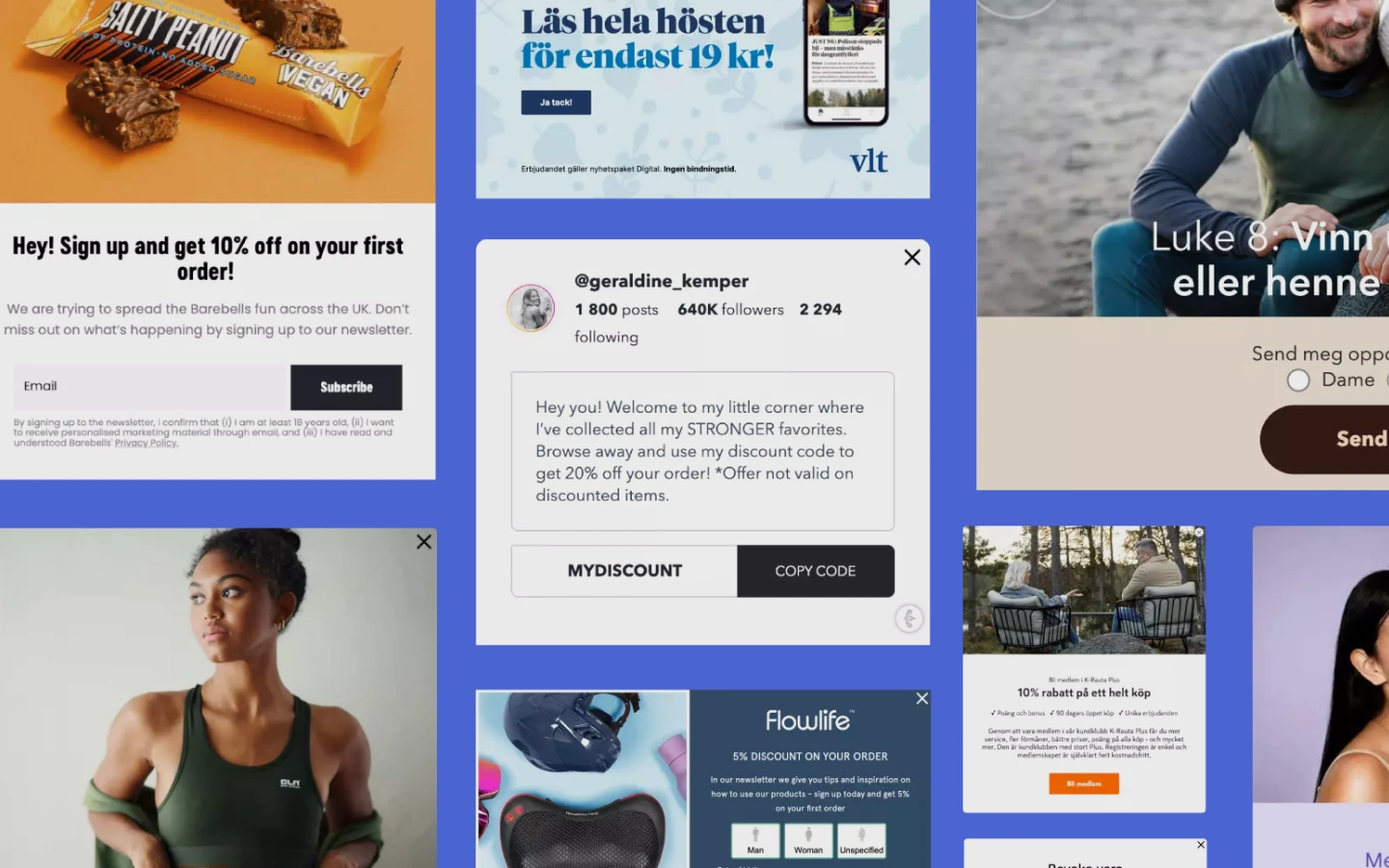
The Triggerbee MCP connector lets Claude draft a campaign, such as a newsletter signup popup, from a template styled with your brand settings, and set its targeting and scheduling. Every change is saved as a draft and needs a clear yes from you before it goes live. Claude can use both connectors in one chat, so one prompt can cover both the page and the campaign:
- Add the spring sale landing page we drafted in Storyblok to the "Spring" release. Then create a Triggerbee newsletter signup popup for first-time visitors on that page, with the same headline. Save the popup as a draft.
Triggerbee also recognizes returning visitors through person-level website visitor identification, based on first-party data such as logins, email clicks and form signups. That lets you build an audience of known members and show them a different message than first-time visitors get. When the campaign has run for a while, ask Claude how it performed. The prompt library in Analyze your website campaigns with Claude has 12 prompts for that.
How to set it up
- Install the Triggerbee tracking script in the frontend that renders your Storyblok content. You can add it to the
<head>of your site (help center guide) or add it with Google Tag Manager. If your frontend is a single-page app, Triggerbee recommends Google Tag Manager. - In Claude, open Customize, then Connectors, find Triggerbee in the directory and click Connect. Or add a custom connector with the server URL
https://mcp.triggerbee.com/mcp. - Sign in to Triggerbee in the browser tab that opens and approve the accounts you want Claude to work with.
In Claude Code, run claude mcp add --transport http triggerbee https://mcp.triggerbee.com/mcp and authenticate in /mcp.
What Triggerbee does not do here
Triggerbee doesn't edit your Storyblok stories, components or releases, so you still need the Storyblok connector for that. A/B tests are created and managed inside the Triggerbee app, not through the connector. And the connector needs an active Triggerbee license.
Connect Triggerbee to Claude
Add the Triggerbee connector from the Claude connector directory, then ask Claude to draft a signup campaign for the next page you publish in Storyblok.
FAQ
Is there an official Storyblok MCP server?
Yes. Storyblok hosts it at https://mcp.storyblok.com/mcp, and Storyblok is listed in Claude's connector directory. The older local server on GitHub is archived.
Do I need to install anything?
No. The server is hosted by Storyblok. You add it in your AI assistant and sign in with your Storyblok account. You only need a personal access token for scripts or for clients that don't support OAuth.
Can Claude publish stories without my approval?
It can if you allow it. Publishing runs through the tool for create and update operations, so set that tool to need your approval in Claude, or ask Claude to add changes to a release that you publish yourself. Triggerbee campaigns always wait as drafts until you approve them in the conversation.
Can the Storyblok MCP server read my live website content?
No. It works through the Management API, so it reads and changes the content in your space. It can't read published content through the Content Delivery API.
Does connecting Triggerbee change my Storyblok space?
No. Triggerbee doesn't change your stories, components or settings in Storyblok. It adds campaigns, such as popups and forms, to the pages your frontend renders, once the Triggerbee script is installed and you have published a campaign.
Which AI assistants work with these connectors?
Storyblok's setup guide covers Claude, Claude Code, Cursor and VS Code, and any client that supports MCP over HTTP can connect. The Triggerbee connector works with Claude, ChatGPT, Gemini, Copilot and any assistant that supports remote MCP servers and browser sign-in.