
Last Black Week in 2025, we analyzed 179 million visits, 1.7 million purchases, and around 2,700 onsite campaigns across Triggerbee customers.
The clearest takeaway was that Black Friday may be the biggest buying day, but the customer journey starts much earlier, and ends much later.
Traffic began rising around Singles Day and stayed high for almost three and a half weeks. During that period, shoppers were browsing, comparing products, checking offers, signing up for early access, and returning several times before making a purchase. As we got closer to Black Friday, the purchase intent rose fast. Until finally, on Black Friday itself, purchases increased by 600% compared with a normal October day.
For marketers, that changes how you should think about Black Week.
It’s easy to treat Black Week as one big promotion that starts when the sale goes live and ends with Black Friday. But our data suggests that the most successful strategy is to match your marketing to the customer behavior throughout November.
Early on, the goal is to capture interest. A week later, it should be to help people explore. As Black Friday gets closer, the focus turns toward conversion, urgency, and bringing people back to complete the purchase.
Here’s how you should use these lessons when planning Black Week 2026.
1. Capture intent before people are ready to buy
Two or three weeks before Black Friday, a large part of your traffic may already be interested in what is coming. They’re simply not ready to make the purchase yet.
That makes this an important period for growing the audience you can reach when the sale starts.
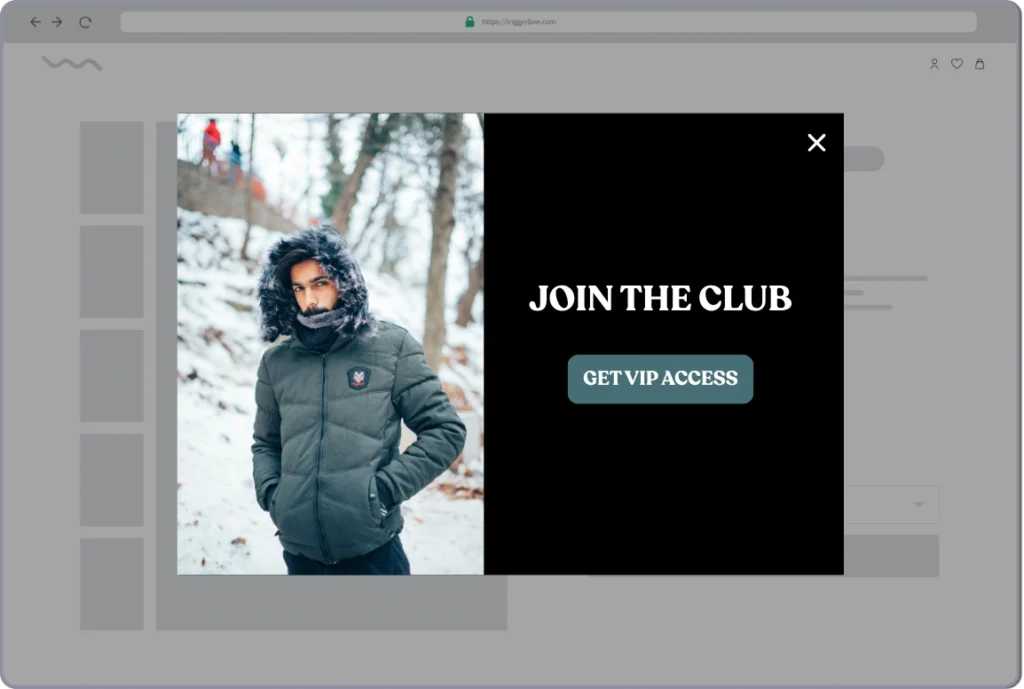
In our 2025 data, campaigns offering early access to Black Week deals had an average conversion rate above 16%, around 150% higher than normal. Campaigns that asked existing contacts for additional data also converted at about twice their normal October rate.
It’s simple, instead of asking every visitor to buy immediately, give them a reason to identify themselves first.
That could mean offering early access to the sale, inviting them to join your loyalty program, collecting an email address or phone number, or asking what types of products they are interested in. The information you collect before Black Week can then be used to make the communication during the sale far more relevant.
A good example is c/o Gerd. Before Black Week, they invited unidentified visitors to sign up for early access. More than 18% of those who saw the campaign signed up, adding over 200 new contacts before the sale had even begun.
Bubbleroom used a similar approach and collected more than 4,500 email signups through a Black Week campaign.
The lesson is that the weeks before Black Friday have value of their own. You don’t need every visitor to convert immediately, if you can turn anonymous traffic into profiles you can reach again when purchase intent is higher.
2. Help shoppers decide what to buy
Another clear pattern in the 2025 data was that traffic increased before purchases did.
Three days before Black Friday, clicks on onsite campaigns rose while conversion dropped. People were clearly interested in the offers but were still waiting before placing an order. This is the research phase.
During Black Week, customers are often comparing offers by several brands. They’re checking prices, looking at different products, returning later, and trying to decide where to spend their money.
That means your website should do more than announce that a sale is happening. It should actively help people make a decision.
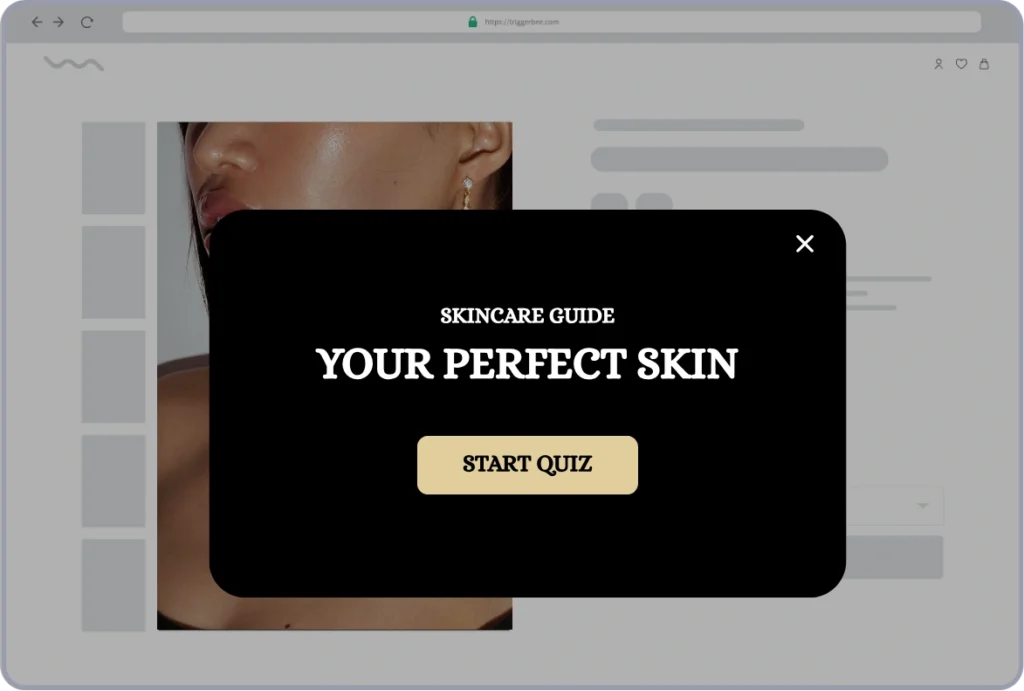
Product recommendations, buying guides, quizzes, shortcuts, recently viewed products, and relevant offers can reduce the work for the customer. If someone’s browsing similar products, help them understand which one they need. If they’ve shown interest in a specific category, make it easier to return there.
It’s not only about how attractive your discount is. It’s also about making your website easy enough for someone to find and buy the right product.
3. Give people a reason to return
One of the most useful findings from last year was that Black Week did not behave like a single traffic spike.
Activity increased around Singles Day, remained elevated through November, peaked on Black Friday, and continued through the final weekend and Cyber Monday. In other words, people were shopping over a period of several weeks.
Bubbleroom, for example, created a daily Black Week calendar where visitors could reveal a new offer each day. The campaign reached click rates between 70% and 90%.
What makes that example interesting is that the campaign was designed around repeat visits. Instead of showing the customer everything at once, it created a reason to come back tomorrow.
You could implement this idea in different ways, such as rotating offers, giving members early access, introducing new products on different days, or using gamified interactions to reveal upcoming promotions.
If someone visits your website five days before the offer they really want becomes available, you don’t need to force a purchase on that visit. Instead, get them to sign up, save the product, and remember the brand.
4. Change the message as purchase intent increases
The closer Black Friday got in 2025, the faster purchasing rose.
The last 72 hours before Black Friday saw the steepest rise, which means the type of message that works earlier in November is unlikely to be the same message that works on Thursday evening.
Early in the period, communication can focus on anticipation and access. You might promote an upcoming sale, encourage people to sign up, or help them explore what will be included.
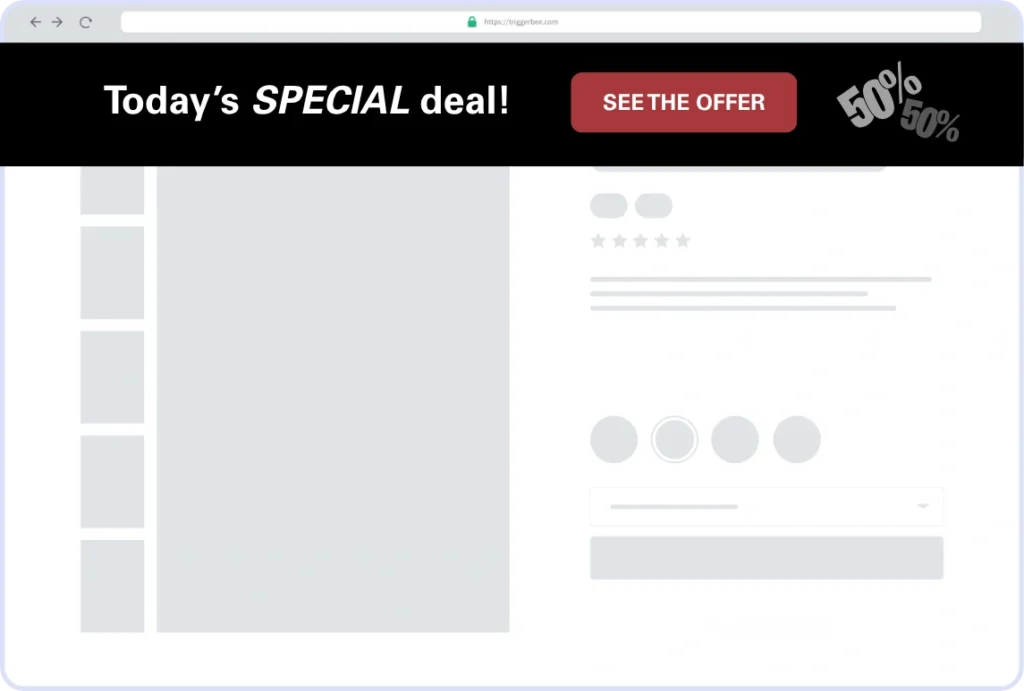
When the sale starts, the message becomes more direct. Make the offer clear, make it visible across the website, and help visitors get to the relevant products quickly.
Then, as the deadline approaches, urgency becomes more useful because there is now a real reason to act.
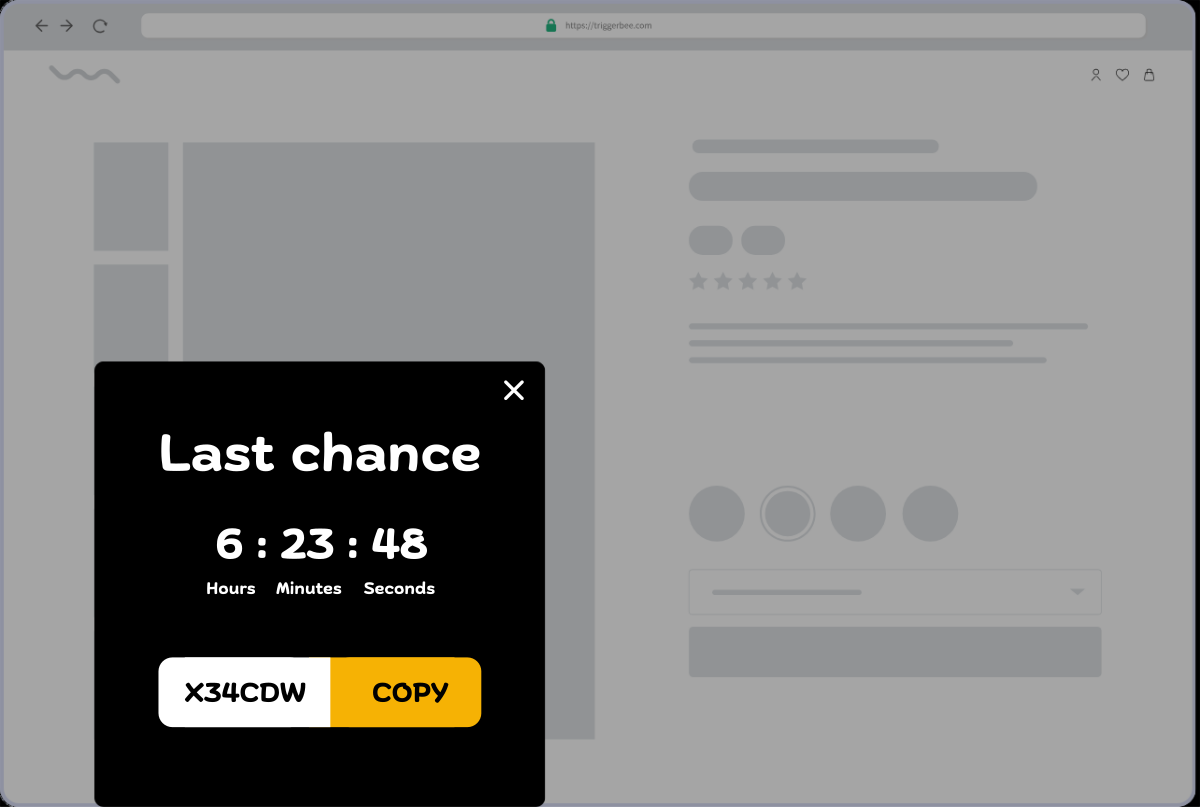
CLN Athletics used this strategy during Black Week. They targeted identified visitors with products in their cart and were about to leave the website. Their exit campaign reached a 33.9% click rate and generated more than 800 copied discount codes.
As Black Friday was ending, they used a last chance campaign where 11.56% of visitors copied the coupon code.
Timing is important.
A countdown too far in advance is like decoration, but a clear deadline during the final hours can help someone finally make the decision.
5. Use what you already know about each visitor
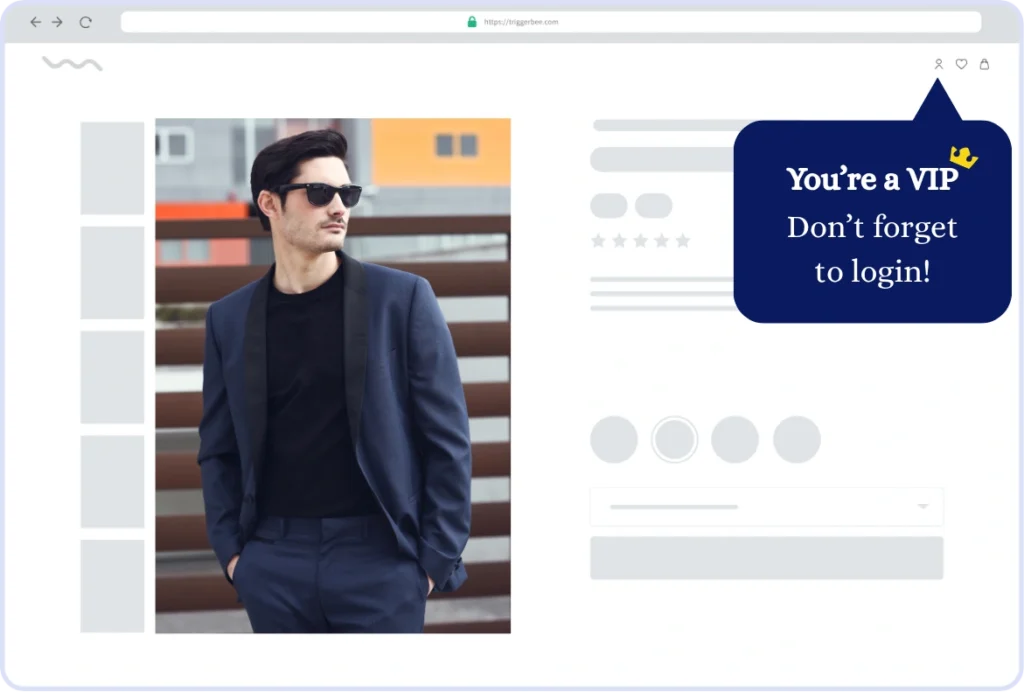
Black Week brings more traffic, but that traffic is mixed between new visitors and loyal members returning. Visitors from an email campaign might arrive, some with products in their cart, or those who visited a specific category multiple times.
The difference between those visitors should be part of your targeting strategy. Apohem, for example, promoted early access to Black Week to Club Apohem members, while excluding people who had already reached the sale. The campaign generated more than 60,000 clicks.
It sounds simple, right? It is, simple and important.
If someone’s a member, don’t try to recruit them again. If they’ve already seen the Black Week offer, show them the next step instead. If they left products in the cart, the next message can try to save that abandoned cart.
Retailers already collect a lot of this information across their CRM, loyalty program, website, and ecommerce platform. Black Week is a good time to actually use it.
Traffic creates opportunities, but it also creates noise. Your customer data helps you shape the right message for the right person.
6. Black Friday is NOT the end
Black Friday was the biggest shopping day in our 2025 data, which should not come as a surprise, but one of the more interesting findings came after it.
The final day of Black Week ended with 134,643 purchases, an increase of 434% compared with a normal day. Cyber Monday then generated another 95,113 purchases.
That means there’s still a lot of demand after that Friday.
Some shoppers wait for a potential better offer.
Some abandon their cart.
Some plan to return later and just forget.
Others just need more time to decide.
The days after Black Friday should be an important part of the plan, not an afterthought, to maximize the biggest shopping holiday of the year.
You simply shift the focus of the message. Instead of introducing the sale, focus on reminders, cart recovery, deadlines, interest data, or last chance offers.
Don’t let your Black Week plan end on the Friday night, or you’ll miss a lot of demand.
What we would do differently for Black Week 2026
So, if we turned all of these findings into a plan for this year, we would start earlier and give each part of November a clearer purpose.
Two or three weeks before Black Friday, the focus is on capturing interest. It’s the time for early access, loyalty recruitment, email and SMS signups, and collecting useful preference data.
When people move into research mode, the focus shifts toward helping them explore. Product guides, recommendations, quizzes, and personalized content can help shoppers get closer to a decision.
During Black Week, the job becomes making the offer easy to understand and find. Your homepage, product pages, category pages and email communication should work together so customers don’t have to search for the relevant content.
In the final 72 hours, focus on the urgency. Use deadlines, cart recovery, reminders, and last chance messages for the best effect.
Once Friday is over, keep going. The data from last year shows that there is still significant purchase intent throughout the weekend and into Cyber Monday. And in fact, it’s already time to use that data for your upcoming End of Year-sale.
The biggest Black Week opportunity is before Black Friday
The most interesting thing about analyzing 179 million visits was not discovering that Black Friday generates a lot of sales.
We already knew that.
What matters is seeing what happens before those purchases.
Customers start researching weeks earlier. They visit several times, compare products, interact with campaigns, sign up for offers, and wait for the right moment to buy.
That is why Black Week 2026 should be planned as a customer journey, not just a single promotion.
Capture interest early. Help people find what they want. Give them reasons to return.
Use the signals they give you along the way. Then, when the purchase intent is at its peak, make the offer clear and easy to act on.