Challenge E-handelsutveckling and SC Styling wanted to get feedback from visitors who came from social media and didn’t make a purchase.
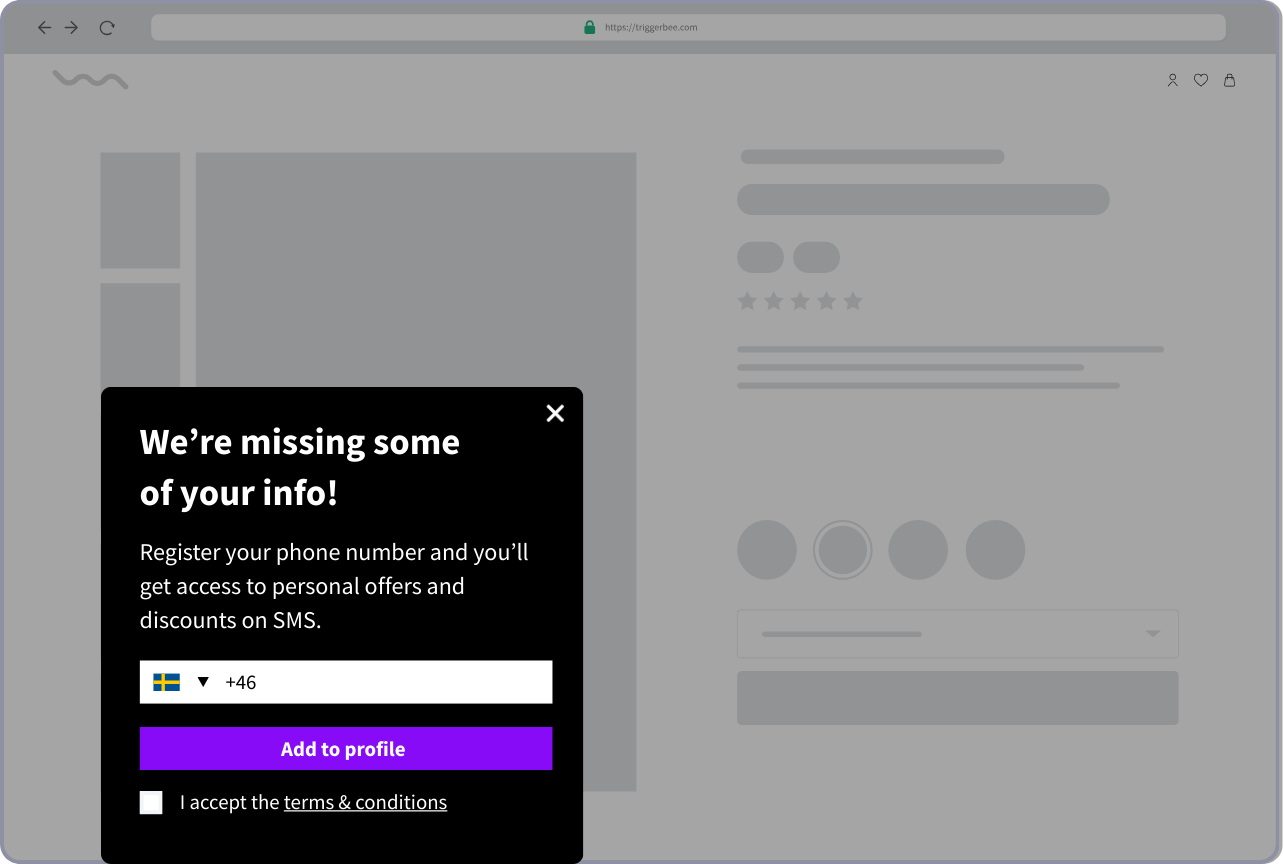
How they did it E-handelsutveckling used a Triggerbee Form with radio buttons to collect feedback on the shopping experience.
The campaign was shown to visitors coming from social media, Facebook and Google via UTM tagging. And it triggered after 90 seconds, excluding the checkout page.
This form got a mighty impressive 41.7% response rate and led them to understand their visitors’ intentions better.
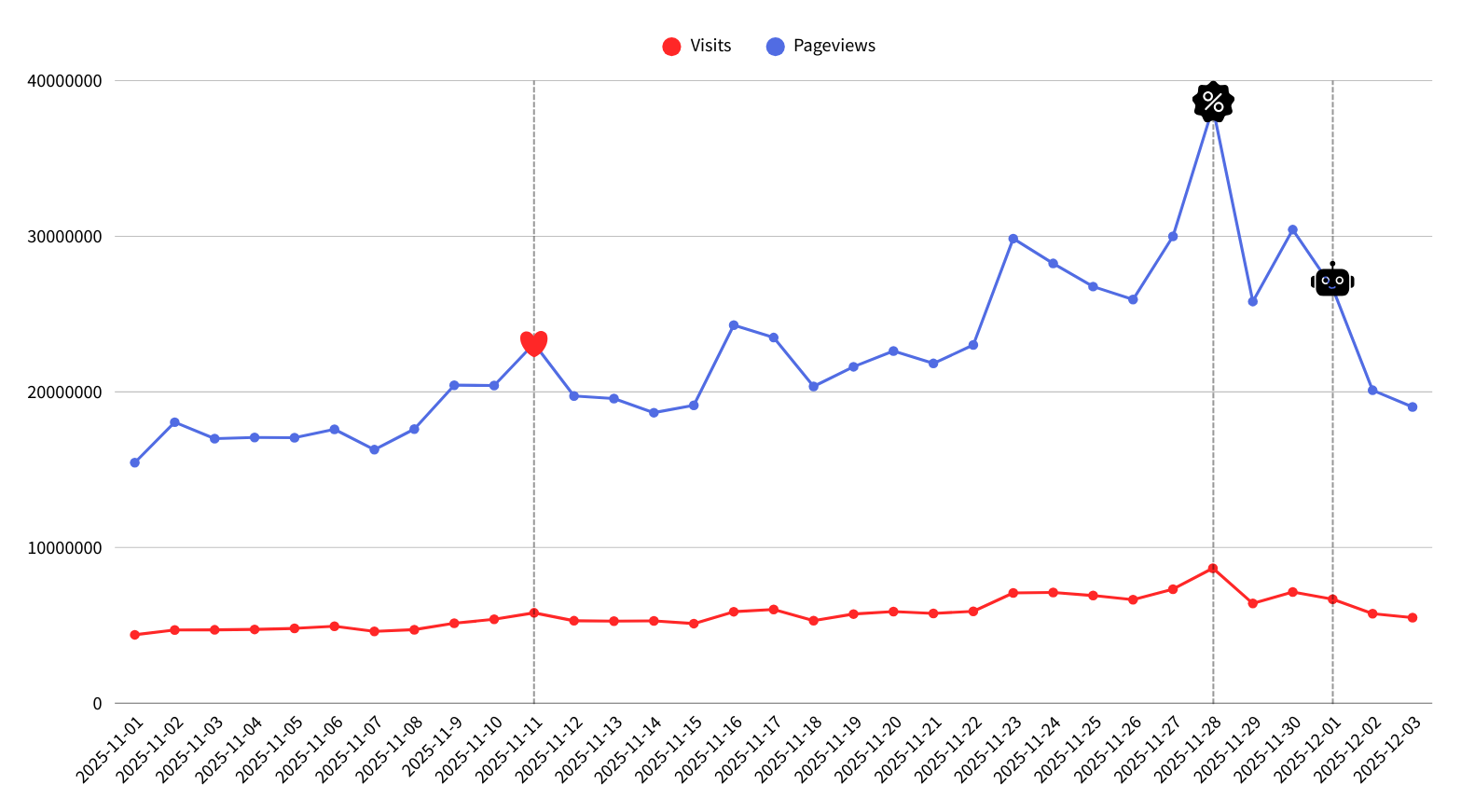
This year’s Black Week was huge. Across all Triggerbee customers we analyzed 179 million visits, 1.7 million purchases, and billions of pageviews during the full period. What stands out is how early the traffic lift begins and how long it lasts. Traffic starts rising two days before Singles Day and stays elevated for almost three and a half weeks.
Here are the patterns, behaviors, and campaign types that consistently delivered results across hundreds of e-commerce sites:
Buying behavior during Black Week 2025
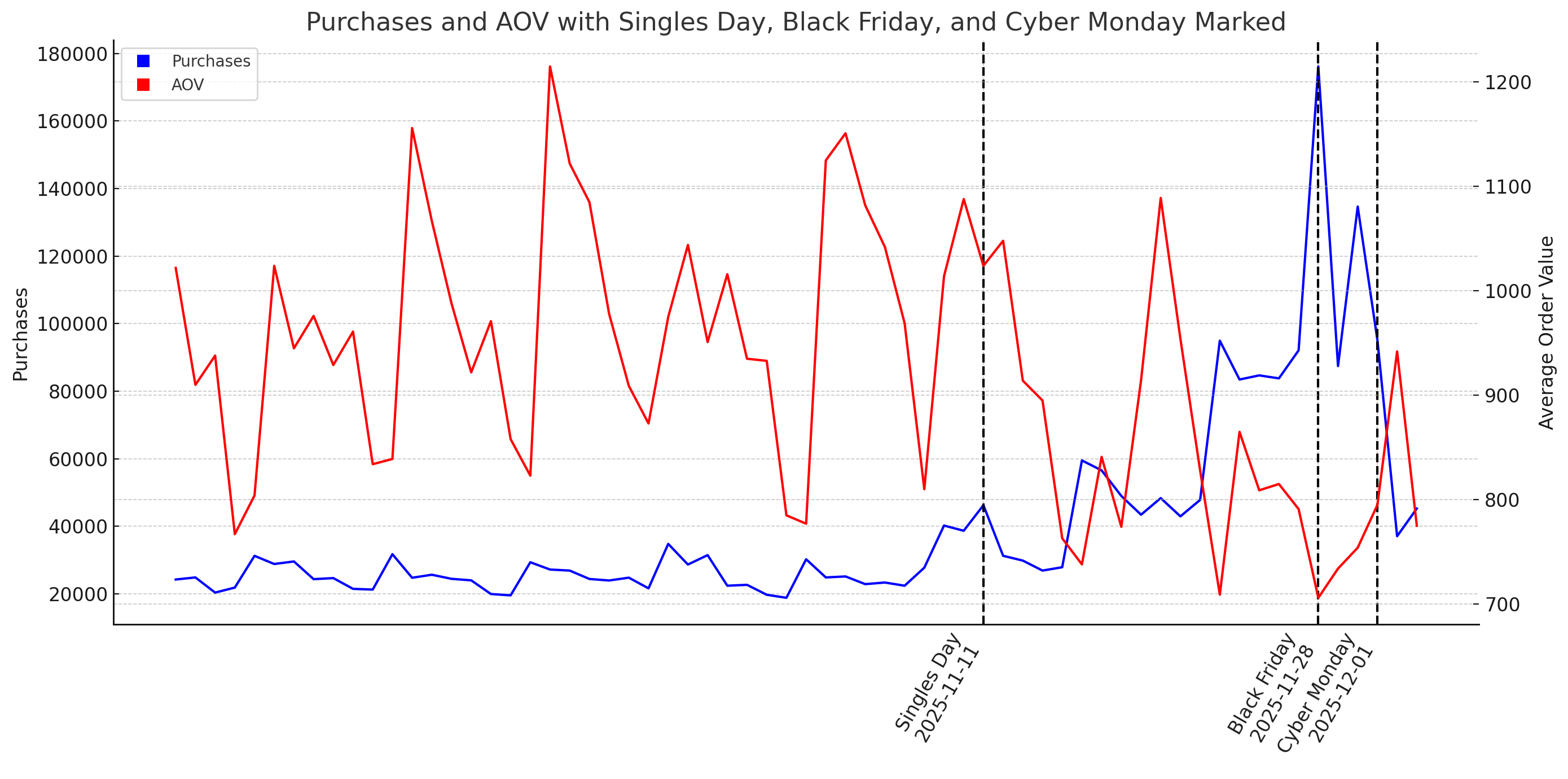
On Black Friday, customers made about five times more purchases than on a normal day, and total revenue was about 1.5 times higher. We also see a first peak around Singles Day, a short dip back to normal, and then a steep climb into Black Friday and the last day of Black Week.
Singles Day saw an 84% increase in purchases with 46,249 orders.
Black Friday saw a 600% increase in purchases with 176,120 orders.
Black Friday also delivered a 250% increase in revenue, but average order value fell by 27% compared to October.
Last day of Black Week saw a 434% increase in purchases with 134,643 orders.
Cyber Monday (December 1) saw a 278% increase in purchases with 95,113 orders.
The last day of Black Week performs almost as well as Black Friday
The last day of Black Week catches two types of buyers:
First, the people who waited too long on Black Friday and come back when they haven’t found a better deal.
The last chance buyers who want one final look before sales end. This creates a second strong peak that almost mirrors Friday.
Traffic stats for Black Week 2025
Singles Day on November 11 marked the start of the shopping period. Traffic jumped 21% to 5.8 million visits (compared to a normal October Monday at 4.78 million).
Heart = Singles day. Black percentage icon = Black Friday. Robot = Cyber monday.
Instead of dropping back to baseline, visits stayed elevated and carried straight into the first day of Black Week on November 18, which landed at 5.3 million visits.
From there the buildup accelerated. Each day pulled in more traffic than a regular month, and the curve steepened as shoppers started taking action. The peak arrived on Black Friday where traffic jumped 81% to 8.67 million visits (compared to a normal October day).
Certain traffic sources spike intent but purchases land later
Early traffic from social, influencers, and discovery channels drives discovery during the whole november. Visitors arrive, browse around, and build their shortlist.
When the strongest offers drop, they return through direct, email, or branded search to complete the purchase. In this case, intent is likely correlated with the increased amount of pageviews.
The pattern is clear. People begin researching about a week before Black Week, peak heavily on Black Friday, and then drop back to normal once Cyber Monday passes.
Campaign behavior
We tracked about 2700 onsite campaigns during the period, with 165 of them built specifically for Black Week. Most pre-launch campaigns went live from November 1, which in turn also drove a lot of high-intent traffic once their offer dropped.
Decoupling CTR and Conversion rates in Onsite Campaigns
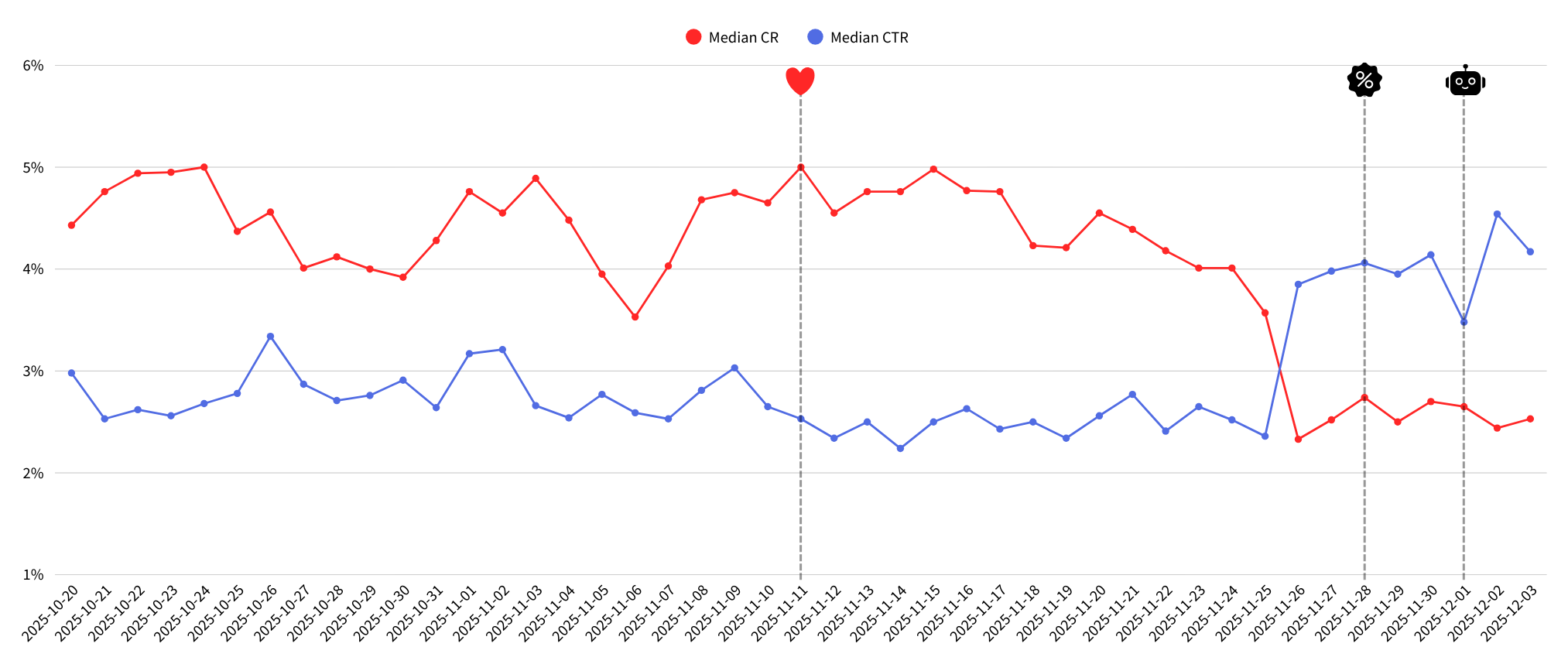
Before Black Week, CTR and CR moved together. But three days before Black Friday, CTR sharply increased and CR took a nosedive. This happens when visitors hunt for deals, compare options, and delay purchasing until discounts peak.
Heart = Singles day. Black percentage icon = Black Friday. Robot = Cyber monday.
Onsite Campaigns that outperformed before Black Week
These campaigns connect directly to the first and fourth drivers: early research and CRM preparation.
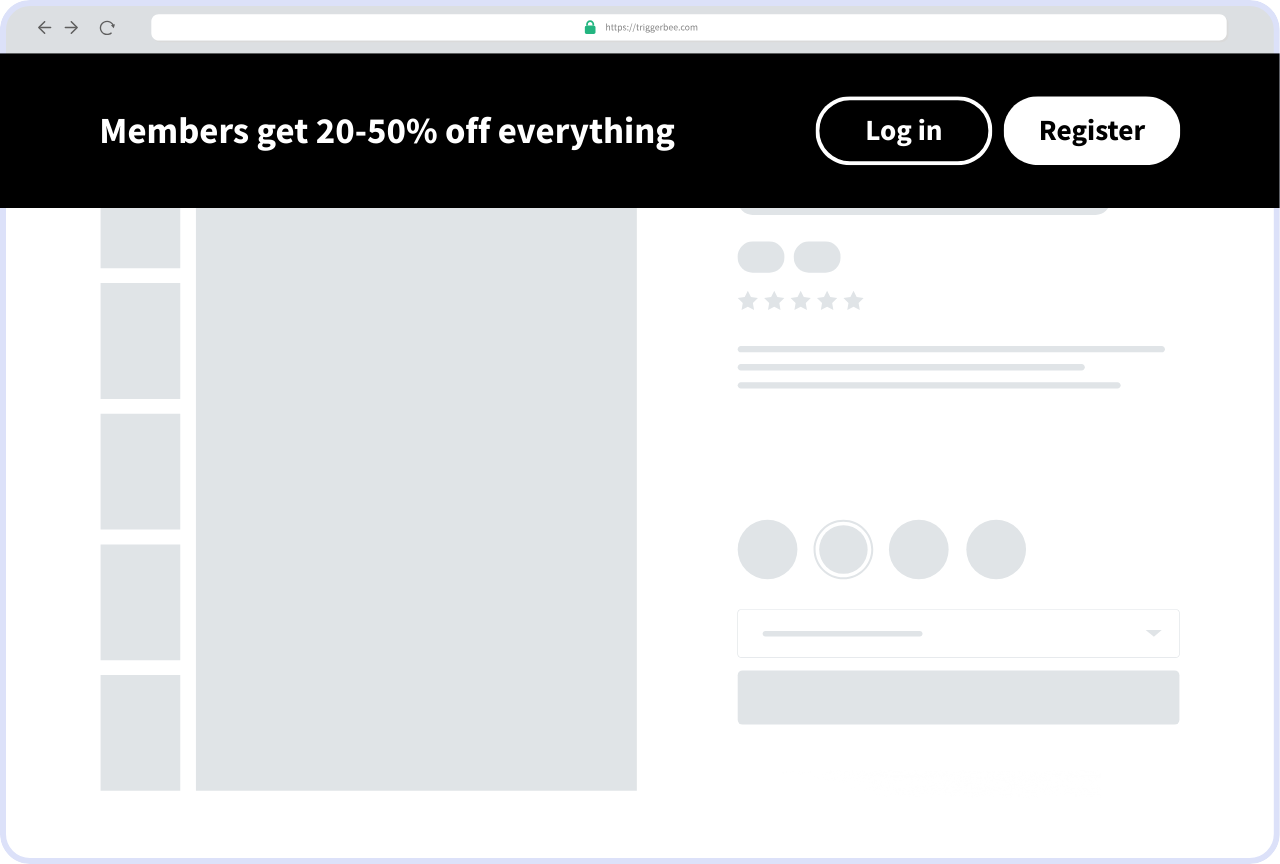
Pre access campaigns
Conversion rate: 16%+ (150% higher CR than normal)
These campaigns invite visitors to sign up for early access to Black Week/Friday deals. They usually launch about two weeks before Black Friday.
CRM enrichment campaigns Conversion rate: 100% higher CR than normal
Brands use enrichment campaigns to gather consents and update subscriber data leading up to Black Week/Friday. During November these campaigns convert at roughly twice their October levels, which goes to show that people prepare for the sale period and are more open to sharing data.
Onsite Campaigns that outperformed during Black Week
Once Black Week starts, the focus shifts from signup to deal visibility. Visitors expect to see the deal right away on category pages, product pages, and the homepage.
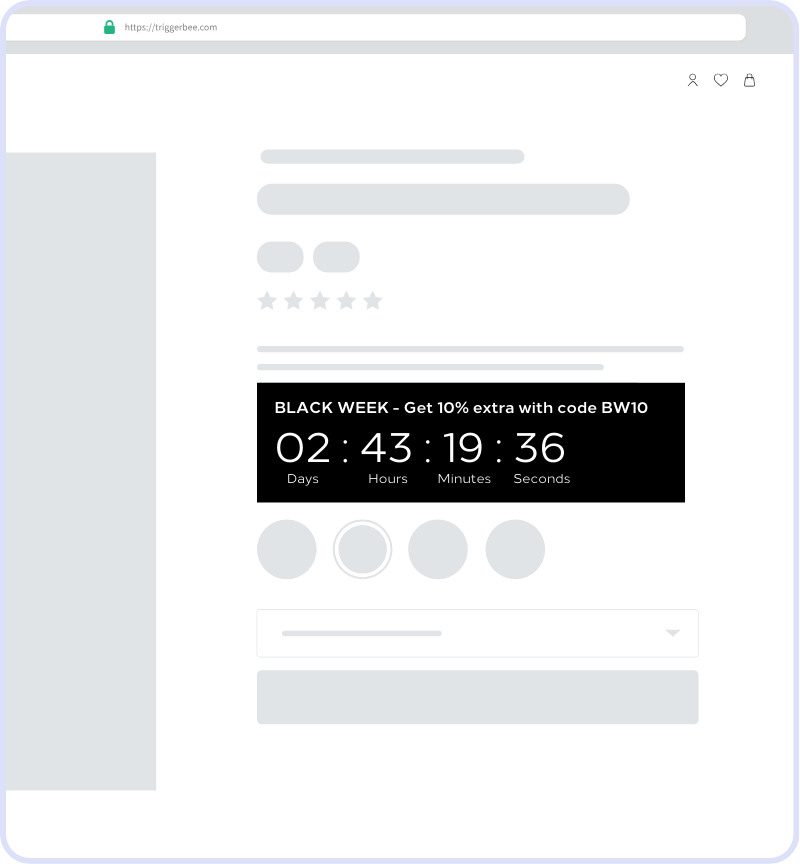
Deadline campaigns The use of countdowns and deadlines saw a 100%+ increase, which is not that surprising. These campaigns work best two to three days before Black Friday and during the day itself.
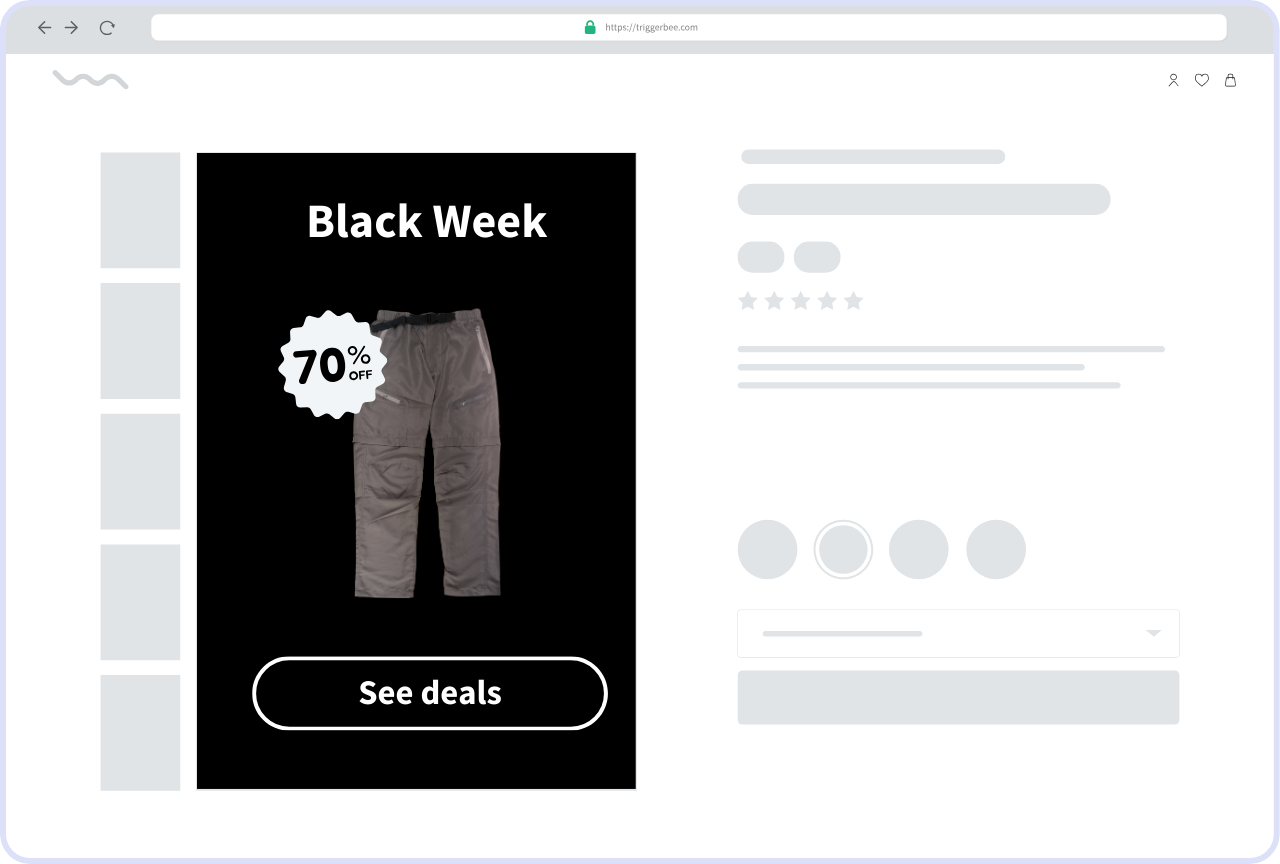
Promotional / Deal highlight campaigns
What this means for marketers going into Black Week 2026
Black Week is not about one day. It is a long window of research, warm up, and timing.
The brands that performed best did three things well:
They captured demand early
They enriched and cleaned CRM data before the peak
They switched to clear, deadline driven offers during the final days
The four drivers behind this year’s performance
Visitor behavior follows the same overall shape each year, but this time the data gives us much clearer proof of why.
1. Early research builds demand long before the buying peak
Singles Day was the trigger of this year’s holiday season. Visits grew from 4.7M on Nov 8 to 5.8M on Nov 11, and Pageviews per visit climbed 25%. The number of purchases went up ~84%, but the average order value was only 8% higher compared to October.
2. Offers matter more than timing
By the time Black Week officially started, shoppers already knew what they wanted. The real lift came from the strength of the offers, not from the date. This explains why purchases jumped from 46K on Singles Day to 176K on Black Friday without a similar rise in traffic.
3. Deadline messaging works best during the peak
The final 72 hours before Black Friday drove the steepest purchase lift, with conversion climbing from 1.26% on Nov 27 to 2.03% on Nov 28. Countdown campaigns doubled in usage and matched this pattern.
4. CRM preparation pays off
Brands that collected data early saw better results later. CRM enrichment campaigns converted about 100% higher compared to in October, and pre-access campaigns hit an average 16% conversion rate, roughly 150% higher than normal.
How to act on these four patterns in 2026
Early research builds demand
Start two to three weeks before Black Week with light discovery campaigns. Use pre access forms, interest surveys, and personal landing pages to catch visitors while they browse.
Offers matter more than timing
Make the value obvious. Use simple offer framing, strong visual hierarchy, and avoid too many variations. People already know what they want. Give them a reason to act.
Deadline messaging wins during the peak
Use countdowns, “ends tonight”, and limited stock messaging in the last 72 hours. These elements push already decided shoppers over the edge.
CRM preparation pays off
Focus on high quality opt-ins in October and early November. Better data means stronger performance once the sale begins.
Webbografi specializes in scaling e-commerce businesses with revenues between 2–20 million by optimizing both organic and paid channels. With expertise in SEO, Google Ads, Meta Ads, and email marketing, we deliver noticeable results fast.
We provide support on both a strategic and hands-on level to boost your performance with Triggerbee and other tools for marketing automation and conversion optimization.
Custobar is the European CDP and marketing platform for omnichannel and online retail. It helps you elevate customer data to deliver personalized marketing, seamless customer experiences, and stronger loyalty across channels.
Trippus is an end-to-end Event Management System used to invite participants, get them to sign up and pay, handle what happens on-site and follow up afterwards. Everything from small internal events to international conferences and tradeshows.
Beet is a Stockholm-based digital marketing agency specializing in helping brands accelerate growth through smart strategy, performance marketing, and data-driven optimization. With a proven track record of scaling both established enterprises and ambitious challengers, we combine creativity and analytics to deliver measurable business results.
We offer a full-funnel approach to digital marketing, covering everything from awareness and branding to conversion and retention. Our core expertise lies within:
Search Engine (SEM & SEO): Optimizing visibility, traffic, and performance across Google, Bing, and global search platforms.
Paid Social & Video: Leveraging Meta, TikTok, YouTube, and emerging platforms to create engaging content that drives conversions.
Marketing Automation & CRM: Building automated customer journeys to maximize lifetime value.
Analytics & Tracking: Ensuring data accuracy, attribution, and actionable insights through advanced analytics frameworks.
What makes Beet stand out is our ability to integrate strategy, execution, and measurement into a seamless process. We are not just a media agency, we act as long-term partners who deeply embed into our clients’ organizations to align marketing with commercial goals.
Over the years, we’ve supported leading brands across e-commerce, technology, retail, and lifestyle sectors. Our partnerships span both B2B and B2C companies.
Our specialists bring deep expertise in their respective channels. On average, our consultants have 10+ years of experience in SEM, 13+ years in SEO, 7+ years in Paid Social, and 10+ years in Analytics. This senior-level competence allows us to consistently deliver best-in-class strategies and execution.
Beet is also a Google Premier Partner, recognized for excellence in campaign performance and innovation. We have been nominated for Google’s Search Excellence and Video Excellence Awards, which reflects our capability to deliver cutting-edge solutions at scale.
Beyond execution, we emphasize knowledge-sharing and collaboration. We frequently hold workshops, audits, and strategic sessions with our clients to ensure they feel empowered and involved in the process.
At Beet, we believe growth is achieved through bold ideas, precise execution, and continuous optimization. Whether it’s launching a new brand, scaling into new markets, or maximizing the value of existing customers, we make sure our clients not only keep up with the digital landscape, but lead it.
Black Friday is the official kickoff to holiday shopping. It’s also a brutal fight for attention. Customers are hit with offers from every direction, and standing out takes more than slapping a discount banner on your site.
The good news? With the right strategy, you can cut through the noise and even outplay the biggest brands. Below, we’ve gathered 8 Black Friday onsite personalization examples that top e-commerce brands have used to drive clicks, signups, and sales when it mattered most, with strategies like:
Save Abandoned Carts CLN Athletics ran an exit-intent popup with a countdown timer to stop visitors from leaving. The urgency worked: 33.9% clicked through and many carts were recovered.
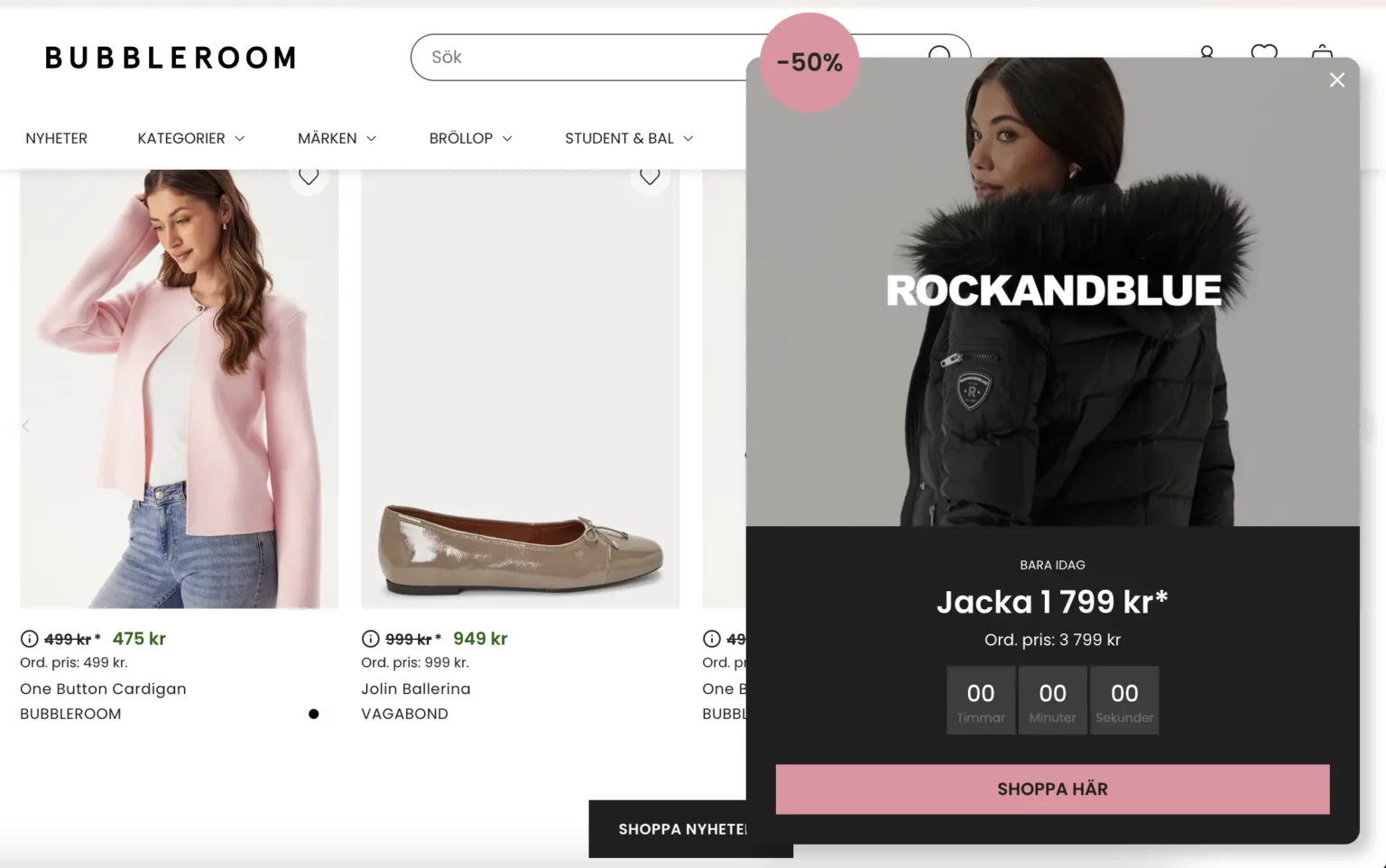
Engage Customers With Daily Activity Bubbleroom launched an interactive Black Week calendar popup where each day revealed a new deal. It kept visitors coming back and achieved a 70–90% click-through rate.
Use Early Access to Reward Loyalty Apohem gave loyalty members exclusive early access to deals, generating over 60,000 clicks. Cellbes did the same and scored a 34.95% CTR. Customers love to feel like VIPs.
Build Your List with Signups Nordic Nest used a Black Week signup popup with a clean, minimalist design. It aligned with their premium branding and still captured a 5.23% CTR, giving them a fresh audience to retarget.
Create Last-Chance Urgency CLN Athletics ended Black Friday with a “last chance” popup and countdown. It pushed urgency hard and achieved an 11.56% coupon code copy rate in the campaign’s final hours.
These real examples have been used to boost Black Week sales and engage the audiences during the year’s biggest sale.
Pre-launch & Early Access Popups
For many retailers, Black Friday is the starting gun for the holiday shopping season. This means your customers begin preparing and planning their purchases far in advance.
That’s why it makes sense to plan marketing activities that activate your customers before the Black Friday sale officially starts.
Before Black Friday, one goal is to increase identification on your website and collect email addresses.
Post sneak-peek images of products that will be discounted on social media
Send email campaigns to your existing database that help customers prepare. For example, you could create shopping lists based on personality types, put together a guide, or encourage customers to create a wishlist on your site ahead of time.
Launch one or more onsite campaigns to identify visitors and gather email addresses, to then retarget.
Apohem Black Week Early Access Popup
Apohem used a Black Week early access popup to give loyalty club members the chance to see promotions before the general public. This made visitors feel like VIPs, rewarding loyalty while driving traffic to their campaign. The design emphasized exclusivity and generated more than 60,000 clicks.
Cellbes Black Week Early Access Popup
Cellbes launched an early access popup to let loyal members in on Black Week deals before anyone else. This kind of messaging works especially well with long-time customers who value exclusivity, and managed to generate a 34.95 percent CTR.
8. CLN Athletics Black Week Early Access Popup
CLN Athletics used a Black Week early access popup to grow their list and warm up audiences before the sale period. The popup was designed with clean visuals that made the offer stand out clearly. By promising early access, it increased the incentive to sign up quickly. The result was an 8.35 percent response rate.
Black Week Signup & Offer Popups
During Black Week, customers are not only looking for deals, they’re also planning their purchases and comparing where to shop. This makes it the perfect time to capture their interest and grow your email list.
The goal is to make it easy for visitors to sign up so you can keep them updated with offers throughout the week. By collecting more subscribers, you also build a long-term audience you can market to after Black Friday.
Examples of activities
Show signup popups with exclusive discounts for new subscribers
Run onsite campaigns that highlight member-only perks, like loyalty points or free shipping
Send tailored email updates to new subscribers during the week to keep them engaged and coming back
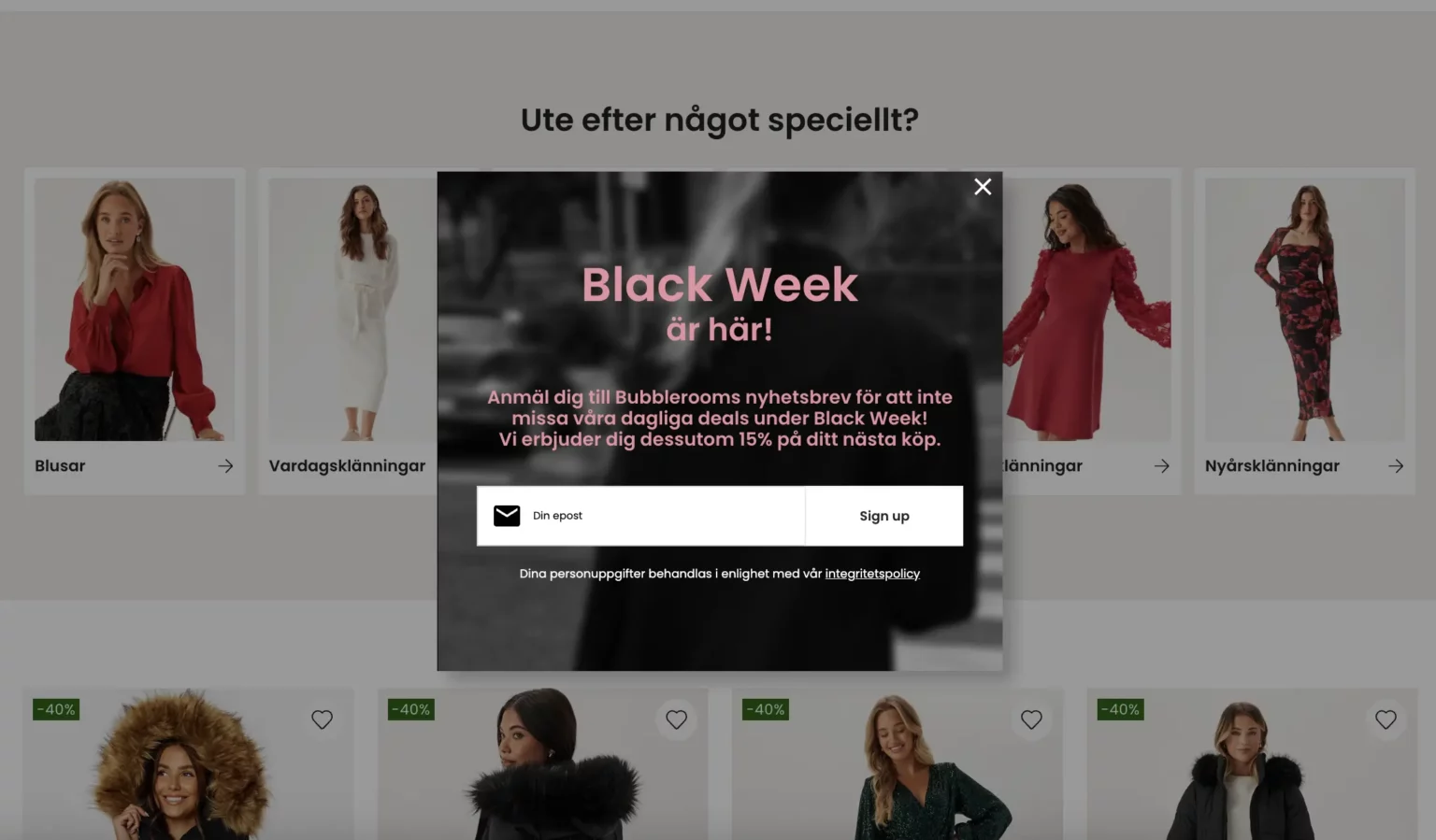
Bubbleroom Black Week Signup Popup
During one of the busiest retail weeks of the year, Bubbleroom ran a signup popup to help subscribers keep track of the Black Week deals. This built their list and ensured their most loyal customers were kept updated. It gave them thousands of new contacts to market to during and after the event. More than 4,500 people signed up through this campaign.
Bubbleroom Black Week Calendar Offer
During Black Week, Bubbleroom created an interactive calendar popup where each day revealed a new deal. The approach kept visitors coming back daily to check what was next. This not only boosted engagement but also helped distribute traffic across the entire campaign period. The design was fully on-brand and the result was an exceptional 70–90 percent click-through rate.
Nordic Nest Black Week Signup Popup
Nordic Nest ran a signup popup during Black Week which encouraged unregistered users to become members. The design was minimalist, aligning with their premium aesthetic, while the message focused on exclusivity and special offers. It captured a 5.23 percent CTR, providing Nordic Nest with a large base to retarget during the campaign.
Last Chance & Exit-Intent Popups
The worst thing that can happen on Black Friday is that your site crashes…
But the second worst? Abandoned carts.
According to Statista, about 70% of all visitors abandon their carts. It’s a struggle for every e-commerce business.
It’s impossible to completely stop abandoned carts, but it’s definitely possible to reduce the risk.
How? By having a high identification rate on your web traffic.
When you know who your visitors are, you open up the possibility to market to them based on their behavior.
Let me explain.
If you don’t know who your visitors are, you can’t market to them.
It’s not enough to have a big email database. Even if someone is in Mailchimp or Rule, you don’t know what that person does when they visit your site. There’s no connection between their inbox and your site – unless they’re identified.
To save a cart, you need to know who the person is. Once you do, you can start showing exit-intent messages, sending abandoned cart emails, suggest products to add, and personalize every step of their journey on your site.
CLN Athletics Black Week Exit-Intent Popup
CLN Athletics used an exit-intent popup during Black Week to save visitors who were about to leave. The campaign targeted identified visitors with products in the cart and used the Deadline component, which adds a countdown timer and FOMO to make the offer even more exciting. The campaign delivered a 33.9 percent click-through rate, proving how powerful exit-intent triggers can be.
CLN Athletics Black Friday Last Chance Offer
At the end of Black Friday, CLN Athletics created a last-chance popup reminding visitors of deals expiring the same day. The message created urgency and emphasized limited time left to buy, by using a countdown. The campaign achieved an 11.56 percent coupon code copy rate, helping maximize the final hours of sales.
Wrapping Up
These strategies prove that Black Friday success isn’t about shouting louder than everyone else. It’s about timing, exclusivity, and smart design choices that turn attention into action.
From abandoned cart recovery to early access offers and last-chance reminders, each of these approaches shows a different way to maximize results during the busiest shopping week of the year.
Use them as inspiration for your next Black Friday campaign. Make every click count!
Website popups are one of the most effective ways to capture attention and guide visitors toward the next step. When they are personalized and well-timed, they stop being an interruption and instead become a helpful part of the customer journey.
In 2025, popups are no longer one-size-fits-all. They adapt in real time to each visitor — whether someone is about to leave, scrolling a product page, or browsing on mobile. This shift toward relevance has made them a core part of how e-commerce and subscription brands grow.
The results back it up:
Triggerbee customers see conversion rates from 5 percent on simple welcome offers to over 70 percent on interactive campaigns, like Bubbleroom’s Black Week calendar.
Loyalty-based reminders can dramatically outperform static banners, with cases like KICKS driving 480 percent higher click-through rates by nudging members about unused points.
Gamified formats, such as Flowlife’s Easter Egg Hunt, reached 10 percent+ conversion rates, showing the power of making engagement fun through gamified marketing.
Research from Baymard Institute shows that cart abandonment remains above 70 percent, but strategies like exit-intent popups can significantly reduce lost revenue.
HubSpot’s benchmarks confirm that lead generation forms placed in popups often convert 2–3x higher than static embedded forms.
This article brings together more than 30+ real website popup examples from brands across fashion, beauty, retail, and lifestyle industries. You will see how companies use everything from seasonal countdowns to loyalty reminders to turn casual browsers into subscribers and buyers.
Let’s get started!
Seasonal & Countdown Popups
1. Bubbleroom Easter Mystery Offer
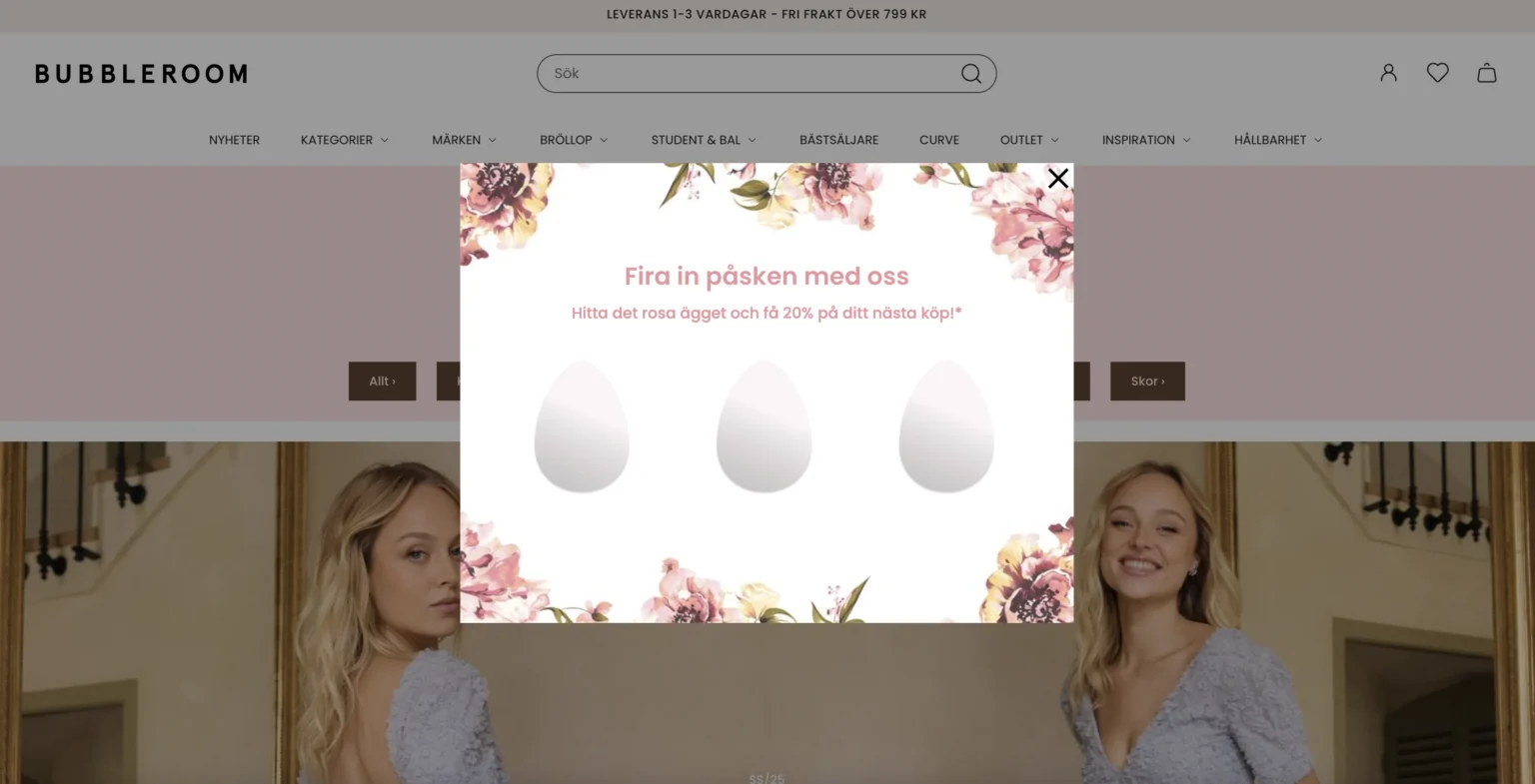
For Easter, Bubbleroom created a popup with a mystery discount, a digital egg hunt, where visitors had to find the pink egg. With festive visuals, it gave people a reason to engage during the holiday period. The result was 20,000+ new subscribers, making it one of their most successful seasonal campaigns.
2. Kulta-Center Christmas Countdown Banner
Kulta-Center launched a Christmas countdown banner to build urgency during the peak shopping season. A countdown timer reminded visitors how long deals would last, creating anticipation as well as FOMO. The banner created constant awareness without interrupting the shopping experience and received over 100,000 impressions.
3. CLN Athletics Halloween Flash Sale Countdown
For Halloween, CLN Athletics designed a countdown popup for a flash sale that made use of urgency. The popup immediately communicated the offer and promoted the flash sale itself. The campaign achieved a 26.38 percent click-through rate, one of their highest for seasonal promotions.
4. Bubbleroom Black Week Calendar Offer
During Black Week, Bubbleroom created an interactive calendar popup where each day revealed a new deal. The approach kept visitors coming back daily to check what was next. This not only boosted engagement but also helped distribute traffic across the entire campaign period. The design was fully on-brand and the result was an exceptional 70–90 percent click-through rate.
5. Bubbleroom Black Week Signup Popup
During one of the busiest retail weeks of the year, Bubbleroom ran a signup popup to help subscribers keep track of the Black Week deals. This built their list and ensured their most loyal customers were kept updated. It gave them thousands of new contacts to market to during and after the event. More than 4,500 people signed up through this campaign.
6. Apohem Black Week Early Access Popup
Apohem used a Black Week early access popup to give loyalty club members the chance to see promotions before the general public. This made visitors feel like VIPs, rewarding loyalty while driving traffic to their campaign. The design emphasized exclusivity and generated more than 60,000 clicks.
7. Cellbes Black Week Early Access Popup
Cellbes launched an early access popup to let loyal members in on Black Week deals before anyone else. This kind of messaging works especially well with long-time customers who value exclusivity, and managed to generate a 34.95 percent CTR.
8. CLN Athletics Black Week Early Access Popup
CLN Athletics used a Black Week early access popup to grow their list and warm up audiences before the sale period. The popup was designed with clean visuals that made the offer stand out clearly. By promising early access, it increased the incentive to sign up quickly. The result was an 8.35 percent response rate.
9. Nordic Nest Black Week Signup Popup
Nordic Nest ran a signup popup during Black Week which encouraged unregistered users to become members. The design was minimalist, aligning with their premium aesthetic, while the message focused on exclusivity and special offers. It captured a 5.23 percent CTR, providing Nordic Nest with a large base to retarget during the campaign.
Exit-Intent & Last Chance Popups
10. CLN Athletics Black Week Exit-Intent Popup
CLN Athletics used an exit-intent popup during Black Week to save visitors who were about to leave. The campaign targeted identified visitors with products in the cart and used the Deadline component, which adds a countdown timer and FOMO to make the offer even more exciting. The campaign delivered a 33.9 percent click-through rate, proving how powerful exit-intent triggers can be.
11. CLN Athletics Black Friday Last Chance Offer
At the end of Black Friday, CLN Athletics created a last-chance popup reminding visitors of deals expiring the same day. The message created urgency and emphasized limited time left to buy, by using a countdown. The campaign achieved an 11.56 percent coupon code copy rate, helping maximize the final hours of sales.
12. CLN Athletics Abandoned Cart Popup
CLN Athletics also addressed cart abandonment with a recovery popup. Shoppers who left items behind were pushed to become a member and get a discount, encouraging them to ultimately complete checkout. This campaign converted 3.3% of abandoning visitors and 37% purchase completion rate, recovering otherwise lost revenue.
Welcome & Signup Popups
13. Didriksons Welcome Signup Popup
Didriksons welcomed new visitors with a signup popup offering a first-order discount. This simple, clear value exchange worked well for turning anonymous traffic into known leads. The popup was designed with a clean, on-brand look that matched their Scandinavian style, and also asked for which demographic they were interested in. The result was over 1,600 new subscribers added to their database and +254 000 SEK in assisted sales.
14. Didriksons Welcome Discount Popup
To grow their customer base even further, Didriksons used a general welcome discount popup for all new visitors. This strategy made sure first-time traffic always received a compelling reason to subscribe. The approach expanded their customer database by 40 percent and increased the average order value with +€20, making it one of their most impactful onboarding campaigns.
15. A Day’s March Welcome Discount Popup
A Day’s March introduced new visitors to their premium brand with a welcome discount popup. The popup was minimalistic and elegant, matching the brand’s identity while still communicating a clear incentive. It offered a discount on the first purchase, which worked well to lower friction for first-time buyers. This popup converted 3.41 percent of visitors into subscribers.
16. Cervera Membership Signup Popup
Cervera used a membership signup popup to grow their loyalty program. The popup emphasized exclusive benefits and rewards for members, making the offer more compelling than a standard discount. Its design was simple and professional, which matched the brand well. The popup reached a 14.5 percent conversion rate.
17. Apohem Membership Signup Popup
Apohem ran a membership signup popup highlighting the value of joining their loyalty program. The popup offered a welcome bonus and promoted their loyalty club. More than half of visitors who saw the campaign converted, with a 53 percent signup rate and 30% transaction rate.
18. Bubbleroom Pre-Launch Popup
Ahead of a major new collection, Bubbleroom ran a pre-launch signup popup to build anticipation. The popup promised VIP access for those who sign up, which created excitement and exclusivity. This approach helped them build buzz before launch day and gave their campaign a head start. More than 40 percent of visitors signed up through the popup.
19. Cellbes Collection Signup Popup
Cellbes promoted a new collection with a dedicated signup form. This helped build excitement for the upcoming fashion collection and increase newsletter signups.. It delivered a 12 percent response rate, in the lead-up to launch.
20. Miss Mary Referral Signup Popup
Miss Mary used a referral popup to encourage visitors to join and then invite their friends, which was strategically placed after the checkout process. The popup explained the reward structure clearly, making it attractive. It delivered 1,200 signups at a 12 percent conversion rate, and 22% referral rate.
21. Klar Discount Reminder Popup
Klar made a popup that reminded visitors about active discounts. They wanted to remind visitors who didn’t purchase, that they still had an unused discount code the next time they returned to the website. This kept offers top-of-mind during the onsite journey and achieved a 3.08 percent signup rate and 38% discount copy rate.
22. Frank Dandy Gender-Targeted Newsletter Signup Popup
Frank Dandy personalized their newsletter popup based on gender, ensuring relevant content from the start. The tailored enhanced the relevance and engagement and achieved a 7% signup rate and 5-7% Click-through rate.
24. Moomin Membership Raffle Popup
Moomin invited visitors to join a raffle via popup, making the process fun and exciting. The chance to win prizes drove high engagement and this popup achieved a 65 percent participation rate as well as thousands of renewed consents.
25. Frank Dandy Halloween Fullscreen Popup
Frank Dandy launched a fullscreen Halloween popup with bold visuals and a terrifyingly great discount. With no distractions, visitors either engaged or ignored it, which apparently was difficult to do as the campaign saw a 40 percent coupon code copy rate.
26. Cervera Member’s Discount Popup
Cervera used a popup to highlight an exlusive member discount, with a simple on-brand design and confetti animation to give it a party feeling. This simple but effective campaign lead to 17 percent of visitors copying the code.
27. Apohem Membership Coupon Reminder Popup
Apohem created a popup campaign to remind members about unused coupons. The targeted message drove immediate action and achieved an impressive 19.11 percent CTR and 28.6% Click to purchase rate, serving as a gentle reminder which encouraged them to purchase and redeem their personal rewards.
28. KICKS Loyalty Points Reminder Popup
KICKS targeted members with a popup reminding them of unused loyalty points. This highly relevant message dramatically outperformed with an exceptional CTR was 480 percent higher than average, activating their club members and improve their engagement rate.
29. Proteinbolaget Birthday Greeting Popup
Proteinbolaget celebrated visitors’ special days with a birthday popup offering a discount. The personal touch made customers feel valued, which is made apparent through the 36 percent that copied the discount code and 12% transaction rate.
Skinroller used an influencer-themed onsite campaign to boost trust and credibility. Featuring a well-known personality and a chat-like design helped drive interest in highlighted products and the campaign achieved a 20 percent CTR.
32. Efva Attling Influencer Greeting Popup
Efva Attling designed a popup featuring an influencer greeting to welcome visitors. To make the transition smoother for visitors coming from social media, Efva Attling guided them and made sure they understood they landed on the right page, with a familiar face. This influencer campaign gained 8,000+ impressions.
33. Nudient Device Selector Popup
Nudient helped shoppers find the right product with a device selector popup. By creating a device-selection popup in Triggerbee, with a dropdown for the device model, they simplified and smoothened the experience. The popup reached a 50 percent submit rate with 80,000+ visitors submitting device data.
34. Boomerang Out-of-Stock Reminder Popup
Boomerang used an out-of-stock reminder popup to collect emails and save the visitors’ interest for a longer time. Visitors could request a reminder when items returned. This helped Boomerang build an email list, and enrich their email database and target audience with clothing size information. This campaign converted 18–35 percent of visitors and resulted in a 37% Signup rate.
Wrapping Up
These 30+ real popup examples prove that popups are far from outdated. When they are personalized, well-designed, and timed correctly, they become one of the most powerful tools for onsite engagement.
From seasonal countdowns to loyalty nudges and gamified raffles, each of these campaigns shows a different way to turn attention into action. Use these ideas to inspire your next popup strategy and make every visitor interaction count.
There are several excellent online survey tools available, each with different strenghts. Triggerbee is a popular choice for collecting feedback on your website, with built-in NPS, CSAT, response targeting options, and revenue analytics. Google Forms is a great free option for non-branded surveys. Hotjar is an online survey tool that focuses on quick feedback and user behavior, while SurveySparrow, Netigate, and ProProfs offer more advanced tools for enterprise research, employee satisfactions, and deeper insights.
Here’s a more detailed look at some of the best online survey tools available:
Common survey tool features
NPS and CSAT surveys: Collect and track customer loyalty and satisfaction
Rating formats: Star, smiley, and numerical rating scales for feedback collection
Open text responses: Let users explain their thoughts
Micro surveys: Short, single-question surveys about specific features or use cases
On-page targeting: Show surveys to specific visitors based on behavior or attributes
Embedded surveys: Add surveys directly into landing pages, blog posts, or product sections
How to compare online survey tools
Not all online survey platforms offer the same level of flexibility, customization, targeting, or insight. Some are made for creating quick polls. Others help you build fully automated and recurring feedback programs.
Here’s what to consider when choosing the best online survey tool for your business:
Survey formats: Does it support NPS, CSAT, multi-step forms, and open-ended feedback?
Targeting & segmentation: Can you show surveys based on visitor behavior, CRM status, or past responses?
Analytics: Are there built-in dashboards to track ex. NPS or CSAT trends, feedback, and revenue impact?
Ease of use: Is the survey builder drag-and-drop? Are there templates to launch faster?
Pricing & limits: Do lower-tier plans include the features you need, or are they locked behind enterprise pricing?
Data storage (bonus): If compliance is a priority, is EU-based data hosting available?
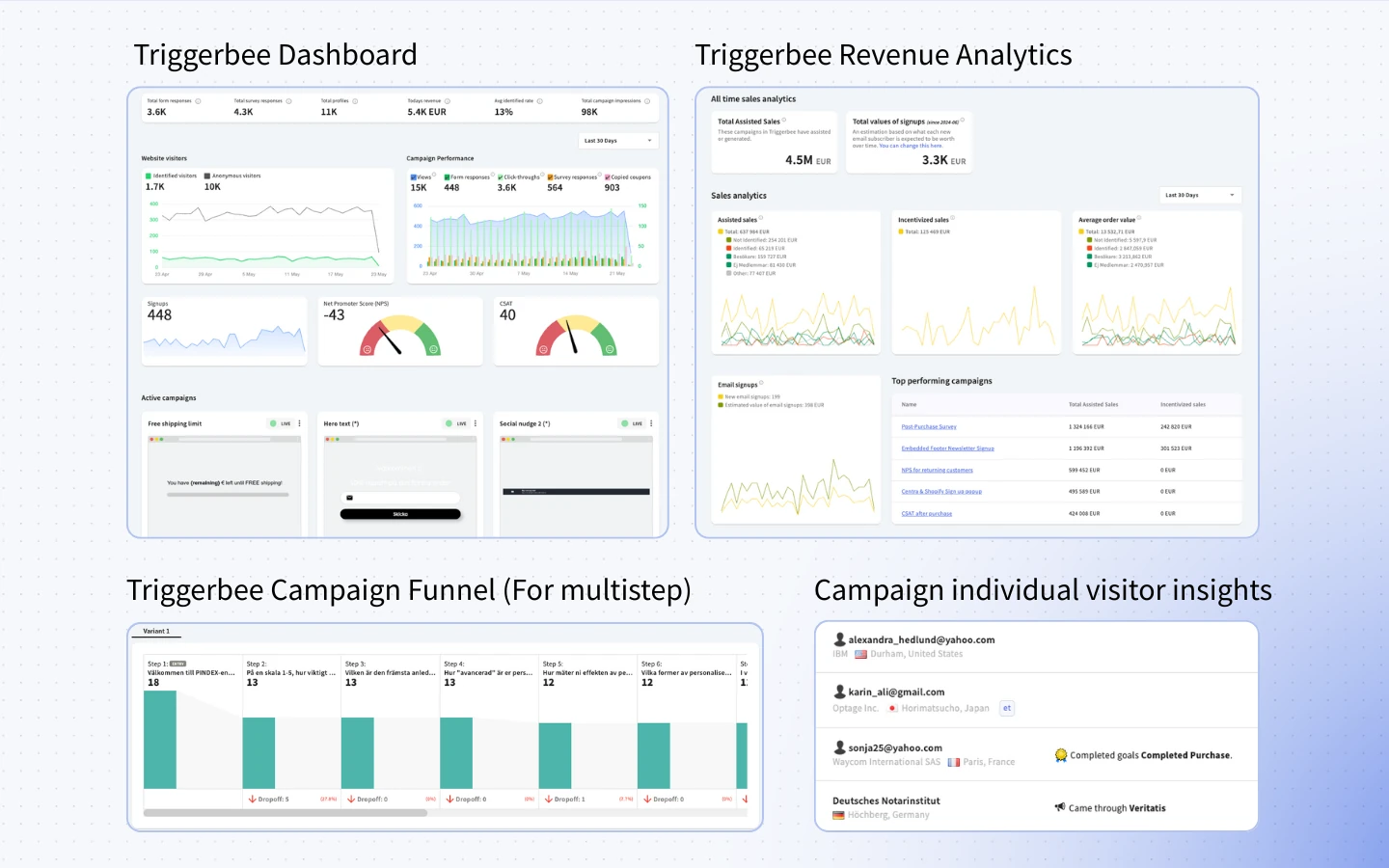
Let’s take a closer look at the top survey platforms and how they compare. First one up is the most customizable option on the list, focused on website surveys and customer feedback collection: Triggerbee.
Triggerbee is one of the best online survey tools if you’re looking to collect customer feedback on your website or in your app.
You can launch website surveys in popups, slide-ins, or embed them directly into your site. Supported survey types include:
NPS (Net Promoter Score)
CSAT (Customer Satisfaction)
Star ratings
Smiley scale ratings
Open comment questions
This makes Triggerbee ideal for UX research, in-app surveys, onboarding surveys, brand tracking, loyalty tracking, and post-purchase feedback.
Their drag-and-drop builder includes 100+ pre-made templates, and you can run multi-step surveys with conditional logic. All surveys automatically inherit your brand’s fonts, colors, and spacing.
Triggerbee includes a built-in NPS and CSAT dashboard with trend tracking, filterable comments, and visual breakdowns. You can track changes in satisfaction over time, identify high-impact feedback, and highlight common pain points. All NPS and CSAT responses are color-coded by detractor, passive, or promoter.
For longer feedback surveys, you can analyze responses with multiple chart types and export segmented lists. You can also group related surveys under one response list for combined analytics.
Survey responses can be used as targeting conditions. For example, you can show offers to detractors, follow up with promoters, or personalize the website experience for passives. This lets you act on feedback without waiting for a manual export.
Real results from real brands
Efva Attling – NPS Survey with 50% response rate
Efva Attling launched a post-purchase NPS survey using Triggerbee’s surveys to measure customer satisfaction from purchases made in physical stores. The survey was embedded on a landing page and was triggered by a QR code that was printed out and placed by the register counter. The result was a 50% response rate and detailed feedback that helped bridge the gap between in-store experience and digital follow-up.
Cerveras CSAT Survey
Cervera used a CSAT survey made with Triggerbee Surveys on the order confirmation page to measure satisfaction after purchase. The popup appeared as a two-step callout asking for a rating and an optional comment. The survey saw a 20% response rate and over 100 qualitative comments for improving the buying experience.
“Thanks to the survey function in Triggerbee, we were able to measure the customers’ shopping experience in a simple and fun way. The comments gave us insight into how the buying journey can be improved and we will take action on it right away.” Carina Hejde, Online E-commerce Coordinator at Cervera
Jula used a CSAT to expand into other markets
Jula launched a simple satisfaction survey in the checkout asking visitors to rate their experience from “disappointing” to “awesome.” The campaign achieved a 25.6% response rate and helped Jula better understand the customer journey before entering a new market.
“To enter a new market we wanted to make sure our customer journey is on point. With the help of Triggerbee Surveys we can measure this in a fun and effective way.” Alexander Ginman, Country eCommerce Specialist at Jula
If you tried to piece these features together with separate tools, you’d be looking at over €500/month. Just SurveyMonkey‘s basic plan will cost you €30/month. A referral tool like ReferralCandy starts at $59/month plus 3.5% commission. A gamification platform adds another €60/month or more.
With Triggerbee, everything is included with analytics, advanced targeting, and your own brand styles. And pricing starts from just €39/month.
Targeting and segmentation built for feedback
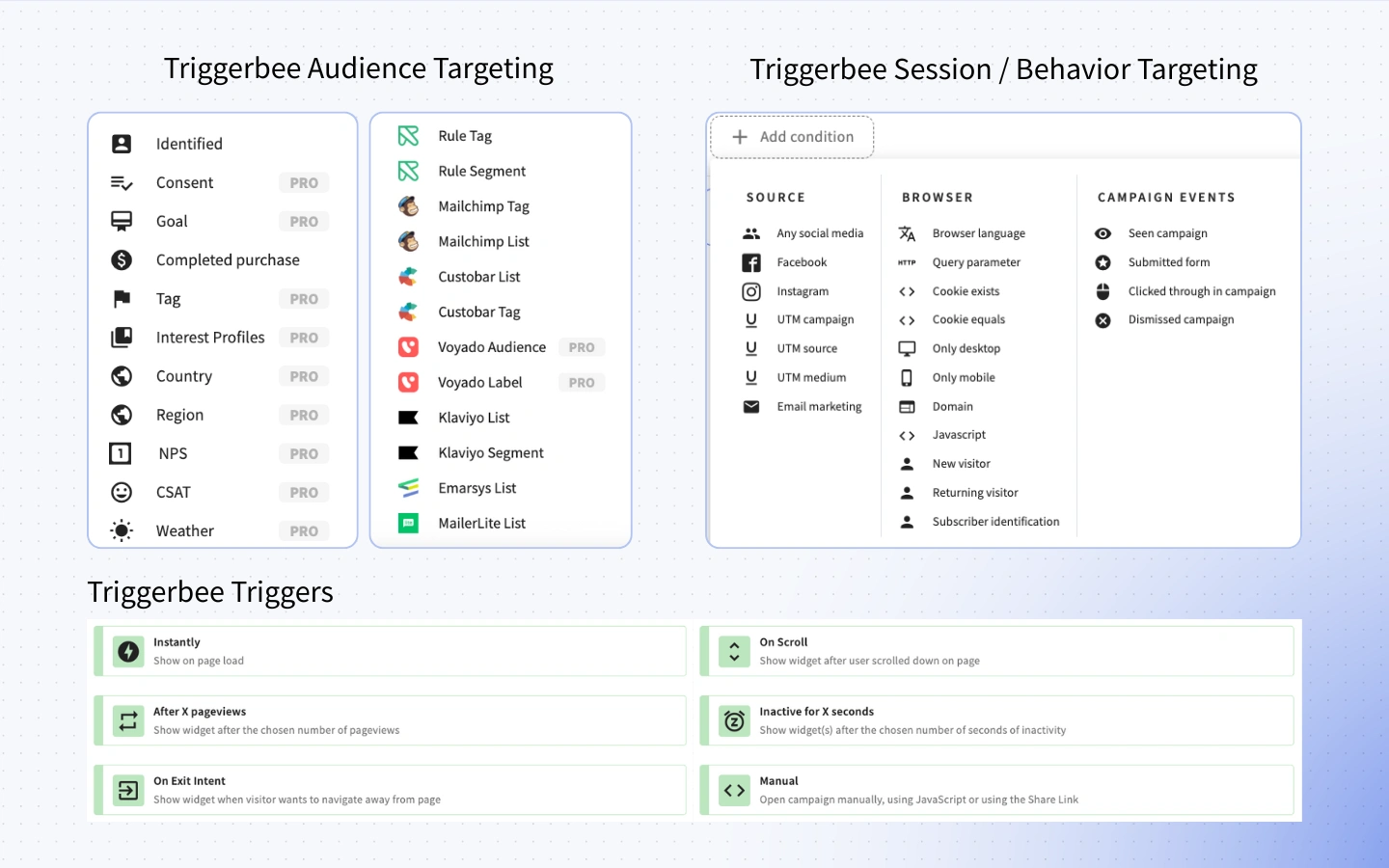
Most survey tools rely on general triggers like time delay or scroll depth. Triggerbee includes over 40 targeting rules so you can show the right survey to the right person at the right time.
Target based on user behavior, visit history, referral source, location, device, traffic channel, or CRM data. Use AND/OR logic to build segments like “returning visitors who viewed a product and did not buy” or “known customers who gave a low NPS score.” Perfect for measuring satisfaction at different stages or targeting follow-up campaigns.
Built-in analytics to track survey performance
Every survey comes with built-in analytics, so you can see response rates, score trends, and comments in one place. NPS and CSAT dashboards are included and show performance over time with filters, visual breakdowns, and full comment logs.
You can also group survey campaigns under a single response list for better analysis. Whether you’re running a product survey, loyalty campaign, or just want a quick post-purchase feedback form, all data is tracked down to the visitor level.
Identify visitors and personalize future surveys
Triggerbee remembers who your visitors are after they submit a form or click a campaign. This means you can tailor future surveys based on their behavior or previous answers without asking the same question twice.
For example, you can follow up with detractors from an NPS survey, skip questions for known users, or block existing customers from seeing surveys they already responded to. This also powers Triggerbee’s email verification, which checks if someone is already in your ESP or CRM before showing a survey or incentive.
Pricing
Triggerbee’s pricing starts at €39/month for up to 50,000 page views. All features are included: surveys, targeting, analytics, personalization, and campaign editor. Higher plans offer more traffic capacity and priority support.
Best for
Marketing teams that want to combine survey creation, targeting, and analysis in one platform. Especially useful for websites and businesses with a lot of recurring traffic who might need CRM-based targeting, or active feedback programs.
Google Forms is a simple and free survey tool included in the Google Workspace suite. It allows you to create basic forms and quizzes with multiple question types, logic branching, and automatic response collection in Google Sheets.
The editor is minimal and easy to use. Forms can be shared via link, embedded on websites, or emailed directly. Collaboration with team members is built-in, and responses update in real time.
There is no built-in targeting, design customization is limited, and analytics are handled separately via Sheets or external tools.
Microsoft Forms offers a straightforward survey and quiz builder for users in the Microsoft 365 ecosystem. It supports logic-based forms, polls, and satisfaction surveys with real-time collaboration and analytics.
Forms are built in a clean interface and can be embedded or shared via link. Results sync directly to Excel for further analysis, and you can export charts and summaries.
Targeting and design options are basic. The tool is best suited for internal use, education, or small feedback loops within the Microsoft stack.
What you can build with Microsoft Forms
Customer satisfaction and event feedback surveys
Quizzes and polls
Internal team forms
Pricing
Microsoft Forms is free for anyone with a Microsoft account.
SurveyMonkey is a widely used survey platform with a broad feature set for building, distributing, and analyzing surveys. It supports question logic, skip rules, multiple response formats, and a large library of templates for customer, employee, and market research.
Surveys can be embedded, shared via email, or linked from social and web. Real-time analytics and filters help track trends, and team collaboration tools are available for larger accounts.
It’s designed for both individuals and teams that need structured survey workflows with easy export and dashboard views.
What you can build with SurveyMonkey
Customer satisfaction and loyalty surveys
Market research and product validation forms
Event feedback and internal team forms
Pricing
Free plan available. Paid plans start from $25/month.
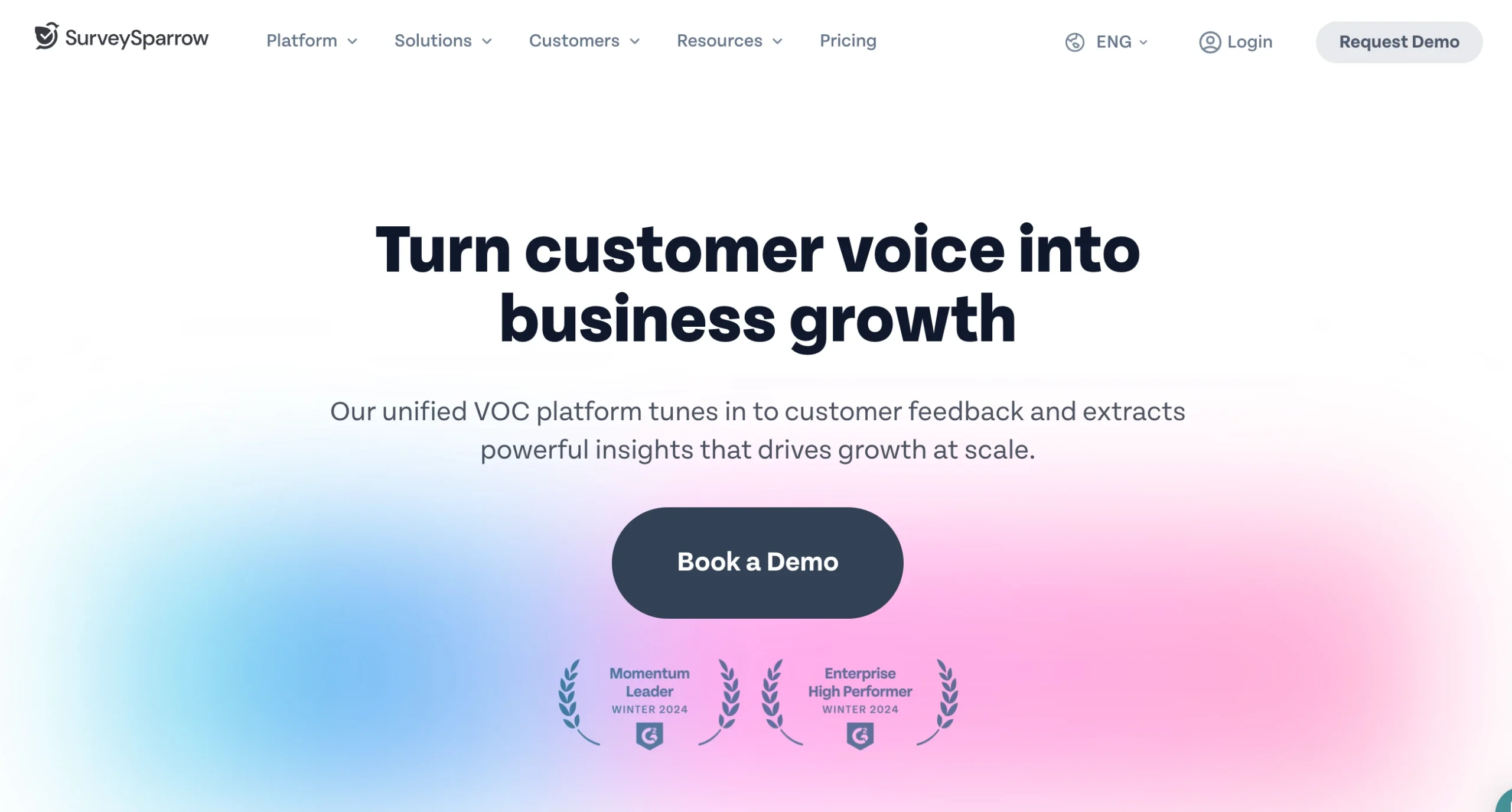
SurveySparrow focuses on conversational and recurring surveys. It offers modern, mobile-friendly designs and supports continuous feedback collection through automation. Logic branching, white labeling, and offline survey support are also available.
Surveys can be embedded, shared via link, or sent via email and SMS. You can set up recurring NPS or CSAT surveys to run on a schedule. Real-time dashboards and response filters help track performance.
The platform is suited for teams looking to automate customer or employee feedback and improve engagement with a friendlier design.
What you can build with SurveySparrow
Conversational NPS and CSAT campaigns
Recurring customer feedback surveys
Multi-page product surveys and lead forms
Pricing
Free trial available. Paid plans start from $19/month.
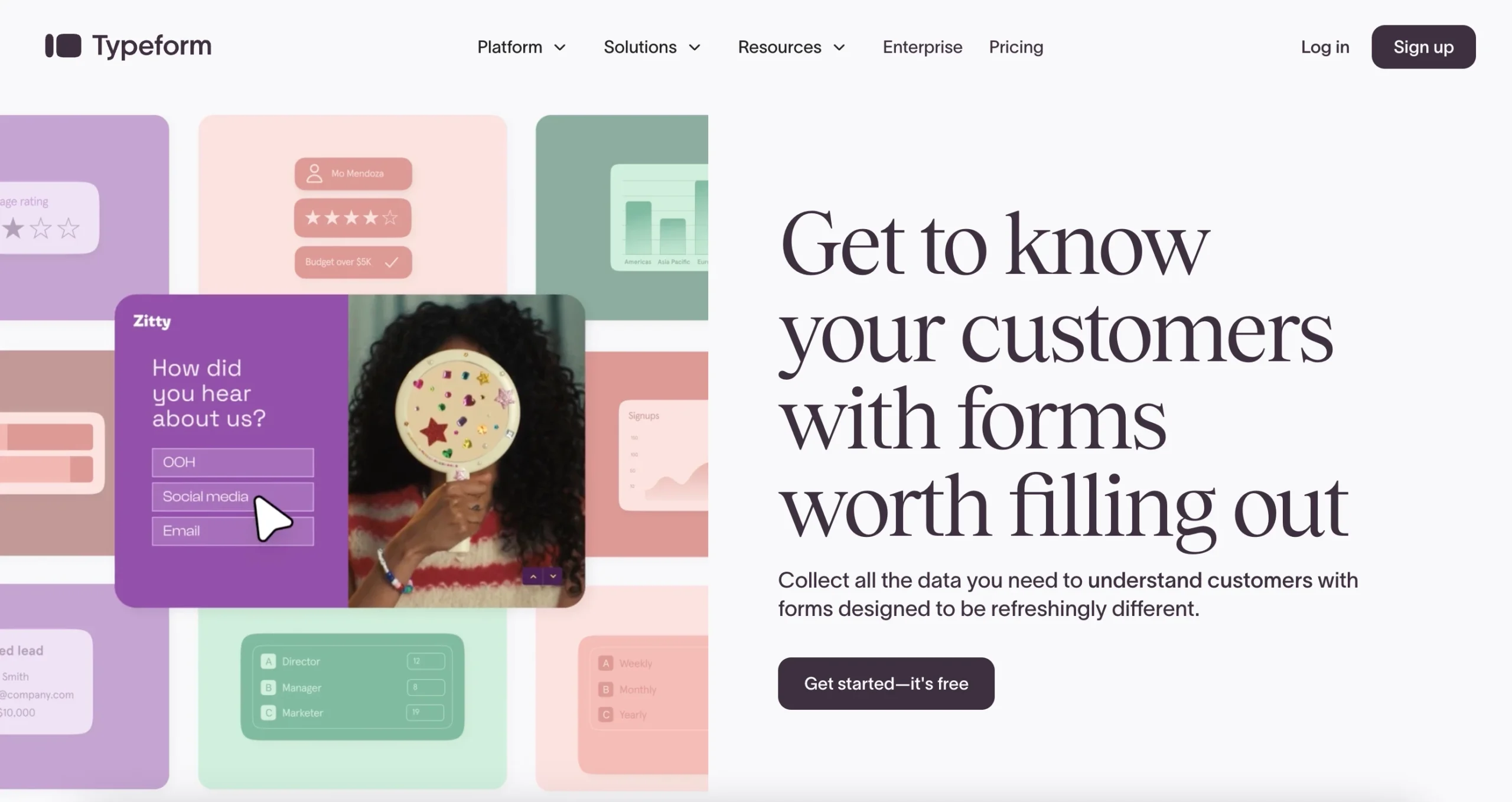
Typeform is known for its interactive, one-question-at-a-time survey format. It’s built for user experience and designed to feel like a conversation. The builder supports logic jumps, calculators, and conditional flows.
Forms and surveys can be embedded in websites or shared via URL. Integrations with 500+ platforms (like Google Sheets, Slack, and HubSpot) are available via Zapier and native apps.
Typeform is ideal for brand-focused businesses that want clean, conversational forms with a strong visual experience.
What you can build with Typeform
Onboarding and personality quizzes
Feedback and brand surveys
Lead generation flows with logic paths
Pricing
Free plan available. Paid plans start from $29/month (billed annually).
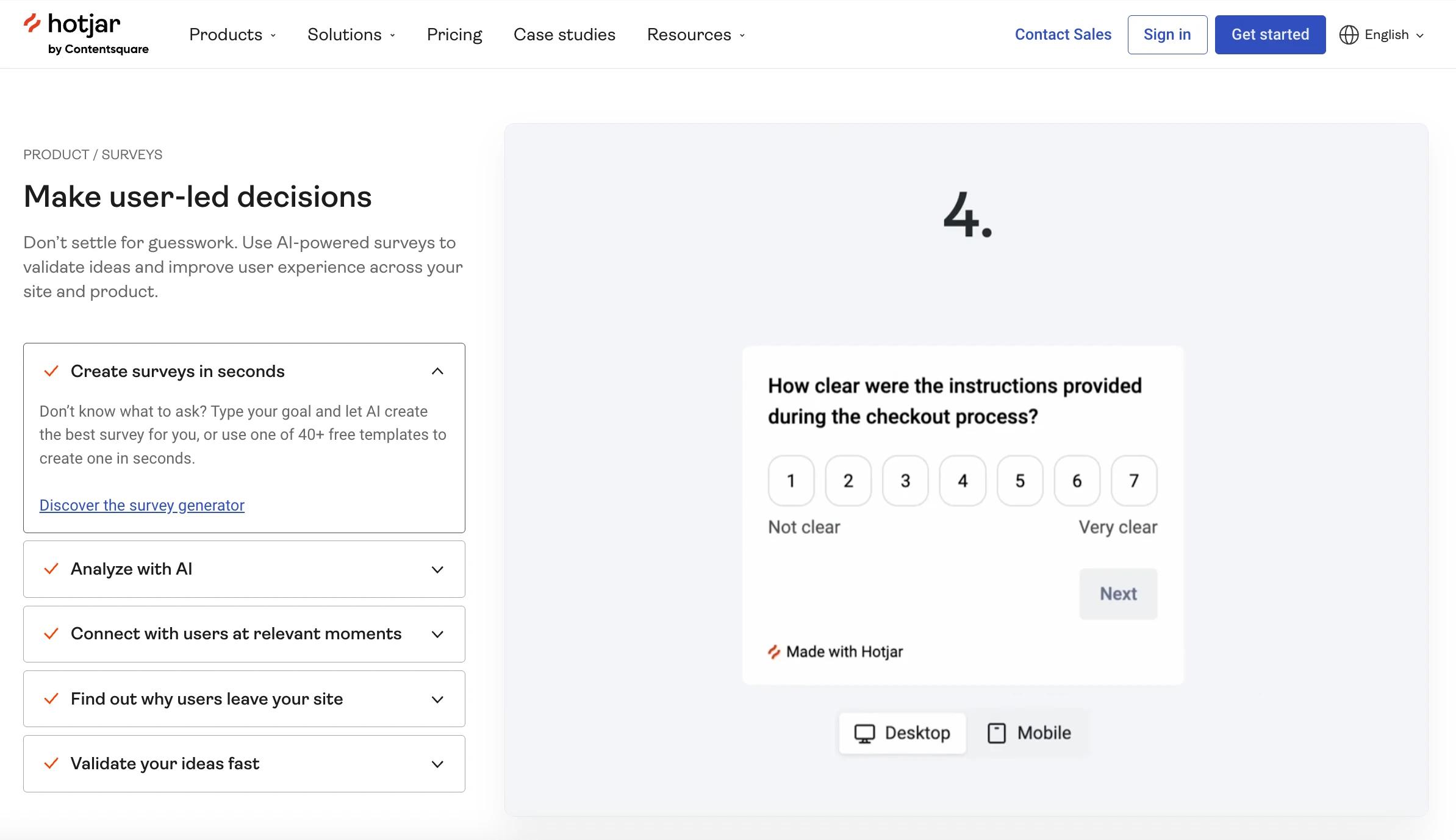
Hotjar is primarily a behavior analytics platform, but it also includes lightweight survey tools like microsurveys, NPS widgets, and on-page feedback polls. These surveys appear directly on the website and can be triggered based on user actions.
Hotjar’s strength lies in combining survey feedback with heatmaps and session recordings, giving teams context behind every response. You can target surveys based on URL, user behavior, or scroll activity.
It’s a good fit for UX research and continuous feedback collection on websites and landing pages.
What you can build with Hotjar
Microsurveys and pop-up feedback
NPS widgets
Targeted website polls
Pricing
Free plan available. Paid plans start from $64/month.
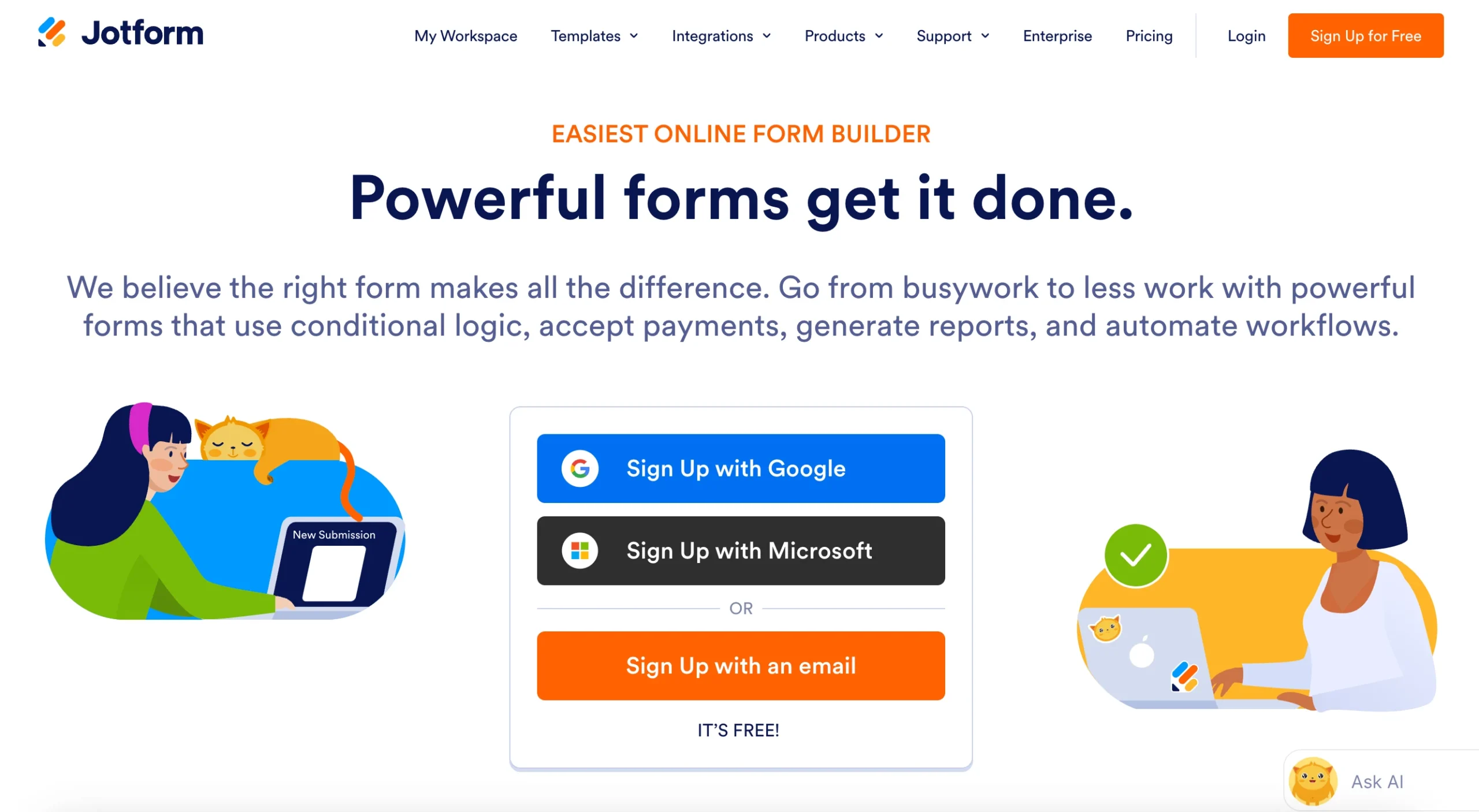
Jotform is a drag-and-drop form builder that supports everything from contact forms to advanced surveys. You can build forms with logic rules, add payment processing, and choose from thousands of templates.
Surveys can be embedded, opened in popups, or shared by link. There are prebuilt widgets for star ratings, scales, and sliders, and submissions can trigger custom autoresponders or email flows.
Jotform is suited for teams who want versatility and deep customization without needing to write code.
What you can build with Jotform
Customer feedback forms and surveys
Quizzes with branching logic
Order forms and satisfaction surveys
Pricing
Free plan available. Paid plans start from $34/month.
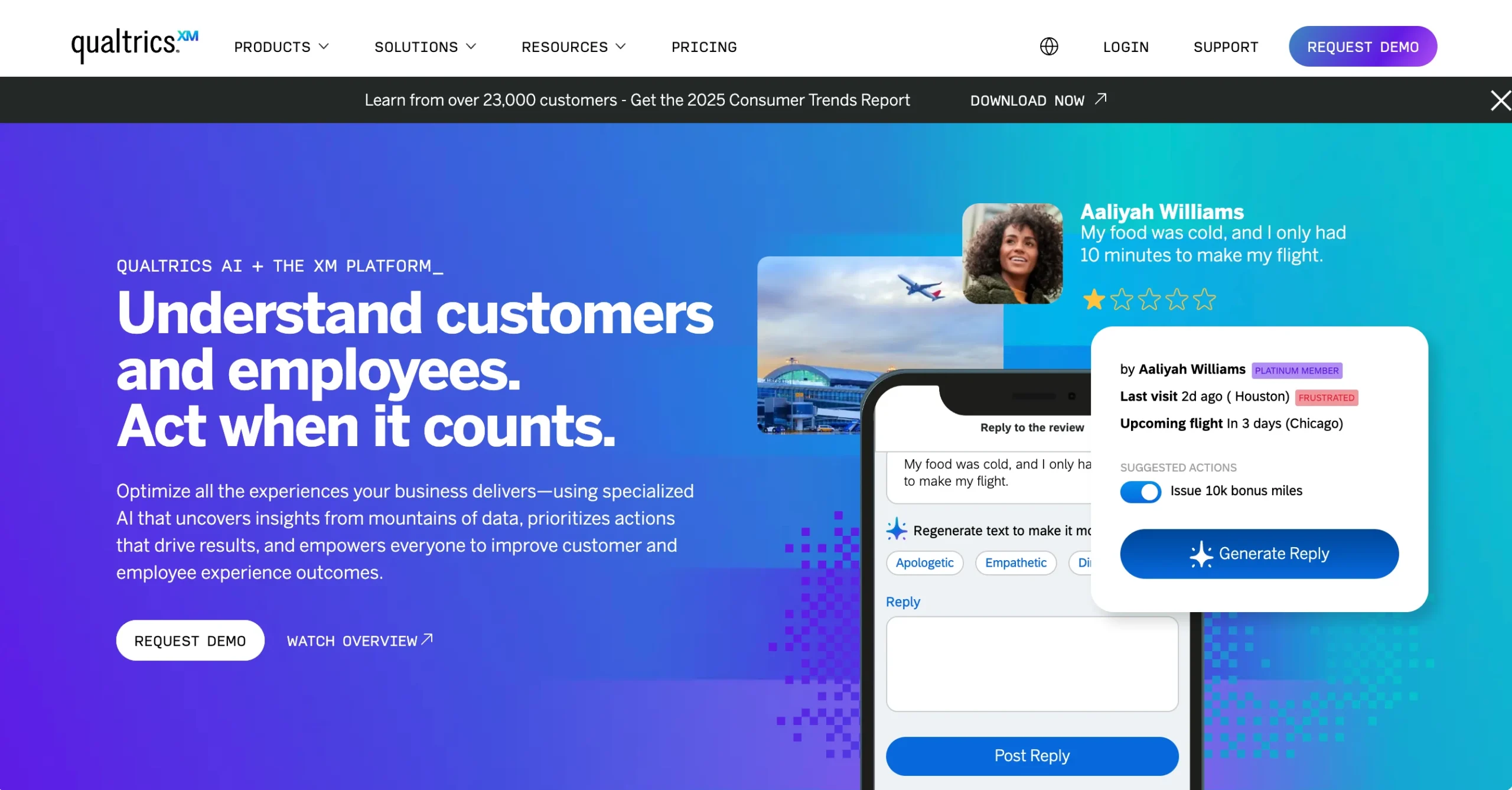
Qualtrics is an enterprise-level survey platform used for market research, customer experience, and employee engagement programs. It includes advanced logic, data routing, predictive analytics, and multi-channel distribution.
The platform supports a wide range of survey types, and surveys can be embedded on websites, sent via email, or launched in-app. Dashboards provide advanced segmentation, benchmarking, and real-time data views.
Best suited for teams with complex feedback requirements and integrations across departments.
What you can build with Qualtrics
Customer satisfaction and loyalty surveys
Employee engagement programs
Advanced research studies
Pricing
Custom pricing based on usage and organizational size.
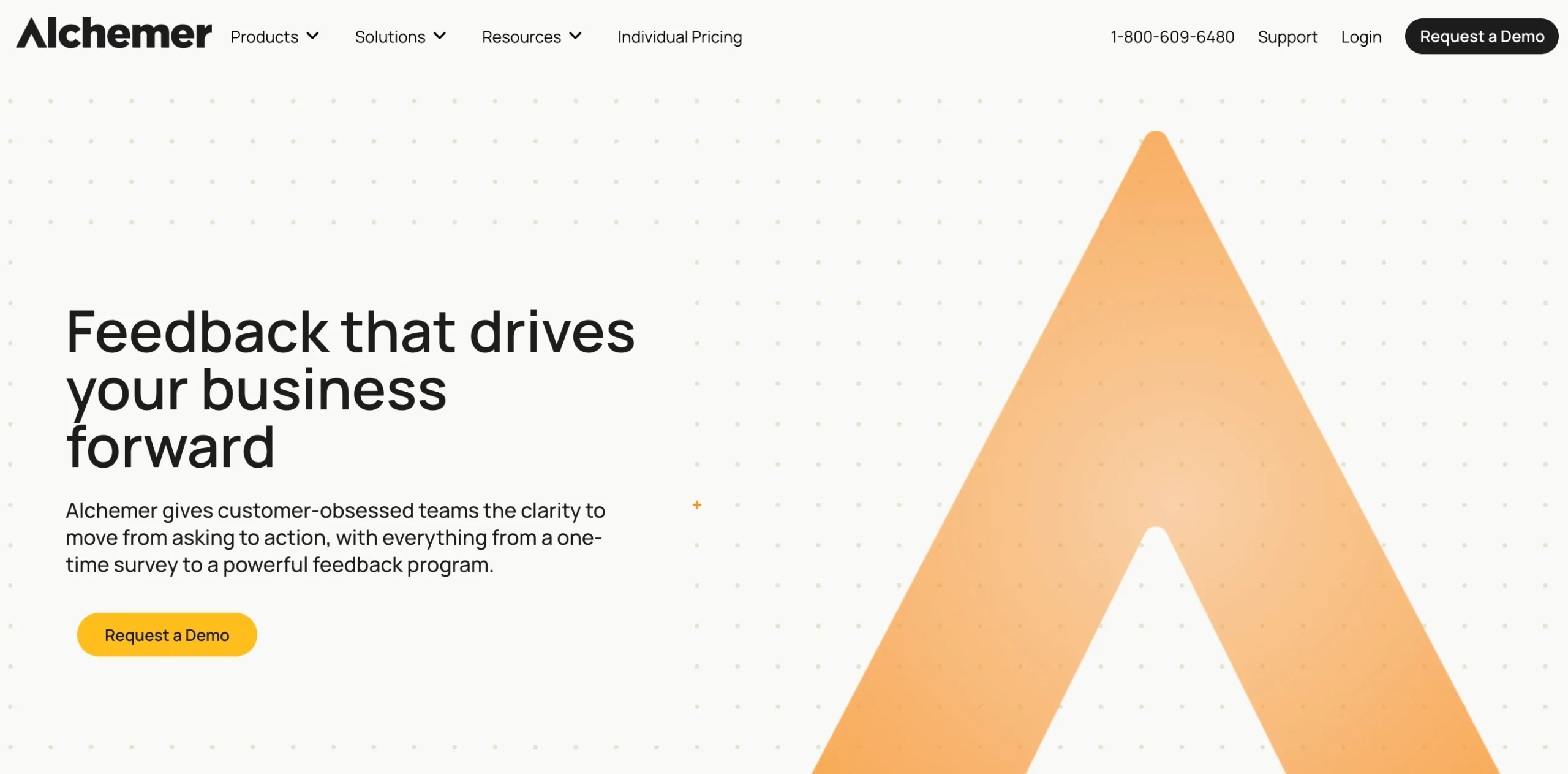
Alchemer (formerly SurveyGizmo) is a powerful survey platform for businesses that need flexibility and control. It supports advanced survey logic, piping, scoring, and workflow automation, along with strong reporting tools.
You can distribute surveys via link, email, embed, or offline mode. It’s built for teams managing multiple feedback flows with roles, approvals, and access levels.
Alchemer integrates with Salesforce, HubSpot, and hundreds of other platforms through native apps and webhooks.
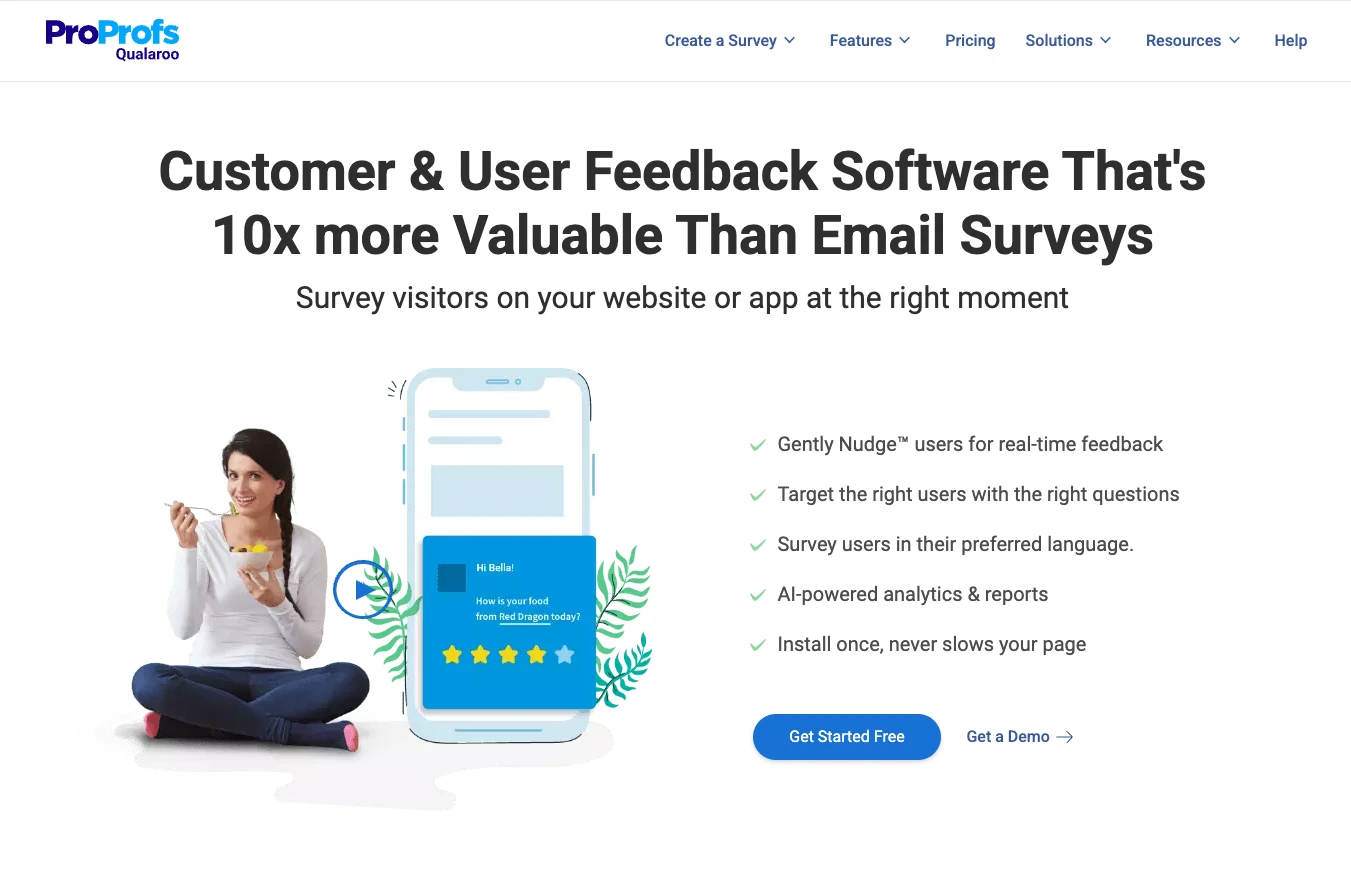
Qualaroo by ProProfs is a survey tool designed for gathering feedback directly on your website or in-product. It supports microsurveys with targeting rules and sentiment analysis powered by AI.
Surveys are shown as non-intrusive popups or bottom sheets, triggered by user behavior or page type. You can collect feedback on features, pricing pages, or checkout flows in real time.
Best suited for product managers, marketers, and UX teams looking to capture user sentiment and intent while the user is active.
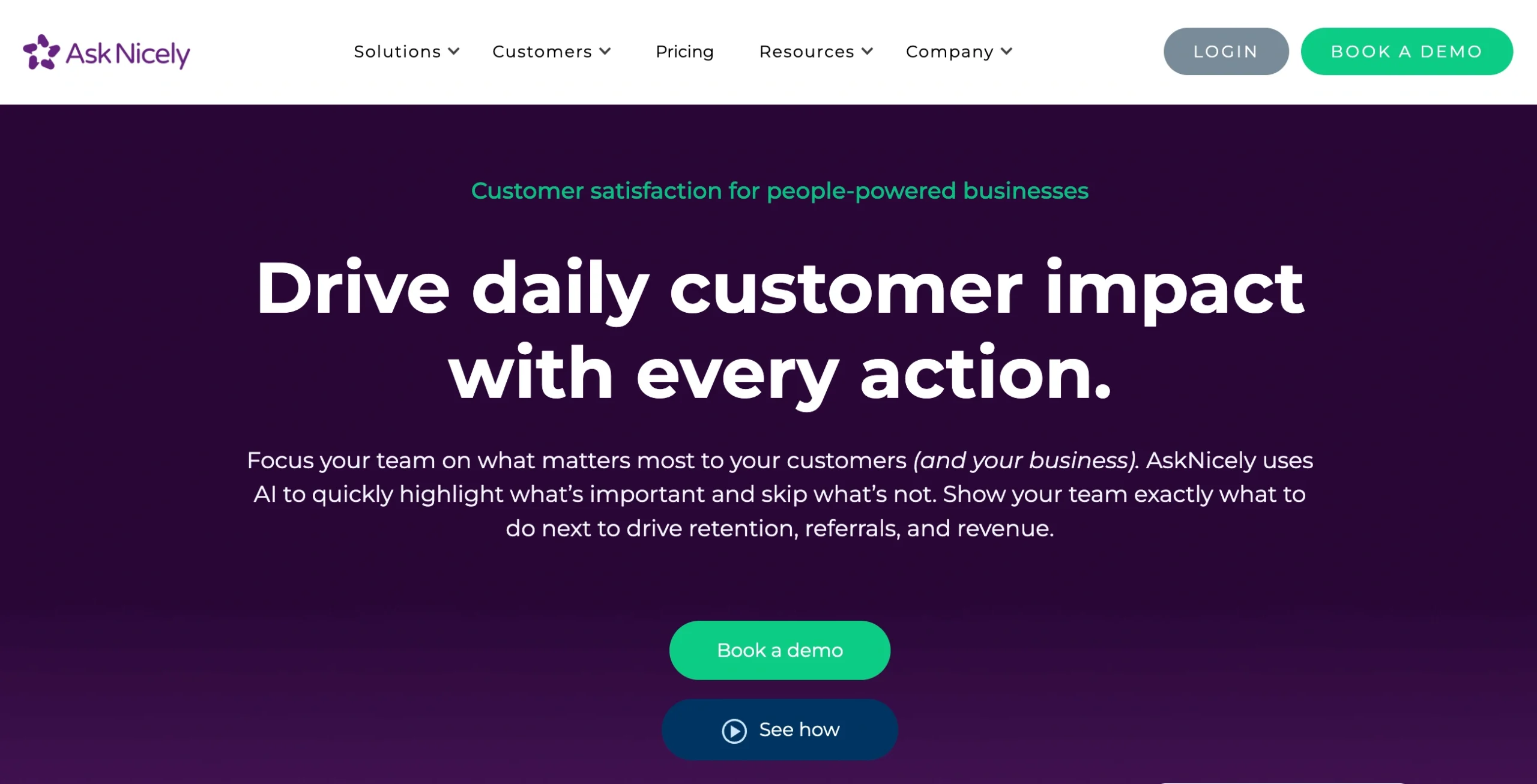
AskNicely is a feedback platform focused on Net Promoter Score (NPS) and customer experience automation. It connects survey feedback to team workflows, goals, and coaching tools.
Surveys are mobile-friendly and can be delivered by email, SMS, or embedded into apps. The platform includes dashboards, response tagging, and integrations with CRMs like Salesforce and HubSpot.
AskNicely is ideal for service-driven teams who want to improve performance using customer feedback in real time.
What you can build with AskNicely
Automated NPS programs
Customer satisfaction score tracking
Feedback-to-action coaching flows
Pricing
Custom pricing based on organization size and usage.
Wrapping up
There’s no shortage of survey tools to choose from. Whether you’re collecting customer feedback, measuring NPS or CSAT, or running user research surveys across your site… there’s a platform for every team and budget.
Some of these online survey tools are built for quick internal use. Others support advanced survey logic, targeting, and analytics for enterprise-scale feedback programs.
The right choice depends on what you’re trying to measure, who your audience is, and how much control you need over the experience.
Before you choose an online survey tool, ask yourself:
Do I need just one survey, or a full system for collecting and analyzing feedback?
Can I match the look and feel of the survey to my brand?
Do I want to show different surveys to different segments or user types?
Does it connect with my CRM or email tool so I can take action on the data?
Can I track trends, responses, and performance over time?
The verdict: Why Triggerbee is the best website survey tool
Triggerbee has forms, surveys and everything else you need to capture leads and feedback. It’s a complete feedback platform for marketers and CX teams who want to collect, segment, and act on customer insights.
With strong survey features like NPS, CSAT, star ratings, smiley scales, and comment fields, you can build surveys that match your brand and collect real feedback directly on your website.
Target surveys based on behavior, CRM data, or post-purchase actions, and track everything with built-in analytics.
Triggerbee also ties every survey submission to a real visitor profile, so you can personalize future experiences and avoid showing the same survey twice.
It’s designed to help you close the feedback loop and collect better customer insights to improve your site and increase satisfaction.
There are several excellent popup builders available, with options to suit various needs and budgets. Some of the best popup builders are Triggerbee, Wisepops, Optimonk, and Sleeknote.
Triggerbee is a great option for marketers who want both lead capture and extensive customization, while Getsitecontrol offers simple templates for quick email capture. OptinMonster and Popupsmart are ideal for basic data collection, and Justuno is well-suited for ecommerce brands who want product recommendations.
Wisepops and Optimonk are more focused on A/B testing and optimization, while Triggerbee provides a more complete toolkit for marketers looking to increase website conversions. Below is a more detailed look at some of the best popup software available today.
All of the popup builders in this list offer the basics: no-code drag and drop editors, lead capture functionality, lead sync, and everything else you need to run website popups that capture email and SMS subscribers. A handful of these tools, such as Triggerbee, Sleeknote, Optimonk and Wisepops, are more full-featured conversion suites with better targeting, personalization, and a broader feature set.
Common popup builder features
Regular popups: Center-screen overlays that capture attention
Slide-ins: Side or bottom entry popups that feel more subtle
Floating bars: Sticky top or bottom bars used for announcements or offers
Embedded forms: Inline forms placed in content or product pages
Exit-intent popups: Triggered when the visitor moves toward the browser bar
Timed or scroll-based triggers: Appear after engagement or delay
How to compare popup builders
Not all popup software offers the same depth of features or flexibility. Some are great for running a single campaign on a homepage. Others are built for managing campaigns across your entire site with granular audience targeting, multistep flows, and real-time analytics baked in.
Here’s what to look for when choosing the best popup tool for your business:
Functionality: What kinds of popup formats are supported? Can you create banners, forms, and embedded elements too?
Targeting & personalization: Can you trigger campaigns based on behavior, source, CRM data, or device type?
Analytics: Can you track views, clicks, signups, and conversions? Can you connect results to actual revenue?
Ease of use: Is the builder intuitive? Can marketers create and launch campaigns without developer help?
Pricing & limits: Are features available on lower tiers? Do plans scale with traffic or usage?
Data location (bonus): For GDPR-sensitive teams, can you choose where your data is stored?
Let’s take a look at the top popup platforms and how they compare, starting with the one that offers the most flexibility and personalization out of the box: Triggerbee.
The Best Popup Builders Ranked
Tool
Functionality
Targeting
Analytics
Ease of Use
Data Storage
Pricing
Triggerbee
Popups, forms, surveys, gamification, referrals
Advanced rules, CRM tags, behavior-based logic
Full visitor-level analytics
Visual editor with templates and brand settings
🇪🇺 EU
From €39/month
Sleeknote
Popups, slide-ins, gamification
Behavior targeting, device, source
Campaign tracking, A/B testing
Easy-to-use editor
🇪🇺 EU
From €68/month
OptinMonster
Popups, floating bars, spin to win
Triggers, geolocation, referrer targeting
Conversion analytics & A/B testing
Template-based builder
🇺🇸 US
From $49/month
Wisepops
Popups, bars, banners, surveys
UTM, geo, behavior, CRM integrations
Built-in analytics
Straightforward editor
🇺🇸 US
From €49/month
OptiMonk
Popups, embeds, gamified campaigns
Multi-step logic, cart targeting
Campaign and revenue tracking
Modern editor
🇪🇺 EU
Free plan available. Paid from $39/month
Justuno
Popups, overlays, advanced rules
Shopify + CRM targeting, segment logic
Performance dashboard
Has a learning curve
🇪🇺 EU
Free up to 2,000 visitors/month
Poptin
Popups, overlays, bars, embedded forms
Exit-intent, scroll, page targeting
Built-in stats and A/B testing
Beginner-friendly
🇺🇸 US
Free up to 1,000 visitors. Paid from $25/month
Popupsmart
Popups, floating bars, gamification
Behavior triggers, JS conditions
Basic campaign tracking
Easy setup with pre-built templates
🇺🇸 US
Free under 5k pageviews. Paid from $32/month
HelloBar
Bars, modals, sliders, full screen
Time delay, scroll, exit-intent
Basic stats and split testing
Very simple setup
🇺🇸 US
From $29/month
BDOW
Popups, bars, announcements
Page-level targeting and triggers
Conversion tracking
Simple interface
🇺🇸 US
Free under 10k views. Paid from $12/month
Getsitecontrol
Popups, surveys, bars, banners
Advanced targeting and segmentation
Visual analytics dashboard
Easy to use, no code
🇪🇺 EU
Free up to 10k views. Paid from €19/month
Klaviyo
Popups and embedded forms
Segment-based targeting, full sync
Email + signup tracking
Clean editor
🇺🇸 US
Included. Free up to 250 contacts
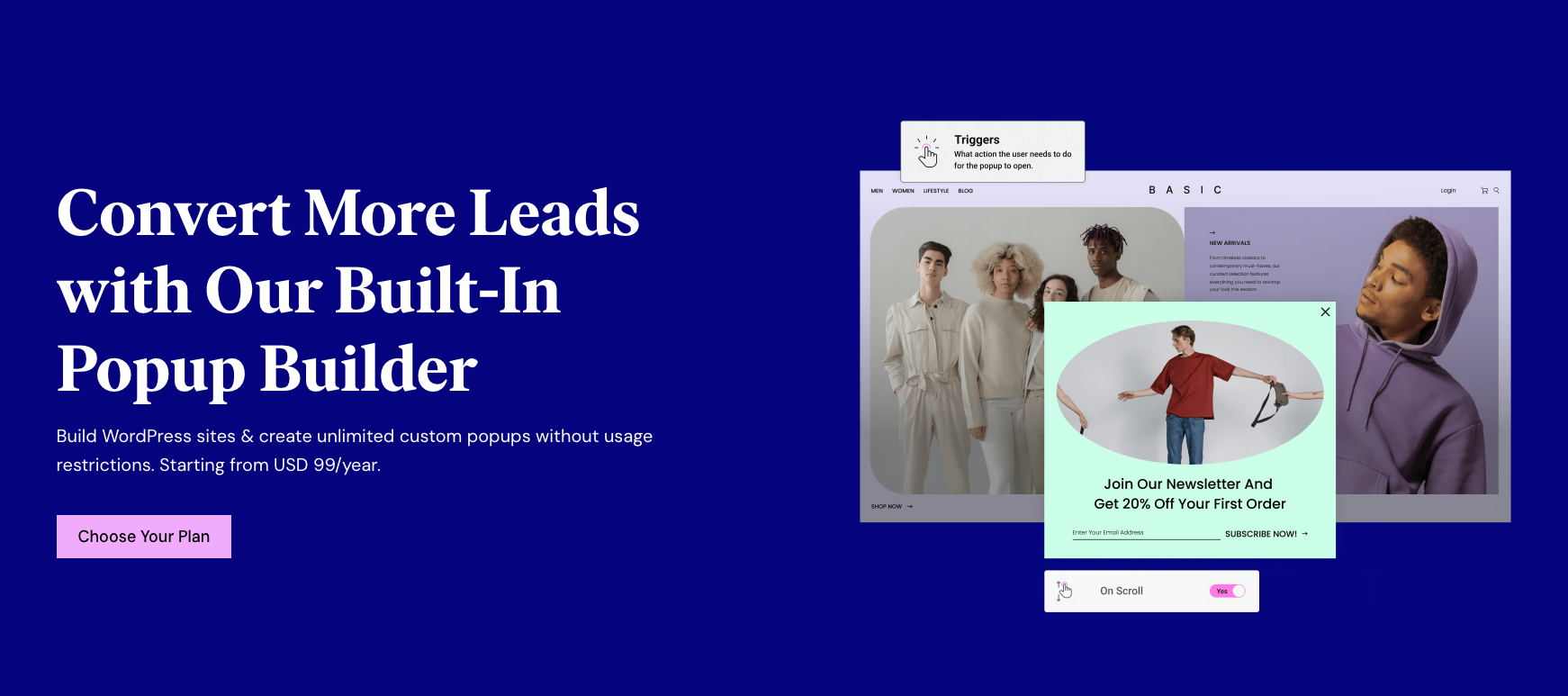
Elementor
Popup builder (WordPress only)
Scroll, click, time delay, page rules
No built-in analytics
Visual control for WP users
🇺🇸 US
Included in Pro. From $59/year
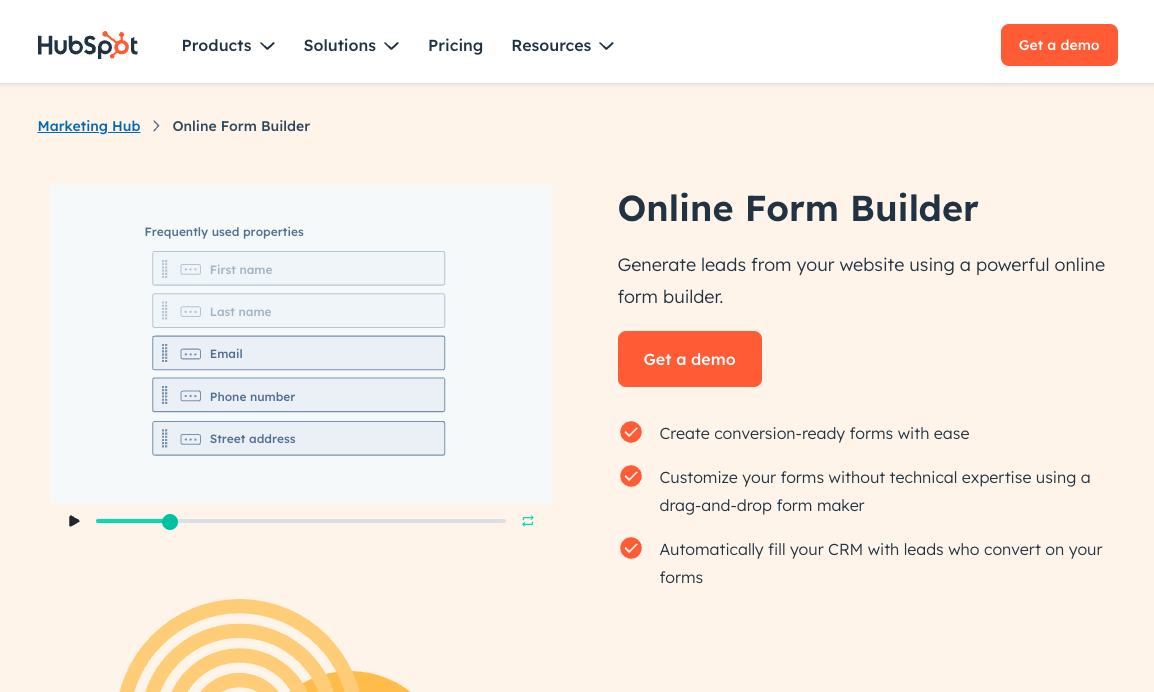
Hubspot
Forms and popups (basic targeting)
List, page, and behavior targeting
CRM-integrated analytics
Easy to launch
🇺🇸 US
Included on all plans. Branding removed from €792/month
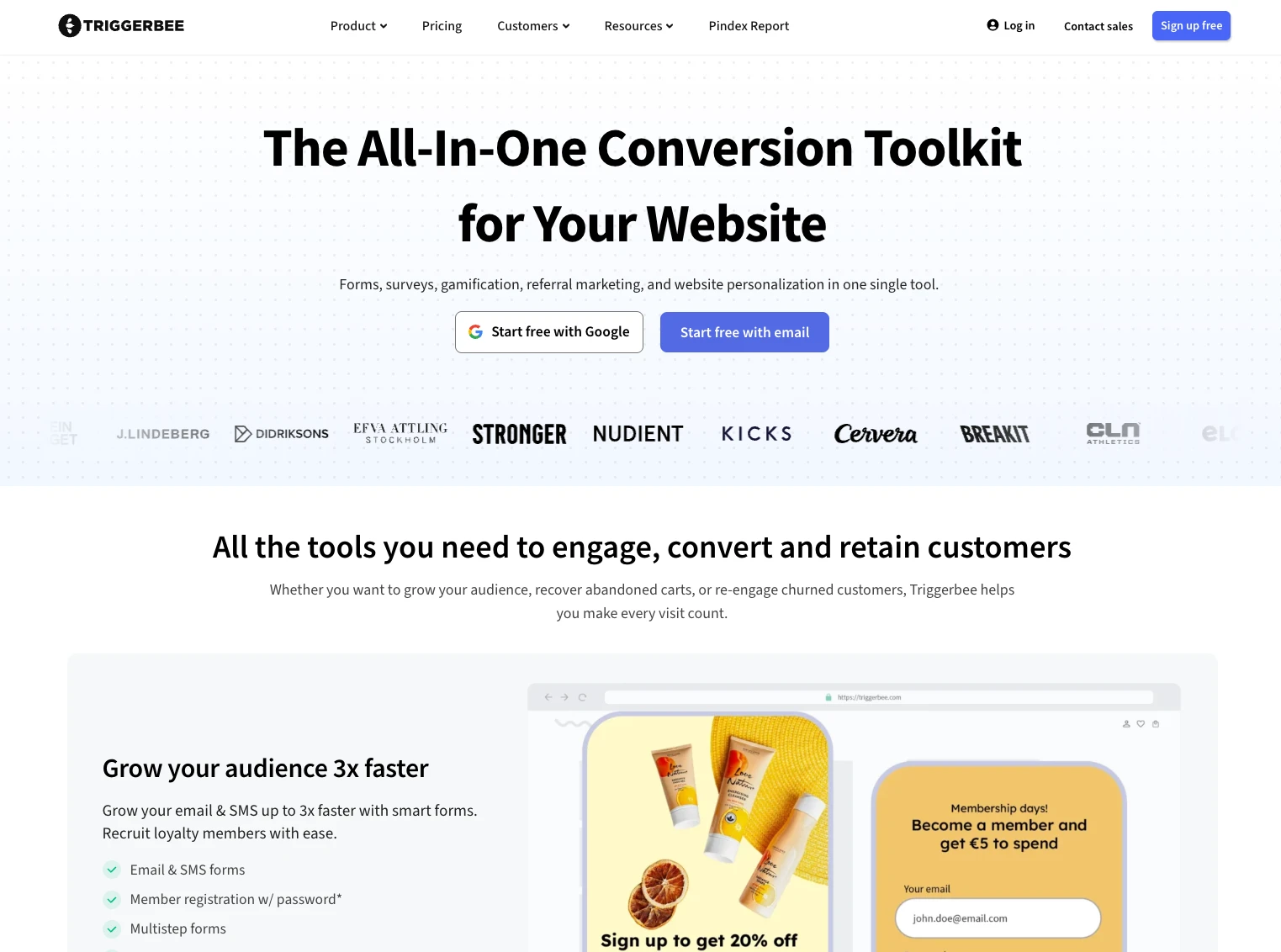
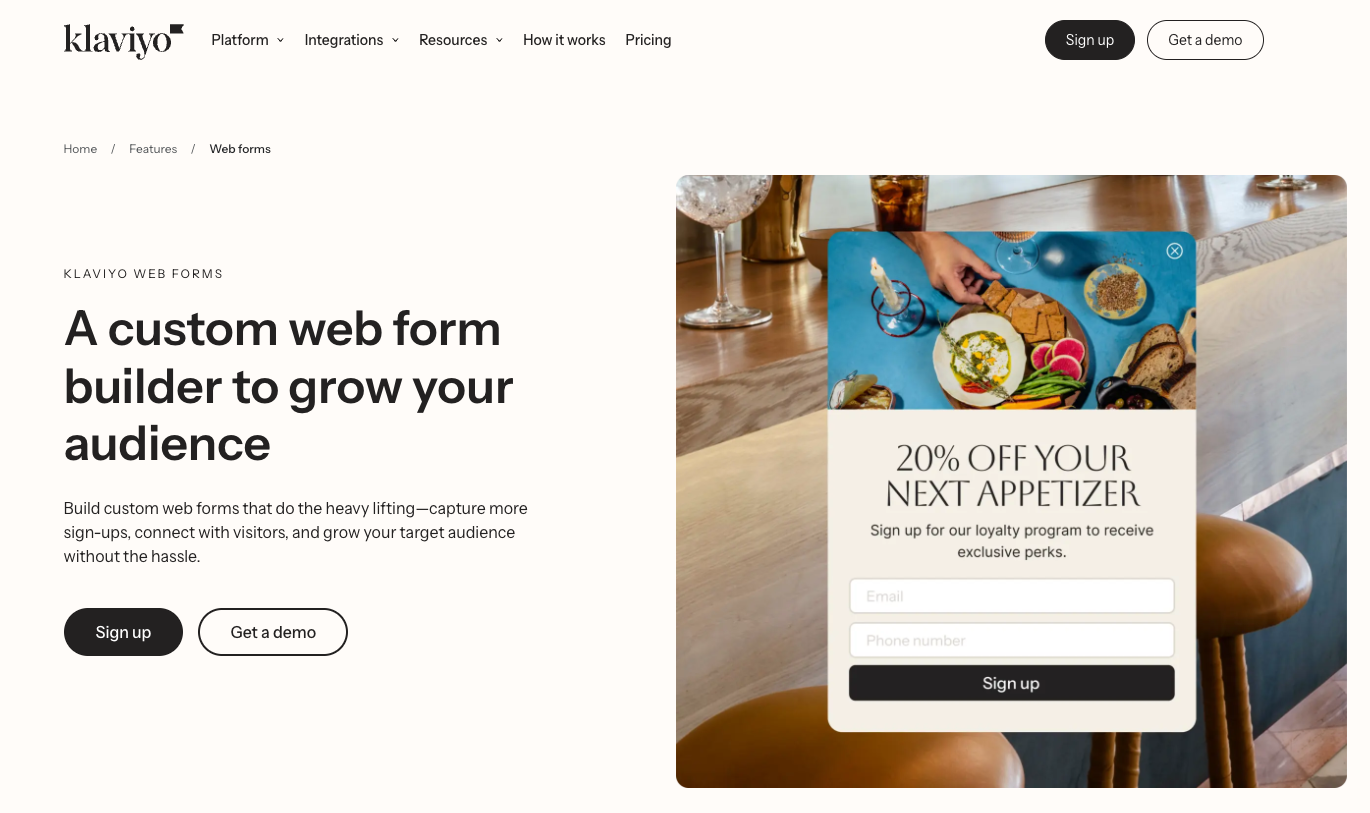
Triggerbee is one of the best popup builders for marketers who want control over popup design, smart targeting, and built-in analytics that tie everything back to real users.
It’s designed to help you turn more of your website traffic into leads without disrupting the user experience.
You can create all the usual popup types like overlays, slide-ins, and sticky bars, but also build more advanced flows like multi-step forms and funnel-based experiences.
Triggerbee gives you full design control, including brand styles for fonts, spacing, and colors, so your popups always match your website. You can even embed forms, surveys, and content into your website, or run gated content offers without relying on third-party tools.
Every popup you publish in Triggerbee is backed by targeting logic and analytics. Want to only show a popup to returning customers who haven’t purchased in 30 days? You can. Want to hide discounts from existing subscribers? Done. And every popup you launch includes a live analytics dashboard showing who saw it, who clicked, who signed up, and person-level conversion analytics.
Real results from real brands
Didriksons Welcome Offer Popup— 1,600 signups and 256,000 SEK in assisted revenue
Didriksons used a Triggerbee popup to grow their email list and reach non-buying visitors with a welcome offer. Didriksons popup offered a discount code for new subscribers, but excluded existing subscribers using Triggerbee’s email verification logic. Revenue tracking showed that the campaign generated 1,600 signups and 254,000 SEK (~€24,000) in assisted sales.
A Day’s March Welcome Offer Popup — 3.4% signup rate and 21% post-submit purchase rate
A Day’s March wanted to build their list and gather gender data for segmentation. They launched a popup offering a discount in exchange for an email and gender selection. If the user was already subscribed, the message changed automatically. This campaign achieved a 3.4% signup rate, and 21% of new signups went on to purchase.
Cellbes Reactivation Popup — 11% increase in repurchase rate from a reactivation popup
To bring back inactive customers, Cellbes created a reactivation popup, targeting users who hadn’t made a purchase in over 60 days. It prompted them to log in and claim a special offer. The result was a 16% clickthrough rate, a 20% login rate, and an 11% increase in repurchase activity from that segment.
Triggerbee is an all-in-one conversion toolkit
Triggerbee is more than a simple popup builder. You can replace 4 to 5 different tools by combining forms, surveys, popups, gamification, and referral marketing into a single platform.
Instead of juggling multiple subscriptions and syncing data across tools, you get everything you need to convert, engage, and retain visitors all in one software.
Forms: Email signups, lead generation, SMS capture, and multistep flows
Promotions: Coupon bars, banners, time-limited offers, and exit-intent discounts
Surveys: NPS, CSAT, smiley ratings, thumbs up/down, and post-purchase feedback
Gamification: Spin to win, quizzes, scratch cards, mystery offers, and memory games
Referral marketing: Invite flows with built-in tracking and reward logic
If you tried to build this stack using separate tools, you’d easily spend over $500/month. Just Hotjar surveys alone cost €64/month. ReferralCandy starts at $59/month plus 3.5% commission. And a gamified popup builder adds another €80/month or more.
With Triggerbee, everything is built in. Including analytics, targeting, campaign editor, and brand settings. And the pricing starts at just €39/month.
Targeting and segmentation built for marketers
Many of the best popup builders offer a wide variety of display triggers. Triggerbee offers the most extensive targeting options, with more than 40 conditions, including page views, CRM data, referral source, traffic channel, location, session depth, device, and weather. You can create segments using AND/OR logic, and personalize content for each audience without writing any code.
If you’re working with returning users, logged-in customers, or multiple traffic sources, this level of targeting helps you show the right popup to the right person every single time.
Built-in analytics
Every popup and campaign comes with built-in analytics that show exactly how it performed. You can track how many people saw your popup, clicked it, submitted the form, and eventually purchased. Every action is trackable on a person-level which means all of their past behavior and visits are connected to individual user profiles.
This gives you a full picture of what’s working across your site and lets you compare popup campaigns side by side. You’ll know what your signup rate is, how many of those signups turn into buyers, and which offers are worth repeating.
Identify and personalize for returning visitors
Triggerbee is also the only popup builder that tracks visitors on a person-level. Once someone signs up or clicks a campaign link, their identity is remembered and updated with each visit. This means you can personalize future campaigns, exclude them from certain messages, or display a new offer based on their past activity.
This feature is also what powers Triggerbee’s email verification logic, which checks if someone is already in your email list before showing them a discount or incentive which is perfect for loyalty management and avoiding abuse.
Pricing
Triggerbee starts at €39/month for up to 50,000 page views. This includes all features: popups, forms, targeting, analytics, surveys, and personalization. Higher tiers unlock more volume and priority support for larger teams.
Best for
Marketing teams that want to unify popup creation, targeting, and results in one platform. Especially useful for companies with CRM data, repeat traffic, or personalized signup flows.
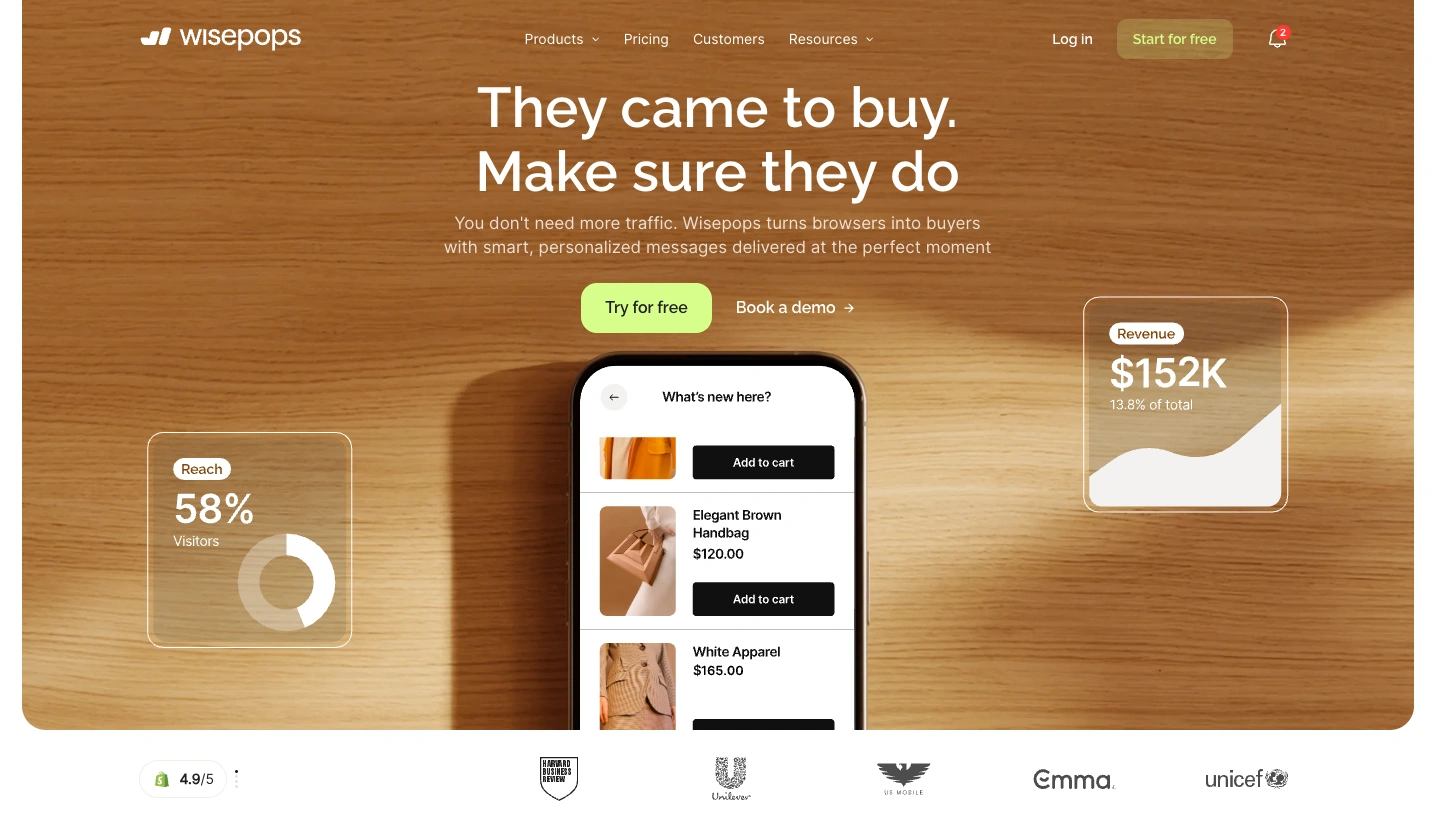
Wisepops is a popular popup builder and onsite messaging platform for marketers who want to launch website campaigns without relying on developers. It includes popups, slide-ins, notification feeds, and on-page embeds.
You can build newsletter signup forms, product promotions, surveys, and lead magnets. Campaigns are styled with a visual editor that offers layout flexibility, animations, and branded design settings. Targeting options include behavior, traffic source, country, device, and UTM filters. There’s also support for scheduling, scroll triggers, and A/B testing.
Wisepops also includes a notification feed feature, which lets you add an on-site message center to display promotions, announcements, or updates to returning visitors. Gamified campaigns like spin to win are available on paid plans.
What you can build with Wisepops
Signup popups and on-site messages
Slide-ins, bars, and embedded banners
On-page surveys and feedback forms
Gamified spin to win popups (from €49/month)
Wisepops is ideal for brands that want to control more of the onsite experience without coding. It’s easy to use, flexible, and supports multiple campaign types in one platform. For teams managing high-traffic sites, it provides a good balance between ease of use and depth.
Pricing
Wisepops pricing starts from $49/month based on visitor volume. Gamification and notification feed features are available on all paid plans. A free trial is available.
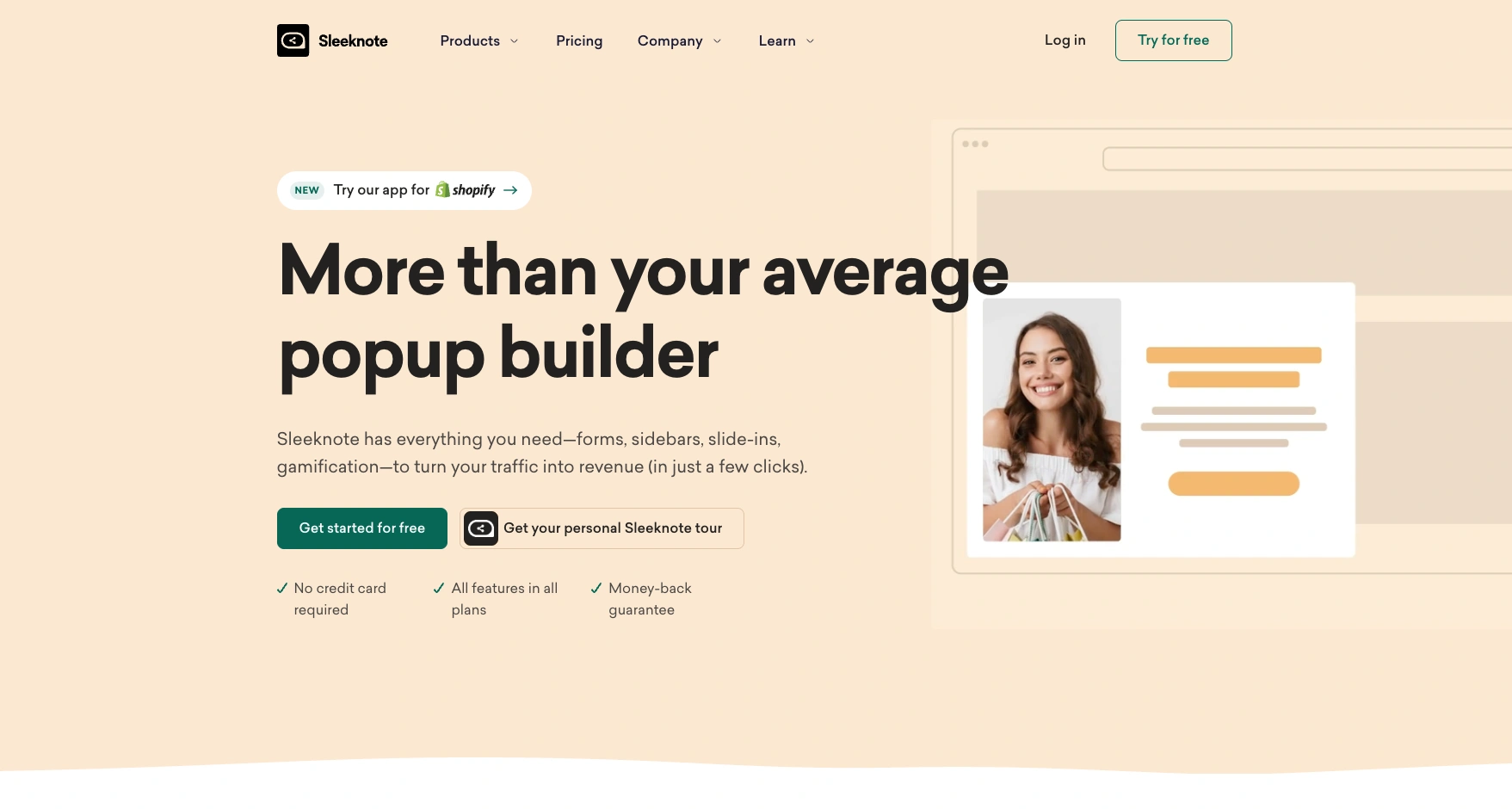
Sleeknote is a popup builder built for businesses that want to grow their email list, guide visitors, or promote time-sensitive offers. It has a simple drag-and-drop builder, a good range of popup templates, and several campaign formats to choose from.
You can create slide-ins, overlays, sidebars, and even inline embeds to collect emails, promote products, or guide users toward a conversion. Sleeknote also includes A/B testing, analytics, and integrations with major ESPs like Klaviyo and Mailchimp.
There are some personalization and behavior-based targeting features as well. You can target campaigns based on device, traffic source, time on page, or scroll depth. More advanced audience options like customer status or campaign source tracking will require workarounds or ESP syncing.
What you can build with Sleeknote
Newsletter signup forms and popups
Campaigns with dropdowns and radio buttons for segmentation
Exit-intent offers for cart recovery
Gamified popups like spin to win, scratch cards, and daily offers (starting from €68/month)
Sleeknote is easy to use and makes sense for ecommerce stores that want to move quickly without needing a developer. The templates are well-designed, and campaigns can go live fast. However, custom design flexibility is somewhat limited, and pricing can scale quickly depending on visitor count.
Pricing
Sleeknote pricing starts from €68/month if you want access to their gamification features. Otherwise their pricing starts at €49. All plans are based on pageviews and scale with traffic. A free trial is available.
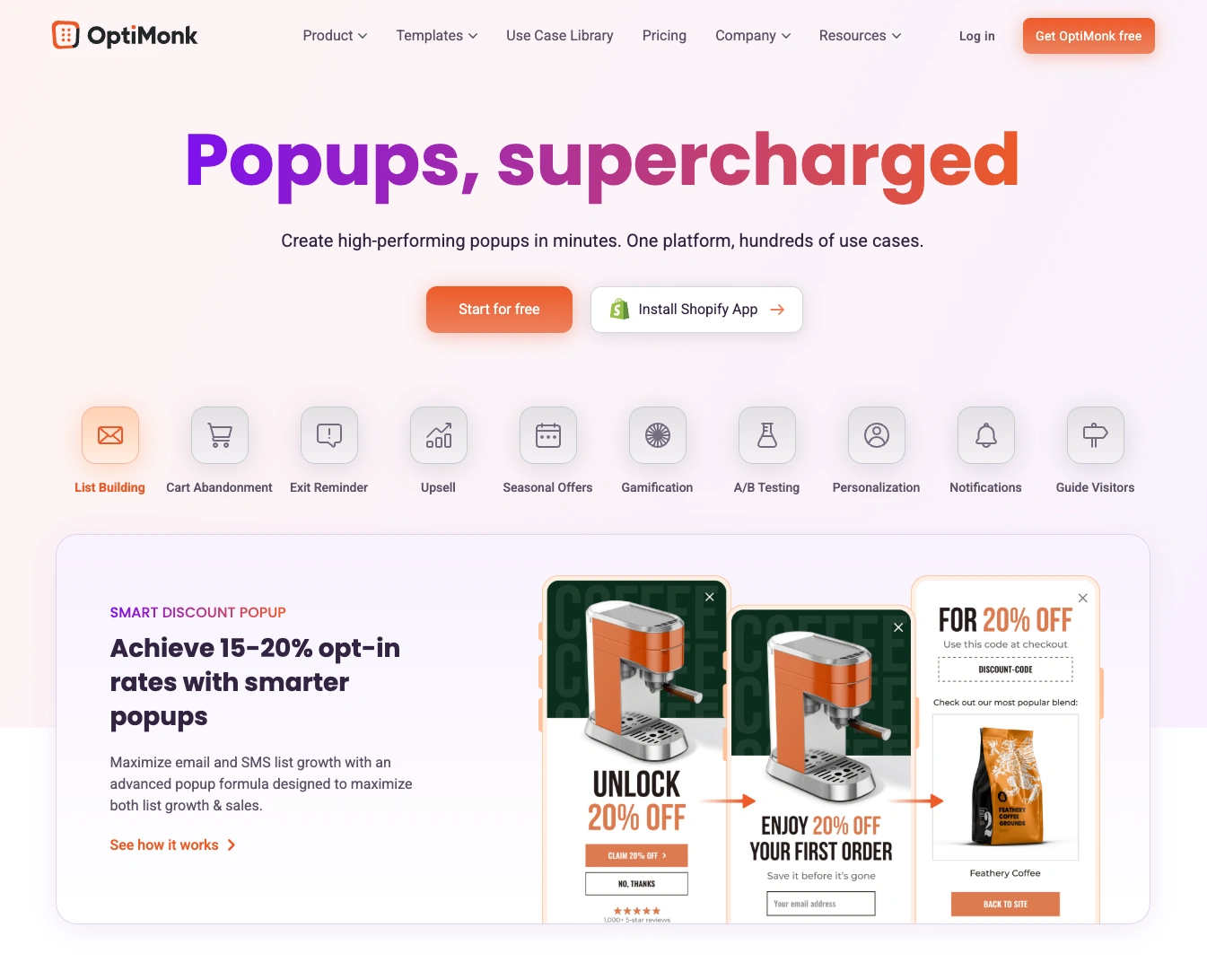
OptiMonk is a popup and personalization tool for businesses that want to collect leads, recover abandoned carts, and display dynamic messages to specific audiences. It includes a visual editor, a campaign builder, and multiple display types for forms and offers.
You can build popups, slide-ins, side messages, sticky bars, and embedded forms. Templates are available for newsletter signups, product recommendations, cart reminders, and more. OptiMonk also supports A/B testing, basic analytics, and integrations with tools like HubSpot, Klaviyo, and Shopify.
Targeting options include scroll depth, exit intent, time on site, and referral source. You can also create audience segments using past behavior and some CRM data. More advanced personalization, like dynamic content or multi-page visitor history, is available through their Smart Tags and embedded product recommendations.
What you can build with OptiMonk
Email signup popups and banners
Cart abandonment campaigns with exit-intent logic
Product recommenders and sticky messages
Gamified popups like spin to win, scratch cards, and mystery offers (free plan available)
OptiMonk works well for teams that want effective onsite messages without a big learning curve. The gamified popups are easy to set up, though styling options are limited. OptiMonk offers a generous free plan, but some advanced features like AI-based A/B-testing is only available on higher tier plans.
Pricing
OptiMonk offers a free plan with access to core popup features for websites under 10,000 page views per month. Paid plans start from $39/month and scale based on pageviews.
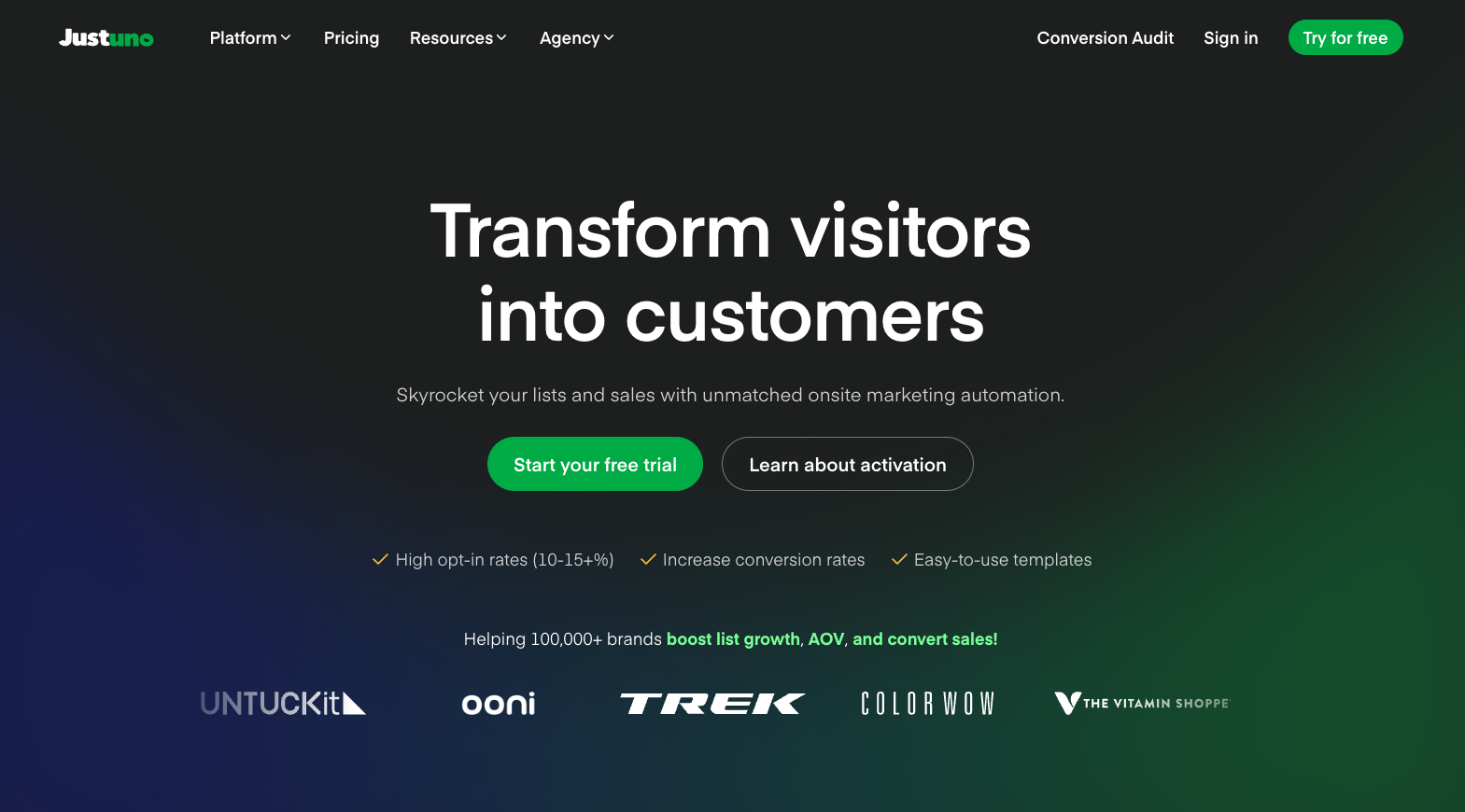
Justuno is a popup builder and conversion platform aimed at ecommerce brands that want more control over targeting and personalization. It offers a flexible campaign builder, advanced rule sets, and deep integrations with platforms like Shopify, Klaviyo, and Attentive.
You can create popups, banners, embedded forms, and promotional overlays. The platform includes pre-built templates for list growth, product recommendations, and cart recovery. Justuno also features audience segmentation, website overlays, and real-time visitor profiling to personalize messages based on behavior or data syncs.
Targeting includes exit intent, cart value, pages visited, traffic source, and more. For logged-in users or known subscribers, you can dynamically update content using profile attributes or product interest tags. Justuno also supports gamified campaigns like spin to win and scratch cards.
What you can build with Justuno
Email signup campaigns and SMS capture forms
Upsell and cross-sell overlays for product pages
Abandonment recovery popups and reminders
Gamified campaigns including spin to win, scratch and reveal, slot machines, and mystery offers (available on free plan)
Justuno is a strong option for ecommerce brands that want to personalize their popups and product offers based on user behavior. It includes more advanced targeting than many tools, though the learning curve is steeper. Design customization is flexible, but it may take more time to set up campaigns compared to simpler tools.
Pricing
Justuno offers a free plan for up to 2,000 monthly visitors. Paid plans start from $29/month and scale with features and usage. Gamification and advanced targeting are included from the start.
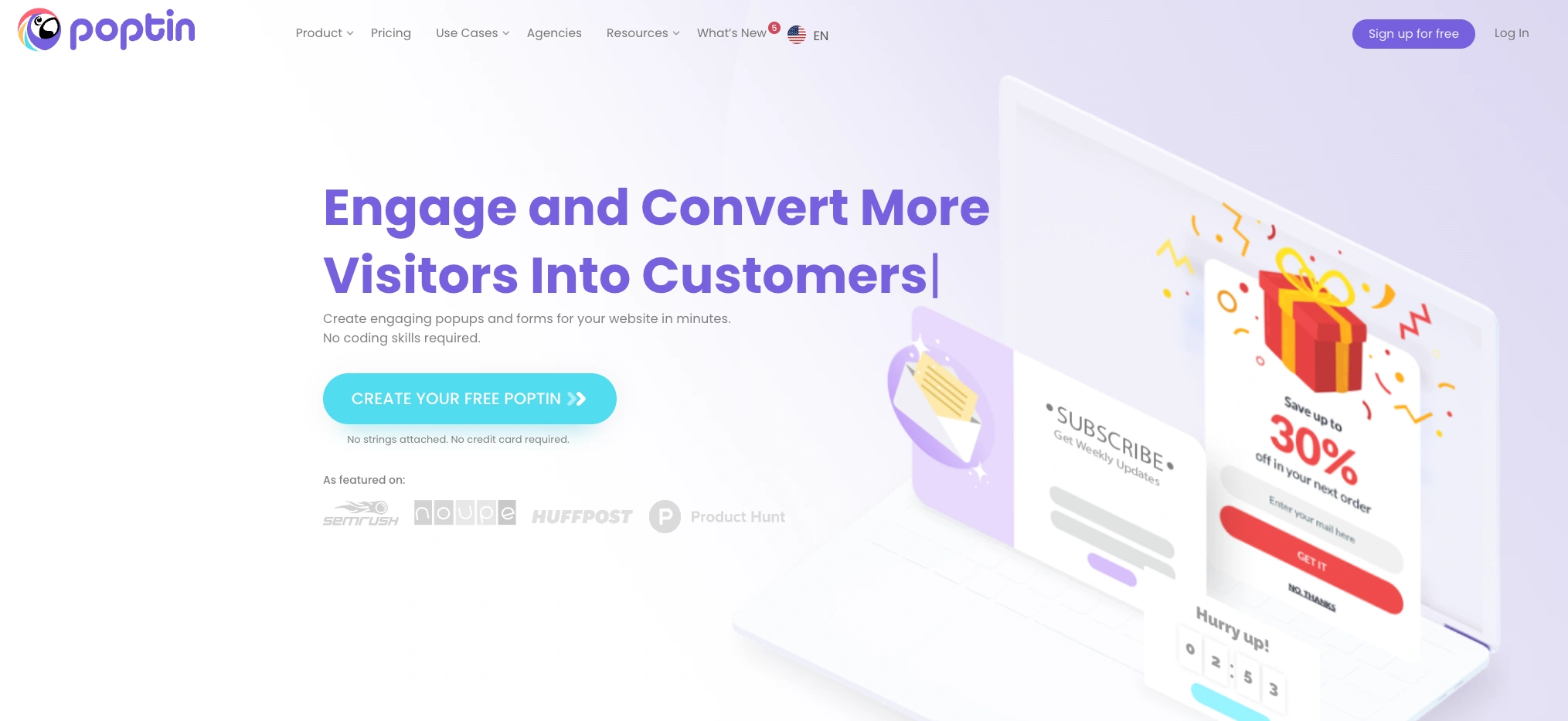
Poptin is a popup builder designed for small businesses, bloggers, and ecommerce stores looking for simple ways to collect leads and reduce cart abandonment. It includes a drag-and-drop editor, pre-designed templates, and basic analytics for tracking performance.
You can build lightbox popups, full-screen overlays, slide-ins, bars, and embedded forms. Poptin supports email and SMS capture, as well as targeting by user behavior, traffic source, device, or scroll activity. Gamification features are available on all plans, though customization options are limited to predefined layouts.
Personalization features are basic. You can show or hide popups based on behavior or referral source, but more advanced targeting requires additional tools. Poptin integrates with many popular platforms like Mailchimp, Klaviyo, Zapier, and Shopify.
What you can build with Poptin
Email and SMS signup popups
Exit-intent overlays and welcome flows
Gamified campaigns like spin to win, scratch cards, and mystery offers (included in free plan)
Basic forms for surveys or product interest
Poptin is a good fit for businesses that want to launch popups quickly without a steep learning curve. The editor is simple, and the templates cover most use cases. Brands looking for full design control or advanced personalization will likely need a more robust solution.
Pricing
Poptin offers a free plan for up to 1,000 monthly visitors. Paid plans start from $25/month and include more visitors, templates, and integrations.
Popupsmart is a lightweight popup builder focused on helping businesses collect leads, grow email lists, and improve conversions. It’s designed to be fast, easy to install, and compatible with almost any website platform, including Shopify, WordPress, and Webflow.
You can create overlays, slide-ins, top bars, and embedded forms. The popup builder uses pre-built blocks to speed up the design process, and you can control when and where each popup appears using a range of targeting options like scroll percentage, time on page, referral source, or geolocation.
Popupsmart also includes some ecommerce-focused templates, such as coupon code offers, cart abandonment reminders, and product recommendation prompts. The platform integrates with major ESPs and CRMs, and includes conversion tracking and A/B testing on higher plans.
What you can build with Popupsmart
Email and SMS capture forms
Popups triggered by scroll, exit intent, or inactivity
Cart recovery and coupon offer campaigns
Announcement bars and time-sensitive promotions
Popupsmart is best for small teams or solo marketers who want to launch lead capture campaigns with minimal setup. The interface is clean and simple, and the pricing is accessible. However, it has fewer personalization features and gamified elements compared to more advanced platforms.
Pricing
Popupsmart offers a free plan for up to 5,000 pageviews per month. Paid plans start from $32/month and scale based on usage and features.
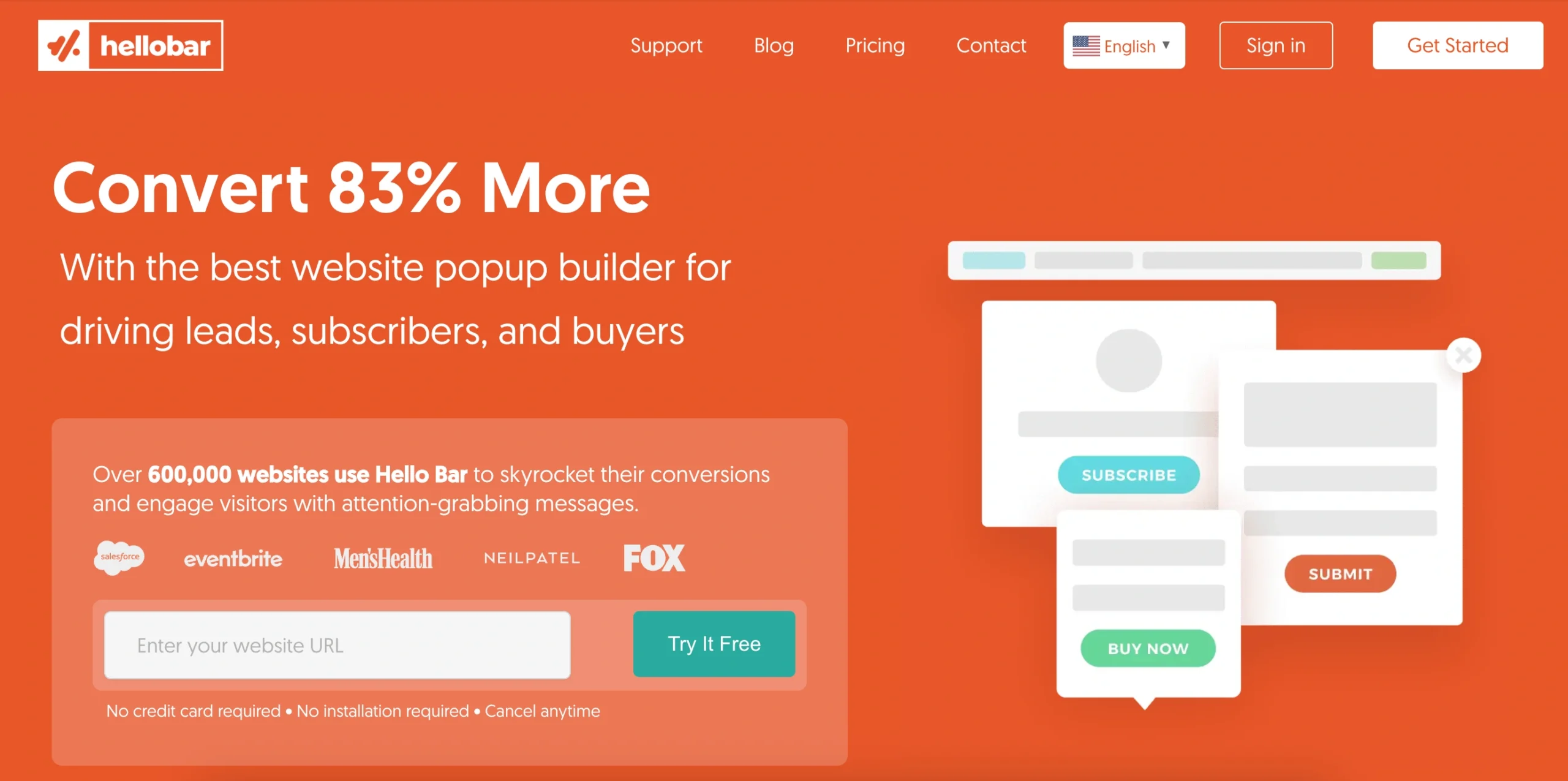
Hello Bar is a simple popup and announcement bar tool designed for collecting emails, making announcements, and promoting offers. It’s a good starting point for small websites or blogs that want a basic way to grow their list without a steep learning curve.
You can build top bars, popups, sliders, and modal forms. Campaigns can be customized with your brand colors, headline text, and call-to-action buttons. Targeting options are basic, including time delay, scroll percentage, and exit intent. Hello Bar integrates with popular email platforms like Mailchimp, AWeber, and Klaviyo.
The interface is beginner-friendly and setup is quick. However, Hello Bar doesn’t offer much in terms of segmentation, personalization, or campaign variety. Design options are limited, and there’s no support for quizzes or gamified formats.
What you can build with Hello Bar
Email signup bars and popups
Announcement banners for sales or updates
Exit-intent offers and basic lead magnets
Hello Bar works well for small sites that want to start collecting emails or promote basic offers. It’s easy to use but lacks the customization and targeting features of more advanced platforms.
Pricing
Hello Bar offers a limited free plan. Paid plans start from $29/month, with features scaling by pageviews and design control.
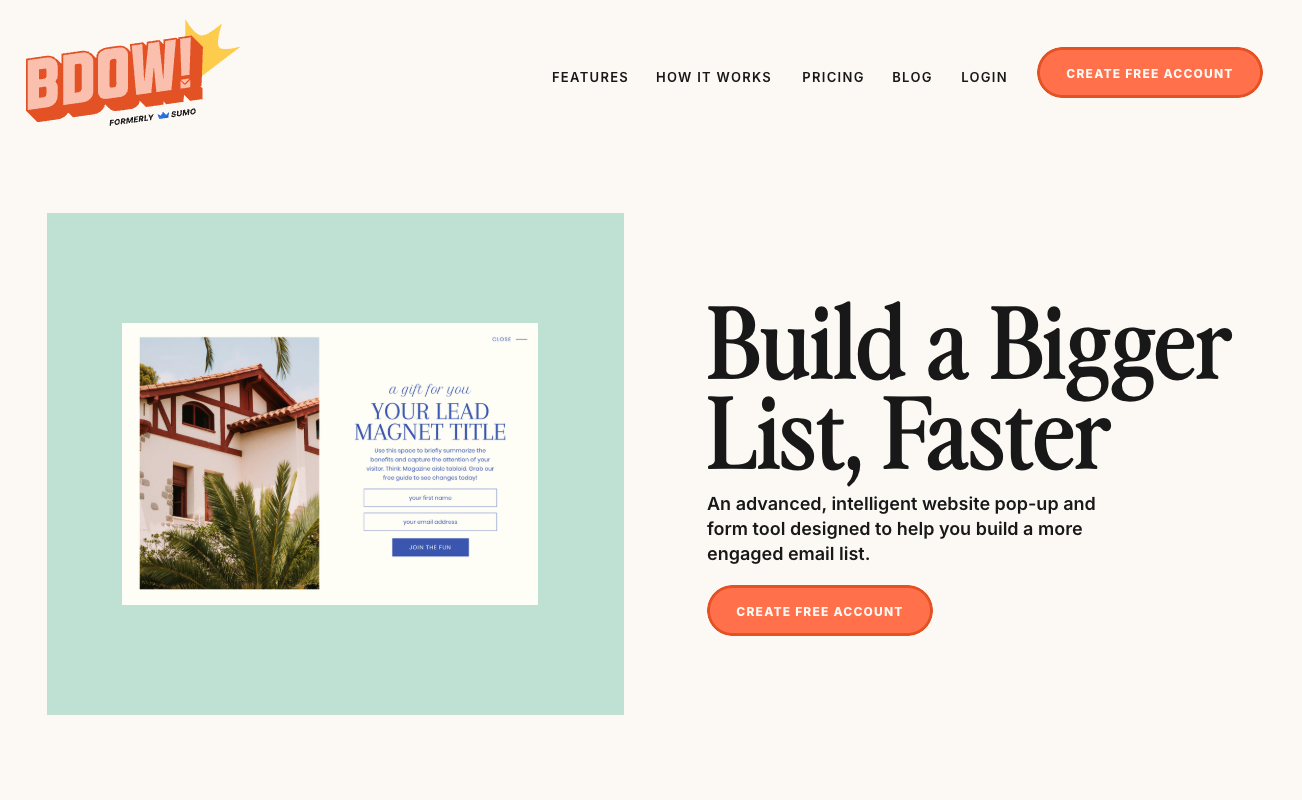
BDOW is a lightweight popup tool built for creators, bloggers, and small business owners who want to grow their newsletter or promote offers on their website. It focuses on simplicity and fast setup, with a handful of pre-made popup types and minimal configuration.
You can create popups, banners, and embeds using their visual editor. The designs are clean and optimized for mobile, with basic styling options for colors, fonts, and spacing. Targeting is kept simple, with triggers like scroll percentage, time delay, and device type. BDOW includes built-in analytics and integrates with popular newsletter tools like Mailchimp and ConvertKit.
The platform is best suited for one-site usage and smaller campaigns. There are no advanced audience filters, CRM integrations, or dynamic personalization features. BDOW is more about ease of use and fast publishing than deep segmentation.
What you can build with BDOW
Email signup popups and banners
Exit-intent offers and welcome messages
Lead capture forms for content or event promotions
BDOW is a good entry-level popup solution for content-first websites or indie businesses looking to boost newsletter growth. The free plan is generous, and paid plans are affordable, but the feature set is limited to the basics.
Pricing
BDOW offers a free plan for up to 10,000 monthly views. Paid plans start from $12/month (billed annually).
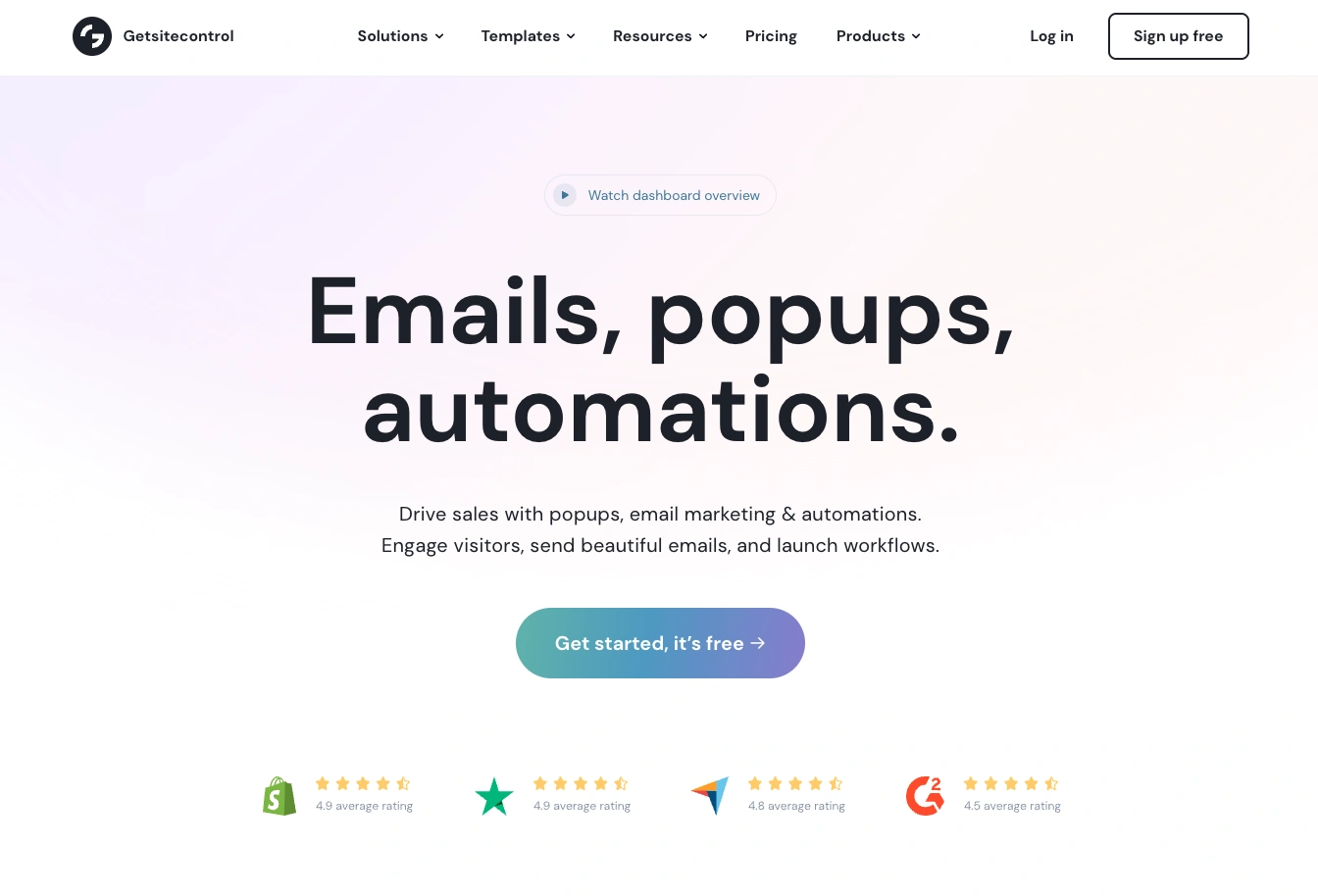
Getsitecontrol is a popup and form builder with a modern editor and a wide selection of campaign types. It’s aimed at growing businesses that want to collect leads, run surveys, promote offers, or guide users to specific actions on the site.
You can create overlays, slide-ins, floating bars, and full-page forms. The design options are flexible, with the ability to adjust layout, spacing, and animations. Targeting includes page-level rules, device targeting, time on page, UTM filtering, and audience segments.
Getsitecontrol also supports multi-step forms, conditional logic, and triggers like exit intent and scroll depth. Integrations include major ESPs and CRMs, and there’s built-in analytics to track performance for each campaign.
What you can build with Getsitecontrol
Email and SMS signup campaigns
Feedback forms and surveys
Announcement bars and product promotions
Lead magnets and gated content flows
Getsitecontrol is a flexible and well-designed popup tool that gives you more design control than many competitors. It works well for growing ecommerce stores, agencies, or businesses that want to build more tailored on-site experiences.
Pricing
Getsitecontrol offers a free plan for up to 10,000 views per month. Paid plans start from €19/month and scale by traffic and feature set.
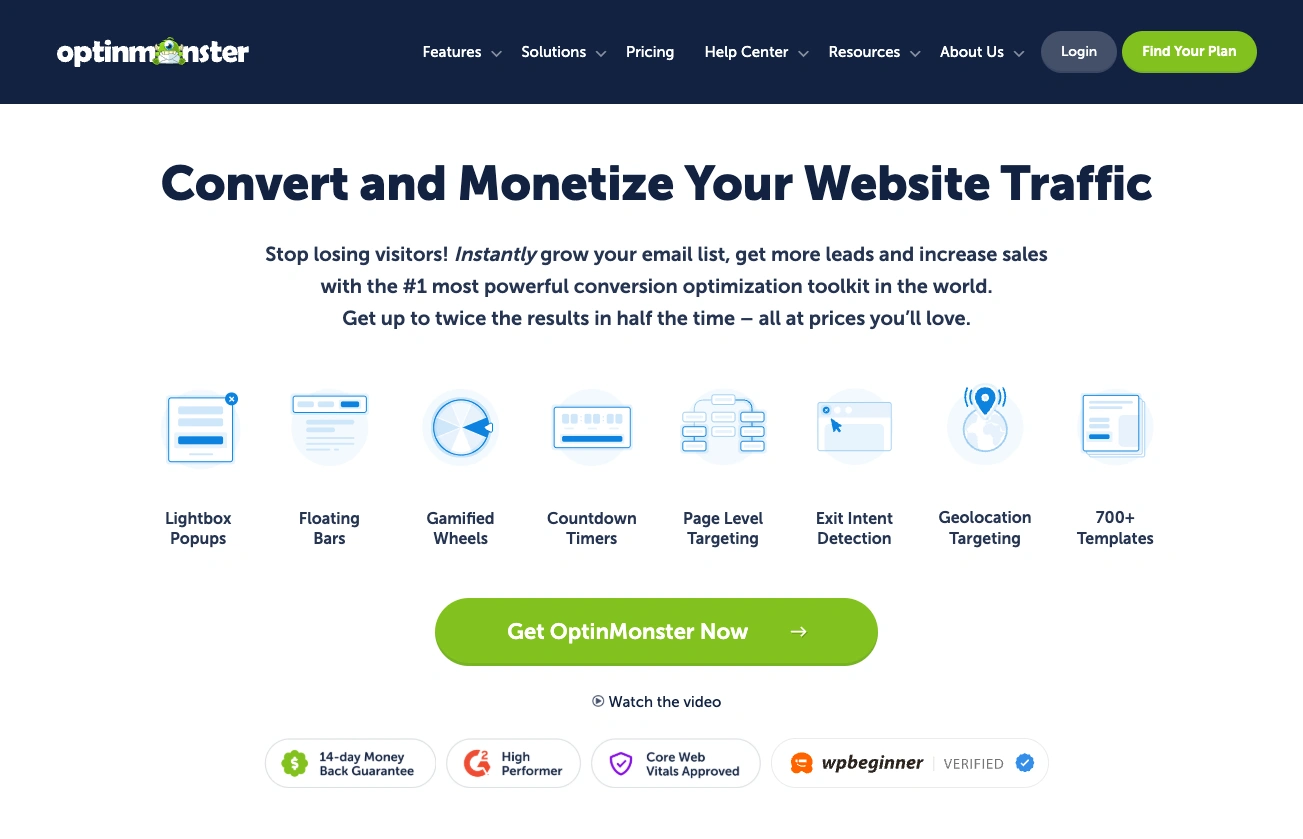
OptinMonster is one of the most well-known popup tools for list building, lead generation, and exit-intent campaigns. It’s designed to work with WordPress and other website platforms, and comes with a wide range of templates, triggers, and form types.
You can build overlays, floating bars, full-screen mats, and slide-ins. The visual editor is easy to use and comes with mobile previews and styling options. Targeting features include page-level targeting, exit intent, scroll depth, geo-location, and traffic source. OptinMonster also supports A/B testing and integrates with most major email platforms.
Gamified popups like spin to win are included with paid plans. Personalization features are available but limited unless paired with another tool like a CRM or tag manager. Analytics are basic but useful for monitoring views, conversions, and split tests.
What you can build with OptinMonster
Email signup overlays and slide-ins
Cart abandonment and time-based offers
Spin to win popups for lead capture
Gated content and lead magnet flows
OptinMonster is a good choice for marketers who want a fast and reliable way to launch popups without much setup. It’s widely used and works well for WordPress users, but personalization options are more limited unless extended through external tools.
Pricing
OptinMonster starts from $49/month for access to gamified features and advanced targeting. Pricing is based on site usage and plan level. A 14-day money-back guarantee is available.
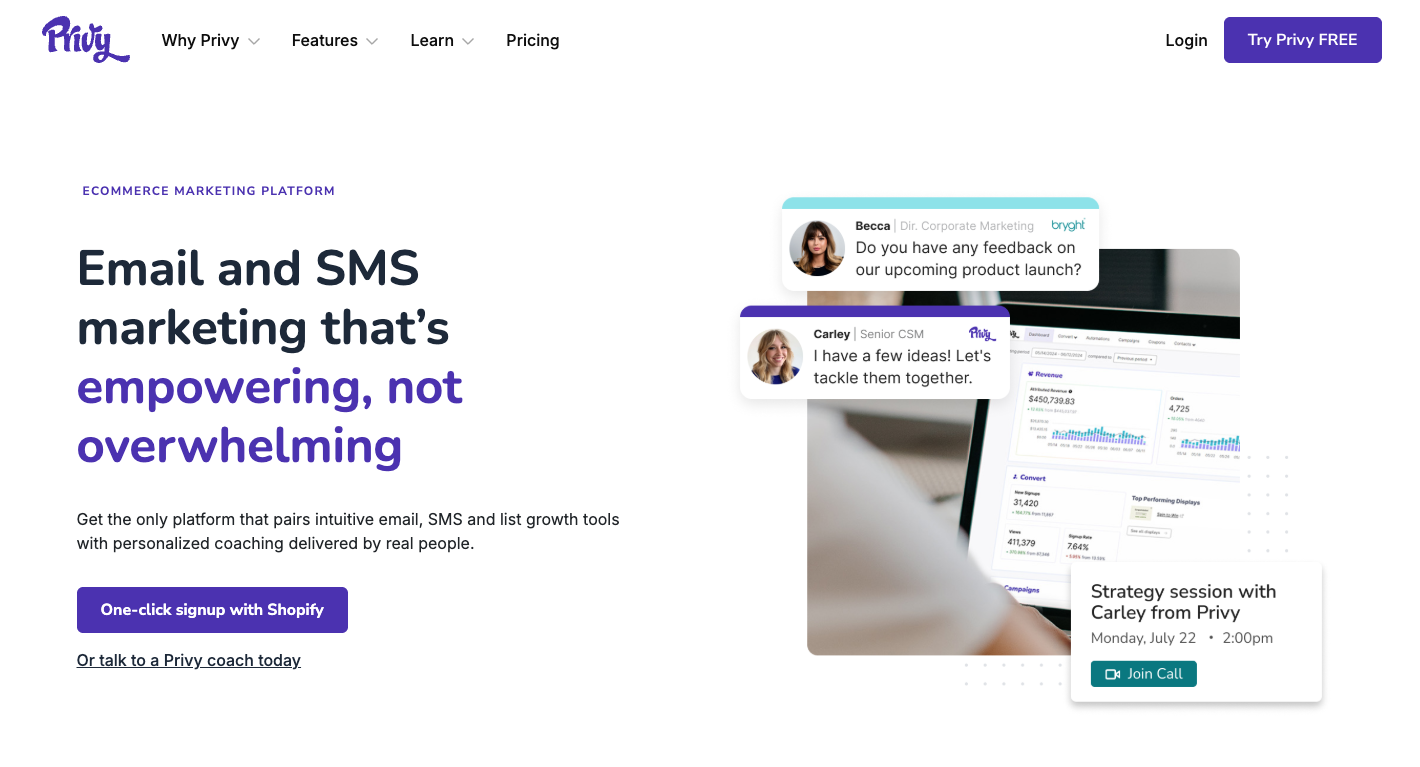
Privy is a popup and email platform built primarily for Shopify and ecommerce brands. It combines popups, forms, email campaigns, and SMS into one system, making it easy to run basic lifecycle marketing without extra tools.
You can create overlays, banners, slide-ins, and embedded forms for collecting emails and promoting offers. Privy’s popup builder is straightforward, and campaigns can be triggered based on exit intent, time on page, cart value, or device. Targeting is solid, and ecommerce triggers are built-in for Shopify, BigCommerce, and Wix stores.
Privy also supports spin to win popups, which are popular for welcome campaigns and lead generation. While design options are limited, the setup is fast, and templates are built with ecommerce goals in mind. It also includes basic email automation tools for follow-ups and cart recovery.
What you can build with Privy
Popups for email and SMS collection
Spin to win campaigns for welcome offers (paid plans only)
Exit-intent overlays and cart savers
Signup-triggered email follow-ups
Privy is a solid choice for smaller ecommerce stores looking for a simple all-in-one tool. It’s especially strong for Shopify users who want quick setup and email follow-up in the same platform. Larger teams may outgrow its design and targeting capabilities over time.
Pricing
Privy offers a limited free plan. Paid plans with gamification and email features start from $24/month.
Klaviyo Forms are built directly into the Klaviyo platform, allowing users to create signup forms and popups that feed directly into their email and SMS automations. It’s ideal for brands already using Klaviyo who want simple lead capture without additional software.
You can create overlays, flyouts, embedded forms, and full-screen popups. Forms can include multistep fields, dropdowns, and hidden properties for better segmentation. The targeting options are limited to URL-based rules, time delays, and device filtering. More advanced targeting and personalization require workarounds or integrations with third-party platforms.
Klaviyo also includes a spin to win popup template. It’s a useful addition for ecommerce brands running welcome offers, though the design and layout options are more limited compared to dedicated popup platforms.
What you can build with Klaviyo Forms
Basic popups and overlays for email collection
Embedded forms for landing pages or blogs
Spin to win lead capture campaigns (included)
Multistep signup flows with custom properties
Klaviyo Forms are best for marketers who already use Klaviyo and want everything in one place. They’re functional and easy to connect to flows, but not ideal for complex campaigns or advanced audience targeting.
Pricing
Klaviyo Forms are included on all plans, including the free plan for up to 250 contacts. Paid plans start from $20/month.
Elementor is a visual page builder for WordPress that includes a built-in popup builder for Pro users. It’s designed for web creators who want full control over their site layout and lead capture campaigns without writing code.
With Elementor, you can create popups, sticky bars, slide-ins, and modal forms using the same drag-and-drop interface used for building pages. Popups can be styled freely using the full Elementor design system, including animations, typography, and spacing. Forms can include multistep logic, dropdowns, and conditional fields.
Display rules include page targeting, scroll depth, exit intent, and logged-in status. Because it runs within WordPress, you have full control over triggers and behavior, though managing campaigns across multiple sites or brands can require more setup.
What you can build with Elementor
Signup forms and popups with full design control
Multistep lead capture flows with hidden fields
Exit-intent overlays and embedded offers
Inline forms across any page or post
Elementor is a great choice for WordPress users who want maximum flexibility and already use Elementor Pro. It works best for creators managing a single site or marketing teams with design skills in-house.
Pricing
The popup builder is included with Elementor Pro, which starts from $59/year for one site.
HubSpot includes a built-in form and popup tool as part of its CRM and marketing suite. It’s designed for capturing and syncing leads directly into your contact database and triggering automated email flows or sales notifications.
You can build popups, slide-ins, and embedded forms using a simple visual editor. Forms can be placed anywhere on your site using HubSpot’s embed code. Targeting is super basic and includes time delay, scroll triggers, and exit intent. Forms can collect CRM properties, segment users, and trigger automations directly in HubSpot workflows.
Customization options are limited on lower tiers, and forms show HubSpot branding unless you’re on a higher plan. More advanced targeting and behavioral segmentation are available in Marketing Hub Professional and Enterprise tiers.
What you can build with HubSpot Forms
Lead capture forms for CRM and automation
Slide-in popups and time-based offers
Embedded forms for landing pages or gated content
Lead magnets connected to email flows
HubSpot Forms are a solid choice for businesses already using the HubSpot CRM. They’re best for basic lead capture and workflow automation. For teams focused on design, targeting, or customization, the popup features may feel limiting.
Pricing
Basic forms and popups are available on all HubSpot plans, including free. To remove HubSpot branding and unlock advanced targeting, you’ll need Marketing Hub Professional from €792/month.
Wrapping up
There’s no shortage of popup tools to choose from. Whether you’re launching a simple email signup form, promoting a flash sale, or running advanced lead generation campaigns with segmentation and automation — there’s something for every business and budget.
Some tools are lightweight and quick to set up. Others are built for big teams and complex marketing stacks. The right one depends on your use case, your traffic, and how much control you want over your design and targeting.
Before you choose, ask yourself:
Do I need just one popup, or a full system for lead gen and personalization?
Can I fully match the design to my brand, or am I limited to preset layouts?
Do I want to target different offers to different audiences?
Does it integrate with my CRM, email tool, or customer data?
Can I track signups, clicks, and revenue from each campaign?
The verdict: Why Triggerbee is the best popup software
Triggerbee isn’t just another popup tool. It’s a complete onsite conversion platform built for B2B and B2C marketers who want more control, deeper targeting, and measurable results that can be used prove ideas and campaigns.
With support for slide-ins, overlays, banners, embedded forms, and post-signup flows — all fully customizable and branded — you can launch campaigns that feel like a natural part of your site. Add powerful targeting, multistep logic, and visitor identity tracking, and you have everything you need to grow your list, boost conversions, and keep your data clean.
Triggerbee gives you more than just a form on a page. It helps you show the right offer to the right person at the right time, with analytics that tie everything back to real outcomes — not just impressions and guesses.
We’re not the biggest tool in the space. But we’re here to make it easier for marketers to do more with less and launch high-performing campaigns without code or compromise.